Showing posts with label Martin Luther King. Show all posts

Monday, August 12, 2013

Still Marching 50 Years Later

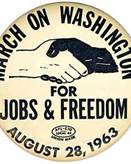
th (17)In just a few weeks August 28, 2013 will mark the 50th anniversary of the March on Washington for Jobs and Freedom. A mass protest that helped energize some of the most critical social legislation in the nation's history and inspired a generation of activists focused on ending poverty, racism and violence. I remember where I was on the day of the historic event as a small child and as time pasted I never thought 50 years later we would need to march for the same things - ending poverty, racism and violence.

But over time I have learned that as sure as things change – they remain the same. Attended by more than 250,000 people that was said to be the largest demonstration Washington had ever seen at the time. The march reached a galvanizing high point with Dr. Martin Luther King's "I Have a Dream" speech, which stands today as one of the best known and most beloved speeches in modern history.

The backdrop for the march was the outrage sparked by media coverage of police brutality in Birmingham, Alabama where attack dogs and fire hoses were turned against peaceful protesters - many of whom were in their early teens or younger. Martin Luther King, Jr., was arrested and jailed during these protests, writing his famous "Letter From Birmingham City Jail," which advocates civil disobedience against unjust laws. Dozens of additional demonstrations took place across the country, from California to New York, culminating in the March.
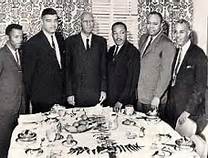
th (21)The March represented a coalition of several civil rights organizations, all of which generally had different approaches and different agendas. The "Big Six" as they came to be known organizers were James Farmer, of the Congress of Racial Equality (CORE); Martin Luther King, Jr., of the Southern Christian Leadership Conference (SCLC); John Lewis, of the Student Nonviolent Coordinating Committee (SNCC); A. Philip Randolph, of the Brotherhood of Sleeping Car Porters; Roy Wilkins, of the National Association for the Advancement of Colored People (NAACP); and Whitney Young, Jr., of the National Urban League. There was only one female speaker that day, Josephine Baker, who introduced several "Negro Women Fighters for Freedom," including Rosa Parks.

The stated demands of the march were the passage of meaningful civil rights legislation; the elimination of racial segregation in public schools; protection for demonstrators against police brutality; a major public-works program to provide jobs; the passage of a law prohibiting racial discrimination in public and private hiring; a $2 an hour minimum wage; and self-government for the District of Columbia, which had a black majority.

President Kennedy called the leaders of the big six to the White House because he want discouraged the march supposedly for fear that it might make the legislature vote against civil rights laws in reaction to a perceived threat. Kennedy demanded that language was changed and that the voices for justice were toned down to almost meek words. Once it became clear that the march would go on, he stationed troops “on the ready” around the city while publically he claimed to support the march.

The AFL-CIO remained neutral and outright opposition came from two sides. White supremacist groups, including the Ku Klux Klan, were obviously not in favor of any event supporting racial equality. On the other hand, the march was also condemned by some civil rights activists who felt it presented an inaccurate, sanitized pageant of racial harmony; Malcolm X called it the "Farce on Washington," and members of the Nation of Islam who attended the march faced a temporary suspension.

Lewis represented the Student Nonviolent Coordinating Committee, a younger, more radical group than King's. The speech he planned to give, circulated beforehand, was objected to by other participants; it called Kennedy's civil rights bill "too little, too late," asked "which side is the federal government on?" It declared that they would march "through the Heart of Dixie, the way Sherman did" and "burn Jim Crow to the ground—nonviolently." In the end, he agreed to tone down the more inflammatory portions of his speech, but even the revised version was the most controversial of the day, stating:

The revolution is at hand, and we must free ourselves of the chains of political and economic slavery. The nonviolent revolution is saying, "We will not wait for the courts to act, for we have been waiting hundreds of years. We will not wait for the President, nor the Justice Department, nor Congress, but we will take matters into our own hands, and create a great source of power, outside of any national structure that could and would assure us victory." For those who have said, "Be patient and wait!" we must say, "Patience is a dirty and nasty word." We cannot be patient, we do not want to be free gradually, we want our freedom, and we want it now. We cannot depend on any political party, for the Democrats and the Republicans have betrayed the basic principles of the Declaration of Independence.
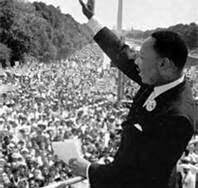
th (20)King's speech remains one of the most famous speeches in American history. He started with prepared remarks, saying he was there to "cash a check" for "Life, Liberty and the pursuit of Happiness," while warning fellow protesters not to "allow our creative protest to degenerate into physical violence.

Again and again, we must rise to the majestic heights of meeting physical force with soul force." But then he departed from his script, shifting into the "I have a dream" theme he'd used on prior occasions, drawing on both "the American dream" and religious themes, speaking of an America where his children "will not be judged by the color of their skin but by the content of their character." He followed this with an exhortation to "let freedom ring" across the nation, and concluded with:

And when this happens, when we allow freedom to ring, when we let it ring from every village and every hamlet, from every state and every city, we will be able to speed up that day when all of God's children, black men and white men, Jews and Gentiles, Protestants and Catholics, will be able to join hands and sing in the words of the old Negro spiritual, "Free at last, free at last. Thank God Almighty, we are free at last."
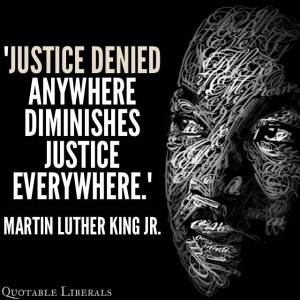
justiceIt appears Brother Martin was wrong! The KKK now wear black robes, justice is still denied, we see James Crow Esq. the son of segregation, a new Citizens Council called the Tea Party, poverty, and joblessness is worst than it was in his day. Now, for a man of peace who fought, struggled, and died for equality; he has been reduced to a four word phrase – “I have a Dream”.

Maybe they were right when they said what he preached was just a dream! And that’s my thought provoking perspective…

Wednesday, September 19, 2012

The Heartless Tin Man

There was a football commercial that aired a few years ago where a coach was asked did you know your opponent. The coach’s response was “they were who we thought they were”. The Plutocrat known as the Tin Man has now told us that he is who we thought he was! He could not have been more honest when he said:

"There are 47 percent of the people who will vote for the president no matter what. All right, there are 47 percent who are with him, who are dependent upon government, who believe that they are victims, who believe the government has a responsibility to care for them, who believe that they are entitled to health care, to food, to housing, to you-name-it. That that’s an entitlement. And the government should give it to them. And they will vote for this president no matter what…. These are people who pay no income tax.... [M]y job is not to worry about those people. I’ll never convince them they should take personal responsibility and care for their lives."

Some of Mitt’s supporters say these remarks were stupid and arrogant. I call this a disgrace for a man who could become the leader of the free world. It's worth noting that a good portion of the 47 percent who don't pay income taxes are Romney supporters. These people are seniors, many are lower-income Americans, soldiers, college students, and of course the Tin Man’s friends. So Mitt seems to have contempt not just for the Democrats who oppose him but also half of the American citizens according to him.

This is a guy that can only claim the best part of the Good Ol Boy’s convention was a senile old man talking to a chair. The Tin Man has now shown himself to be a bumbling fool and its time that he and the Boy Wonder be sent back to the Land of Oz because we have now seen the Wizard! It is hard to justify this “not so eloquent statement” as anything other than distain.

I cannot recall a presidential race in modern times that has had so little substance; yet so many untruths that have produced truth. So it seems this statement is devastating only because it shows he is “who we thought he was”! And that’s my Thought Provoking Perspective…

http://johntwills.com


Tuesday, August 28, 2012

Let Us Never Forget

On this day, August 28, 1955, Emmett Till, a fourteen-year-old black boy from Chicago supposedly whistled at a white woman in a grocery store. The murder of a 14-year old black boy Emmett Till in Money, Mississippi in August 1955 sparked the Civil Rights movement, but the crime won’t sound clarion calls for a nation to wake up to if not for the above photo. Till’s mutilated corpse circulated around the country mainly because of John Johnson who published the gruesome photographs in Jet magazine, a predominately African American publication. The photo drew intense public reaction.

Till didn't understand or knew that he had broken an unwritten law of the Jim Crow South until three days later, when two white men dragged him from his bed in the dead of night, beat him brutally and then shot him in the head. That night the door to his grandfather’s house was thrown open, and Emmett was taken by the mob of at least six white men, forced into a truck and driven away, never again to be seen alive. Till’s body was found swollen and disfigured in the Tallahatchie river three days after his abduction and only identified by his ring.

Till’s body was sent back to Chicago, where his mother insisted on leaving the casket open for the funeral and on having people take photographs because she wanted people to see how badly Till’s body had been disfigured—she has famously been quoted as saying, “I wanted the world to see what they did to my baby.” Up to 50,000 people viewed the body. On the day he was buried, two men — the husband of the woman who had been whistled at and his half brother — were indicted of his murder, but the all white male jury from Money (some of whom actually participated in Till’s torture and execution) took only an hour to return ‘not guilty’ verdict. The verdict would have been quicker, remarked the grinning foreman, if the jury hadn’t taken a break for a soft drink on the way to the deliberation room.

To add insult to injury, knowing that they would not be retrial, the two accused men sold their stories to LOOK magazine and happily admitted to everything. Elsewhere in Mississippi at the time things weren’t going terribly well for blacks either. Just before Till was murdered, two activists Rev. George Lee and Lamar Smith were shot dead for trying to exercise their rights to vote, and in a shocking testimony to lack of law and order, no one came forward to testify although both murders were committed in broad daylight.

The next year, Clyde Kennard, a former army sergeant, tried to enroll at Mississippi South College in Hatiesburg in 1956. He was sent away, but came back to ask again. For this ‘audacity’, university officials — not students, or mere citizens, but university officials — planted stolen liquor and a bag of stolen chicken feed in his car and had him arrested. Kennard died halfway into his seven year sentence. But times were slowly a-changing: Brown vs. Board of Education was decided in 1954, and three months after the Till murder Rosa Parks would refuse to move to the back of a bus in Montgomery, Alabama. Sit-ins and marches would follow, and soon the civil rights movement itself would be in full-swing.

It’s been almost sixty-years since the events of that fateful night and I simply cannot find the words to describe this heinous crime that has yet to receive justice. So I’ll end by sharing these words by Maya Angelou: “history, despite its wrenching pain, cannot be unlived, but if faced with courage, need not be lived again.” And that’s my Thought Provoking Perspective!


YOU MUST SEE THIS!!!
http://johntwills.com Purchase “Just a Season” today because Legacy – A New Season the sequel is coming! AMAZON

Wednesday, August 22, 2012

A Long and Mighty Walk

A season is a time characterized by a particular circumstance, suitable to an indefinite period of time associated with a divine phenomenon that some call life. One of the first things I learned in this life was that it is a journey. During this passage through time I have come to realize that there are milestones, mountains, and valleys that everyone will encounter. It saddens me that African American’s have had to endure more than any other culture!

Dr. John Henrik Clarke famously said, “History is a clock that people use to tell their political and cultural time of day. It is also a compass that people use to find themselves on the map of human geography. History tells a people where they have been and what they have been, where they are and what they are. Most important, history tells a people where they still must go, what they still must be. The relationship of history to the people is the same as the relationship of a mother to her child.”

There are many ghosts of the greats who sacrificed so much for us to exist today. We would not have had our history known if it were not for the great historian Carter G. Woodson, we may not have succeeded in the civil rights movement without a strong Rosa Parks to push Dr. Martin Luther King into bring the civil rights movement to the forefront of America’s consciousness. Then came the Black power movement that was so strong and so serious that it gave even more urgency to the White House and American government to change rather than prepare for violence.

Dr. Clarke was the powerful mind that many leaders of the Black power movement would come to for his knowledge. People like Stokely Carmichael, H. Rap Brown and the most notable of the all - Malcolm X. Clarke became Malcolm X's chief consultant and best friend. His work with Malcolm resulted in one of Malcolm's greatest speeches, indeed, one of the greatest 100 speeches made in America, "The ballot or the bullet."

Dr. Clarke never wrote an autobiography but he had a huge impact his teacher and what he left the minds of his people. Clarke was born in Union Springs, Alabama on New Year’s Day, in 1915. His was a family of poor sharecroppers. But they soon moved to Columbus, Georgia when he was about four years old. There, he met a school teacher named Eveline Taylor. Clarke said Ms. Taylor told John that she saw something special in him. She saw a thinker. And she said to him:

"It's no disgrace to be alone. It's no disgrace to be right when everyone else thinks you are wrong. There's nothing wrong with being a thinker. Your playing days are over."

Here's a eulogy of him written by The Los Angeles Times:

John Henrik Clarke: Activist, Professor July 18,198

John Henrik Clarke never got around to writing his life story, which encompassed some of the more turbulent periods in American history.

Dr. Clarke is remembered as someone who put the forgotten history of Africa back into the textbooks, and gave an analysis of history that wasn’t mainstream and for this we honor him so dearly. This man who descended from a family of sharecroppers was born in 1915 in Union Springs, Ga. He left Georgia in 1933 going to Harlem where he became one of the greatest unsung heroes of our time.

His political and community activism began quickly, when Clarke opposed the Italian invasion of Ethiopia in the 1930s. Later, he became a close friend of black activist Malcolm X. Clarke helped to forge a link between Africans and African Americans.

Clarke studied history and literature from 1948 to 1952 at New York University and later at Columbia University. During his career, Clarke edited or wrote 27 books. His editing work included the classic “American Negro Short Stories” in 1966. I just wanted to remind us of this man who brought into remembrance of our Great, Mighty Walk!

And that is my Thought Provoking Perspective…


The Book Tree Radio Show Returns!

I am personally inviting you to call in on September 5th and let us know what you’re doing, tell us what you’re writing about and where our audience can get your projects. Mark your calendar and take down this number – (718) 506-1699.

I am personally inviting you to call in on September 5th and let us know what you’re doing, tell us what you’re writing about and where our audience can get your projects. Mark your calendar and take down this number – (718) 506-1699.

Tuesday, August 21, 2012

Mightmare on MLK

We hear a lot of talk about this street or that street; namely Wall Street and Main Street but who’s talking about MLK Street. You see when they talk about Wall Street they are talking about the 1% or more aptly put the “Robber Barons”. Main Street is supposed to be where the rest of us reside surviving on the crumbs or what little we can scrape to survive. I suppose it is reasonable to place everyone in these two camps but why can’t MLK Street be added to the conversation.

There was a term or distinction devised not too long ago calling the neighborhoods where MLK Streets called the “Ghetto”. As cool and hip as it sounded it was not a positive description of the communities where people of color reside. I should say that distinction has been upgraded to a more modern term that many have embraced – “the Hood”. As it is by design, it carries the usually, although sounding cool, a negative connotation of the black community.

 In this place depicted as crime riddled and drug infested with gangsta’s rests the lives of the disenfranchised and the hopeless. When there are no jobs or in many cases no way to survive – it breads despair. I think we all know that this is cleaver social engineering at work and a misconception by design! Not a single soul living in the “Hood” has the means to bring in the drug or weapons into the community.

Moreover, when the people of these neighborhoods are deprived of educational opportunities as a result of being segregated - hopelessness is the by product. Let me suggest that if you are ever in the Nation’s Capital ride by the Capital Building you will notice that just a few blocks away you will find neighborhoods where just such a place exists – The Hood! Oh, did I say this is supposed to be the richest nation on this little rock called earth!

Dr. Woodson’s challenged his readers in the epic novel "The Mis-Education of the Negro” to become empowered by doing for themselves: regardless of what they were taught: “History shows that it does not matter who is in power... those who have not learned to do for themselves and have to depend solely on others never obtain any more rights or privileges in the end than they did in the beginning.”  
And that’s my Thought Provoking Perspective…

http://johntwills.com

I am personally inviting you to call in on September 5th and let us know what you’re doing, tell us what you’re writing about and where our audience can get your projects. Mark your calendar and take down this number - (718) 506-1699.

Tuesday, July 3, 2012

The Man Behind The Dream


Forty-eight years after the March on Washington became the crowning achievement of the Civil Rights Movement. Rev. Dr. Martin Luther King Jr. is finally being remembered with a memorial on the National Mall. This is a major accomplishment for his legacy and a testament to his living spirit. I am very proud and honored to have live long enough to see the first man of color to receive such distinction and to have a president of color unveil the monument to this great man. GOD BLESS AMERICA!

Dr. King now has reached his place of immortality and as marvelous as this is I wondered if anyone knows the man whose shoulders he stood. One person in particular would be the chief organizer of the March on Washington, who some have called the man behind the dream. I thought it would be fitting to give props to the man responsible for making the historic March on Washington a reality - Bayard Rustin. He was one of the most important leaders of the civil rights movement from the advent of its modern period in the 1950s until well into the 1980s.

Although his name is seldom mentioned or received comparatively little press or media attention, while others' were usually much more readily associated with the movement. Mr. Rustin’s role was a behind-the-scenes role that, for all its importance, never garnered him the public acclaim he deserved. Rustin's homosexuality and early communist affiliation probably meant that the importance of his contribution to the civil rights and peace movements would never be acknowledged.

Rustin was a gifted and successful student in the schools of West Chester, both academically and on his high school track and football teams. It was during this period of his life that Bayard began to demonstrate his gift for singing with a beautiful tenor voice. He attended Wilberforce University and Cheyney State Teachers College. In 1937 he moved to New York City, where he was to live the rest of his life.

It was at this time that Rustin began to organize for the Young Communist League of City College. The communists' progressive stance on the issue of racial injustice appealed to him. He broke with the Young Communist League and soon found himself seeking out A. Philip Randolph head of the Brotherhood of Sleeping Car Porters and at that time the leading articulator of the rights of Afro-Americans.

He soon headed the youth wing of a march on Washington that Randolph envisioned. Randolph called off the demonstration when President Franklin D. Roosevelt issued Executive Order No. 8802, forbidding racial discrimination in the employment of workers in defense industries. Randolph's calling off of the projected march caused a temporary breach between him and Bayard Rustin, and Rustin transferred his organizing efforts to the peace movement, first in the Fellowship of Reconciliation and later in the American Friends Service Committee, the Socialist Party, and the War Resisters League.

In 1944, Rustin was found guilty of violating the Selective Service Act and was sentenced to three years in a federal prison. In March 1944 Rustin was sent to the federal penitentiary in Ashland, Kentucky. He then set about to resist the pervasive segregation then the norm in prisons in the United States, although faced with vicious racism from some of the prison guards and white prisoners, Rustin faced frequent cruelty with courage and completely nonviolent resistance.

On release from prison, Rustin got involved again with the Fellowship of Reconciliation, which staged a journey of reconciliation through four Southern and border states in 1947 to test the application of the Supreme Court's recent ruling that discrimination in seating in interstate transportation was illegal. Rustin's resistance to North Carolina's Jim Crow law against integration in transportation earned him twenty-eight days hard labor on a chain gang, where he met with the usual racist taunts and tortures on the part of his imprisoners.

Between 1947 and 1952, Rustin traveled first to India and then to Africa under the sponsorship of the Fellowship of Reconciliation, exploring the nonviolent dimensions of the Indian and Ghanaian independence movements. In 1953 Rustin was arrested for public indecency in Pasadena, California, while lecturing under the auspices of the American Association of University Women. It was the first time that Rustin's homosexuality had come into public attention, and at that time homosexual behavior in all states was a criminal offense.

In 1956 Rustin was approached by Lillian Smith, the celebrated Southern novelist who authored Strange Fruit, to provide Dr. Martin Luther King with some practical advice on how to apply Gandhian principles of nonviolence to the boycott of public transportation then taking shape in Montgomery, Alabama. Rustin spent time in Montgomery and Birmingham advising King, who had not yet completely embraced principles of nonviolence in his struggle. By 1957, Rustin was busy playing a large role in the birth of the Southern Christian Leadership Conference and in the Prayer Pilgrimage to Washington that took place on May 17, 1957 to urge A. Philip Randolph to enforce the Supreme Court's 1954 ruling that the nation's schools be desegregated.

Arguably the high point of Bayard Rustin's political career was the A. Philip Randolph for Jobs and Freedom which took place on August 28, 1963, the place of Dr. Martin Luther King's stirring "I Have a Dream" speech. Rustin was by all accounts the March's chief architect. To devise a march of at least one-quarter of a million participants and to coordinate the various sometimes fractious civil rights organizations that played a part in it was a herculean feat of mobilization.

By 1965 Rustin had come to believe that the period for militant street action had come to an end; the legal foundation for segregation had been irrevocably shattered. Rustin's steadfast opposition to identity politics also came under criticism by exponents of the developing Black Power movement. His critical stance toward affirmative action programs and black studies departments in American universities was not a popular viewpoint among many of his fellow Afro-Americans, and as at various other times of his life Rustin found himself to a certain extent isolated.

Although Bayard Rustin lived in the shadow of more charismatic civil rights leaders, he can lay real claim to have been an indispensable unsung force behind the movement toward equality for America's black citizens, and more largely for the rights of humans around the globe, in the twentieth century. Throughout his life his personal philosophy, incorporating beliefs that were of central importance to him: that there is that of God in every person, that all are entitled to a decent life, and that a life of service to others is the way to happiness and true fulfillment.

So you see all of us stand upon the shoulders of someone be it great or not; So Sing – Sing Celebrate!!! The Dream will never die. And that’s my Thought Provoking Perspective…

Purchase “Just a Season” today !!!
Legacy – A New Season the sequel is coming!
July 4, 2012


Tuesday, June 26, 2012

The Court Got It Right!!!


Yesterday, the Supreme Court threw out most of the anti-Latino Arizona immigration law and neutered the rest, which was frankly a surprise to me considering the make-up of this gang. To their credit in this instance they did strike a blow for fairness and this ever elusive thing called justice. Being an African American I have seen and know bigotry firsthand so I think this qualifies me to have an opinion with respect to what this law would do if allowed to stand as the law of the land.

Of course, we now wait for the biggest decision of our lifetime – the healthcare decision. I hope Chief Justice Roberts Jr., who by the way sided with the 5 to 3 majority in immigration law remains sane and takes the position of the liberal Justices on the bench when deciding the healthcare issue. The American people could use his vote when it is rendered and expected to be announced Thursday.

This was a huge victory for justice although they did not eliminate the most notorious part of the Arizona law, which was the requirement that police can check the immigration status of anyone who is detained. This is the part known as the “papers, please” that conjures images of a police-state in my mind that could easily be expanded to include other minorities like us or just us. I can recall there was a time when such laws pertained to black people – they were called Black Codes.

However, it appears that the court had this in mind as it wrote “This opinion does not foreclose other preemption and constitutional challenges to the law as interpreted and applied after it goes into effect”. Which sounds like - we’ll be watching closely. Thankfully most of the less publicized but equally onerous and un-American provisions are now history.

More importantly, the court’s reinforcement of the main tenet was that the federal government has the responsibility for setting immigration policy, not the states. We do not need — and, thanks to this ruling, will not have — 50 sets of laws specifying who gets to live in this country and who doesn’t. This would open the floodgates to bigotry. Like I said, I have seen this before and not too long ago.

This law had another more ominous design, which would have, if sustained,  make it a state crime for anyone who failed to have proper immigration papers; in other words, failing to produce the right documents when asked could have subjected a person not just to deportation but to criminal penalties. The court ruled that this was preempted by federal law, which imposes no such sanctions.

The danger here is this as it relates to the so called “papers please law” it gives police broad authority to arrest anyone — without a warrant — suspected of some “public offense” that makes the person liable to deportation. The court recognized, and rightfully so, that this is a license for police to arrest suspected illegal immigrants indiscriminately, based solely on the possibility that they might be here without the proper documents. Keep in mind the “Arizona ”.

As the court noted in striking down this provision, “The result could be unnecessary harassment of some aliens (for instance, a veteran, college student, or someone assisting with a criminal investigation) whom federal officials determine should not be removed.” Need I say this is what African Americans have been saying all along – we call it “racial profiling”.

Thanks to Justice Anthony M. Kennedy who wrote the majority opinion for pointing out something that many who seek to participate in the immigration debate fail to understand: “As a general rule, it is not a crime for a removable alien to remain present in the United States.” I think he was right to say it’s not a crime for “illegal” immigrants to live and work here without the proper documents. By “here” I mean all 50 states. The United States is one country with one immigration policy, and the Supreme Court means to keep it this way.

In closing, until the healthcare verdict, let me ask you to recall not too long ago this state was the last to recognize Dr. Martin Luther King’s birthday as a holiday.  Therefore I say, Arizona’s thinking – draconian! VOTE!!! And that’s my Thought Provoking Perspective…

http://johntwills.com

Saturday, May 26, 2012

Cynthia McKinney Speaks


I am so empowered by the kindness of my readers who share powerful information with me to share with you. I received this audio clip that you must hear. It is a chilling reminder of what we lived through with the regime of the last administration.

Cynthia McKinney delivers a speech while Lord George was in power that gives us reason to vote because we should never want to go back there…

VOTE!!!

LISTEN TO THESE POWERFUL WORDS!

http://www.spreaker.com/user/4438008/cynthia_mckinney_speaks

On this Memorial Day - Thank a Veteran and Stop War! And that’s my Thought Provoking Perspective…

http://johntwills.com

Wednesday, May 23, 2012

WHEN YOU THOUGHT YOU’VE HEARD EVERYTHING


There is a huge legal battle going on in Detroit over the estate of civil rights icon Rosa Parks. There are lawyers, judges, and family fighting to see who controls the estate of “Mother Parks”.  Wayne County Probate Judge Freddie Burton Jr. was asked to disqualify himself and in what some have said is unusual he made a decision, which is he will let them know if he will in will continue to preside over the Parks’ estate fight.


Burton told lawyers in a five-minute hearing that he would issue a decision on the disqualification motion in 30-45 days without hearing legal arguments from lawyers in the case. Then, he ended the hearing, leaving lawyers to argue their positions with newspaper reporters.

“It’s outrageous that Judge Burton needs 30-45 days to decide a completely unopposed motion for disqualification,” said attorney Steven G. Cohen, of Farmington Hills, who sued Burton last week on the grounds that he conspired with probate lawyers John Chase Jr. and Melvin Jefferson Jr., allowing them to bankrupt Parks’ estate with unnecessary and excessive attorney fees. “He obviously can’t serve as a presiding judge in a case where he is the defendant.”

Cohen said Burton should have ruled this morning since the other lawyers in the case filed no written objections to his request. “This means the motion is unopposed and should be granted immediately,” Cohen said. Troy attorney Alan May, who represents Chase and Jefferson said Cohen’s accusations are outrageous.

Cohen represents Elaine Steele, Parks’ longtime friend and assistant, and the Rosa and Raymond Parks Institute, which Steele founded with Parks. Last week, Cohen sued Burton, Chase and Steele, on the grounds that they conspired to bankrupt Parks’ estate and strip Steele and the institute of their share of Parks’ historically valuable belongings and intellectual property rights.

The controversy is the latest development in a long-running battle that began after Parks’ death in 2005 when her nieces and nephews challenged her estate plan. Though Parks had selected Steele and retired 36th District Court Judge Adam Shakoor to handle her estate, Burton put longtime probate lawyers Chase and Steele in charge.

Instead of marshalling Parks’ assets and sitting on the sideline until Steele, the institute and the relatives settled their differences, Cohen said Chase and Jefferson waded into the fight and started billing the estate for legal fees.

In 2007 Steele, the relatives and the institute signed a confidential agreement giving the institute and Steele 80% of the proceeds from the sale of Parks’ belongings and the royalties from licensing Parks’ name. The relatives were to get the rest.

Instead of putting Steele and Shakoor back in charge of the estate, as the agreement required, Cohen said Burton kept Chase and Jefferson in place. Cohen said Chase and Jefferson fabricated a phony breach of confidentiality dispute that Burton eventually used to strip Steele and the institute of their share of the estate.

Last December, at Cohen’s request, the Michigan Supreme Court ordered Burton to put Steele and Shakoor back in charge of the estate. It also voided the forfeiture order. Cohen now wants Burton off the case and the lawyers to reimburse the estate for the legal fees their received.

May says Chase and Jefferson billed reasonable fees and improved the estate by recognizing the historic value of Parks’ belongings, which a New York City auction house is trying to sell to an institution that can display them. “Shameful.”

This may well be the first time I am at a loss for words as this woman fought for justice while living and her name must continue to fight. And that’s my Thought Provoking Perspective…

As report by David Ashenfelter of the Detroit Free Pree

Sunday, May 20, 2012

To Serve

On this great day I want to simply share a profound message that if taken to heart – will change the world. Please listen to the video and make that change. I once heard it said that “I may not be the one to change the world but I can change the mind of the one who can”.

And that is my Thought Provoking Perspective…


Friday, March 16, 2012

Finally, Recognition!

There are many travesties in the long storied history of our country. With that said, I recently became aware of what I think is one of the worst indignities.  Well, at least in modern times. It’s been forty-four years since civil rights leader, icon, and dare I say martyr Dr. Martin Luther King Jr. was assassinated as he stood on the balcony of the Lorraine Motel in Memphis, Tennessee.

There are streets named in his honor in every city across the country but in the cities where “The King” was murdered happens to be the last place to honor him with a street name. Dr. King gave so much to invoke change in a system that was nothing more than apartheid. Yet, nearly half a century later, the city of Memphis will finally rename the one-mile stretch of Linden Avenue to Dr. M.L. King Jr. on the anniversary, April 4, of his brutal murder.

This prestigious honor has even taken place in foreign countries like Italy, who honored King by renaming streets after him in no less than 10 cities. According to MLKStreet.com, as of two years ago, there are 893 places that have roadways memorializing King in 40 states, the District of Columbia, and Puerto Rico. Yet not even in the entire state of Tennessee, much less in the city where King was brutally murdered, is there one street dedicated to his memory. Shocking isn’t it!!!

Journalist Jonathan Trilove in his book “Black America’s Main Streets” talks about how Dr. Martin Luther King streets serve as points of pride and struggle, yet finding the most appropriate thoroughfare is oftentimes accompanied by the difficulty of convincing Whites that King’s impact and legacy is an inspirational one that provided a coalition of conscience all across the board. Former Memphis City Councilman Berlin Boyd, who helped lead the street-naming effort in Memphis said, “We never wanted to address losing Dr. King’s life here”.

Commemorative movements are usually spearheaded by Blacks and the renaming of streets has oftentimes been a controversial process that has been met with significant public opposition. The inscription of King’s legacy on to streets and the controversy that has surrounded it on numerous occasions has led to the placement of his name on minor streets or portions of roadways that are primarily populated by Blacks.

Memphis has chosen the very busy downtown Linden Avenue, home of the NBA’s Memphis Grizzlies, for the renaming because King marched there in support of sanitation workers. “He marched along this street; we wanted something that had a real nexus to this city,” said Mayor A.C. Wharton.

With there being a monument and a national holiday, it is about time Memphis has done the right thing. And that is my Thought Provoking Perspective…


"Just a Season"
Legacy – A New Season is Coming!
http://www.facebook.com/v/2130334299266

Listen to the author's interview!

Friday, February 3, 2012

The Ghost of Jim Crow


If you follow my blog, Thought Provoking Perspectives, and I hope you do, you know that I often write about issues concerning and pertaining to the African American Diaspora. I do so, hopefully, to empower those who either don’t know our history or have forgotten it. Therefore, in honor of Black History Month I will write a post each day on this topic that I hold dear. Let me say, I believe our history is American History and as I have said many times; “It is the Greatest Story Ever Told”.

In an earlier article someone made a comment and ask a question that, frankly, surprised me. The question was; “What do you mean when you say Jim Crow”? My first thought was, how can history so recent and one that I’ve witnessed, and know to be true, be removed from the consciousness of anyone living in America. I suppose it speaks to the indifference of what is learned today, or not, through the education system or that the system is designed to protect the system.

So in today’s post I will explain the term Jim Crow for those who don’t know! The term originated in a song performed by Daddy Rice, a white minstrel show entertainer in the 1830’s. Rice covered his face with charcoal paste or burnt cork to resemble a black man as he sang and danced a routine in the caricature of a silly black person. By the 1850’s, this cruelly belittling blackface character, one of several stereotypical images of black inferiority in America’s popular culture, was a standard act in minstrel shows of the day.

The term became synonymous with the wicked concept of segregation directed specifically toward African Americans in the late nineteenth-century. It is not clear why this term was selected. However, what is clear is that by 1900, the term was generally identified with those racist laws and actions that deprived African Americans of their civil rights by defining blacks as inferior to whites while identifying them as subordinate people.
It was around this time that its inception entered the lexicon of racial bigotry after the landmark U.S Supreme Court decision Plessy verses Ferguson in 1896 resulting from a suit brought by the New Orleans Committee of Citizens. The notion was devised as many southern states tried to thwart the efforts and gains made during Reconstruction following the Civil War.

They, the Committee of Citizens, arranged for Homer Plessy’s arrest in order to challenge Louisiana’s segregation laws. Their argument was, “We, as freemen, still believe that we were right and our cause is sacred” referring to the confederacy. The Supreme Court agreed and a policy of segregation became the law of the land lasting more than sixty years as a result of that crucial decision.

As a result of reconstruction African Americans were able to make great progress in building their own institutions, passing civil rights laws, and electing officials to public office. In response to these achievements, southern whites launched a vicious, illegal war against southern blacks and their white allies. In most places, whites carried out this war under the cover of secret organizations such as the KKK. Thousands of African Americans were killed, brutalized, and terrorized in these bloody years. I might add that anywhere south of Canada was "South" as this was the law of the land.

The federal government attempted to stop the bloodshed by sending in troops and holding investigations, but its efforts were far too limited and frankly were not intended to solve the problem. Therefore, black resistance to segregation was difficult because the system of land tenancy, known as sharecropping, left most blacks economically dependent upon planter/landlords and merchant suppliers. In addition, white terror at the hands of lynch mobs threatened all members of the black family - adults and children alike. This reality made it nearly impossible for blacks to stand up to Jim Crow laws because such actions might bring the wrath of the white mob on one's parents, brothers, spouse, and children.

Few black families were economically well off enough to buck the local white power structure of banks, merchants, and landlords. To put it succinctly: impoverished and often illiterate southern blacks were in a weak position to confront the racist culture of Jim Crow. To enforce the new legal order of segregation, southern whites often resorted to even more brutalizing acts of mob terror, including race riots and ritualized lynchings were regularly practiced to enforce this agenda.
Some historians saw this extremely brutal and near epidemic commitment to white supremacy as breaking with the South's more laissez-faire and paternalistic past. Others view this "new order" as a more rigid continuation of the "cult of whiteness" at work in the South since the end of the Civil War. Both perspectives agree that the 1890’s ushered in a more formally racist South and one in which white supremacists used law and mob terror to define the life and popular culture of African American people as an inferior people.

I want you to remember that words have meaning and power. Therefore, as we witness the already in progress, presidential campaign that you think about what you have heard and hear from the States Rights folks from the right-wing so-called conservatives. Those vying to become president in 2014, as well as others seeking highly placed positions, understand this tried and true principle as they speak to the so-called real Americans and those who want to take back their country because history is known and has repeated itself!

And that’s my Thought Provoking Perspective…

http://johntwills.com


Purchase “Just a Season” today because Legacy – A New Season the sequel is coming!
AMAZON

Friday, December 9, 2011

Study War No More


It seems like I can remember so many things since I have, as I call it, mentally matured with what I perceive as real. Some call it thought-provoking. This post is intended to be thought-provoking because I want to capture words once spoken by a King. They were said almost a half century ago and they resonate as clearly today as when they were spoken. Now, let me make it clear from the beginning - if you have heard them before great! If you have not; pay close attention because they speak truth to morality. Let me also add that the words are captured and inspired from a speech by the immortal Martin Luther “the King”.

I see war as an unjust, evil, and futile. The time has come for America to hear the truth about the tragic wars in which they are now engaged. The day has passed for superficial patriotism. He who lives with untruth lives in spiritual slavery. Freedom is still the bonus we receive for knowing the truth. "Ye shall know the truth," says Jesus, "and the truth shall set you free." I agree with Dante, that the hottest places in hell are reserved for those who in a period of moral crisis maintain their neutrality. There comes a time when silence becomes betrayal.

Even when pressed by the demands of our inner truth, men do not easily assume the task of opposing government policies, especially in time of war. Nor does the human spirit move without great difficulty against all the apathy of conformist thought within one's own soul and in the surrounding world. Moreover, when the issues at hand seem as perplexing, as they often do in the case of these dreadful conflicts, we're always on the verge of being mesmerized by uncertainty.

Millions have chosen to move beyond the prophesying of smooth patriotism, to the high grounds of firm dissent, based upon the mandates of conscience and the reading of history. Now, one of the difficulties in speaking out grows from the fact that there are those who are seeking to equate dissent with disloyalty. It's a dark day in our nation when high-level authorities will seek to use every method to silence dissent, i.e. the 99’ers. The truth must be told. It appears that anyone who opposes war is a traitor or an enemy of our soldiers. Understand that war does not always mean military conflict.

There is an obvious and almost facile connection between any war and the struggle many have been waging in America. Once there was a shining moment in that struggle. It seemed that there was a real promise of hope for the poor, both black and white, through Poverty Programs. I watched these programs broken as if they were idle political playthings of a society gone mad. America will never invest the necessary funds or energies in rehabilitation of its poor so long as these insane adventures continue to draw men and skills and money, like some demonic, destructive suction tube.

You may not know it but, it is estimated that we spend $500,000 to kill each enemy soldier, while we do not spend a hundred dollars for each person classified as poor, and much of that goes for salaries of people hired to, supposedly, help the poor. Therefore, I am increasingly compelled to see war as an enemy of the poor. Do not consider just the wars in the Middle East but look at the war being waged against you and your community. They continue to tell us that this nation is the greatest nation in the world. I say that measure should be judged by how the nation treats her old, young, and poor.

This great country takes our young men, and women, sending them thousands of miles away under the guise of guaranteeing liberty others. Who've been crippled by society because there are no jobs; before or after the conflict. Yet, they have not found peace or given liberty to citizens in Mississippi, Georgia and New York or, in the slums of Washington, DC. Frankly, this is a cruel manipulation of freedom and justice while, in the meantime, the political arena has become a disgrace.

The only change that came from America were increased troop commitments in support of governments which were singularly corrupt, inept and without the popular support of their own people. All the while the people read our leaflets and received regular promises of peace, democracy and land reform. Now, they languish under our bombs and consider us the real enemy. They move sadly and apathetically as we herd them off the land of their fathers into jails and camps, where minimal social needs are rarely met. They know they must move or be destroyed by our bombs.

So they go, primarily women, and children and the aged. They watch as we poison their water, as we kill a million acres of their land and weep as the bulldozers roar through the areas where they live. They wander into the towns and see thousands of children, homeless - without clothes, running in packs on the streets like animals. They see the children degraded by our soldiers as they beg for food. They see the children selling their sisters to our soldiers and soliciting for their mothers. We have destroyed their two most cherished institutions: the family and the village. Please remember this: “You cannot free anyone if they do not want to be free”. Yet, our government tells us we would be treated as liberators.

This is the role our nation has taken, the role of those who make peaceful revolutions impossible while refusing to give up the privileges and the pleasures that come from the immense profits of overseas investments. I'm convinced that if we are to get on the right side of the world revolution we, as a nation, must undergo a radical revolution of values. We must rapidly begin the shift from a thing-oriented society to a person-oriented society. When machines and computers, profit-motives and property rights are considered more important than people, the giant triplets of racism, militarism and economic exploitation cannot be conquered.

A true revolution of values will soon cause us to question the fairness and justice of many of our present policies. On the one hand, we are called upon to play the Good Samaritan on life's roadside, but that is only the first step. One day, we must come to see that the whole Jericho Road must be changed so that men and women will not be beaten constantly and, then robbed as they make their journey on life's highway. True compassion is more than flinging a coin to a beggar. A true revolution of values will soon look uneasily on the glaring contrast of poverty and wealth with righteous indignation.

The Bible says, “You shall reap what you sow”. With this faith we will be able to hew out of the mountain of despair a stone of hope. With this faith we will be able to transform the jangling discords of our world into a beautiful symphony of brotherhood. With this faith we will be able to speed up the day when justice will roll down like waters, and righteousness like a mighty stream. With this faith we will be able to speed up the day when the lion and the lamb will lie down together and, every man will sit under his own vine and fig tree and, none shall be afraid because the words of the Lord have spoken it. And nations will not rise up against nations; neither shall they study war anymore. And, I don't know about you, but I don’t want to study war no more.

This article was captured and inspired by “A King” and that’s my THOUGHT PERVOKING PERSPECTIVE…


http://johntwills.com

Thursday, December 8, 2011

Saturday, March 26, 2011

The Crime of the Century


I was compelled to write this post as a way to show deference to His-Story concerning the saddest day in our history - April 4, 1968. On this horrible day I refer to as the day they killed a "King" forty-three years ago. It is a moment etched into my mind, and after all these years I can still remember exactly what I was doing the moment I heard the news. To this very day I am of the opinion that the murder of Dr. Martin Luther King, Jr. is the crime of the century and none of what they told us is true.

I will even so so far as to say with absolutely belief that because the truth has never been told this crime is akin to a coup d’état. You know that happens when you remove a leader; particularly, when you consider the antagonistic relationship between the systems racist policies of the time. The Kennedy administration used U.S. Government assets for eight years under the direction of Bobby Kennedy, implemented primarily by J. Edgar Hoover and more than likely every intelligence gathering agency to monitor this man’s every move. Yet, when the murder occurred they claimed to know nothing the moment the shot was fired.

This is why I believe the truth has never been revealed in spite the many so called facts released by the Freedom of Information Act in 1993 and footage I’ve seen. I personally do not believe James Earl Ray was the shooter; for one reason, the meticulous cover up was far beyond his capacity. I have said many times that I am not one to buy into or proscribe to conspiracy theories. But, this case certainly is one when you consider what is known or they wanted us to know has not convince me of guilt beyond a reasonable doubt.

As much as it pains me to say this I believe there was a Judas at the Last Supper! This is not unlike the death of Malcolm X where we now know informants were in his mists to assist the government in Dr. King’s demise. Therefore, I believe African-Americans supported the culprits of these agencies in the plan to murder Dr. King. If the U.S. Government had Dr. King under surveillance the day of his assassination and stationed across the street from the Lorraine Motel, as alleged, why was this murder allowed to happen and made to seem so conclusive. I will not try to re-litigate the case, rather leave you to view the attached videos and ask yourself – WHY!

I remember a statement Dick Gregory made concerning information obtained via the freedom of information act. It has always stayed in my mind. He said one of the documents stated on the night Dr. King was shot those who had him under surveillance said “the friendlies will not be wearing ties”. Keep that in mind when you watch the footage of the murder scene. Lastly, be very aware of the voices that claim to speak for you because I also believe Judas walks among us.

Less not forget that at the time of his death, Dr. King was viewed as the most dangerous man in America and hated by most. So when you think of the way history has rewritten today to create this story to make him the most revered soul known to man. Just consider this: conscience can eat away the soul. Sort of like what the Roman’s did with Jesus!

RIP Dr. King… gone too soon.

The Crime of the Century: the Killing of a King

Who Killed Martin Luther King? PART ONE

Who Killed Martin Luther King? PART TWO


Who Killed Martin Luther King? PART THREE

Sunday, January 30, 2011

The Unspoken Truth – 28 Days of Black History


I have written a series of articles on “The John T. Wills Chronicles” specifically designed to be a potent source of empowering knowledge for the enhancement of the community and the minds of mankind. During Black History Month I will post the entire series with a different article each day speaking to the phenomenal history and difficult struggle of the African American experience.

The legacy of dependency, apathy, and entrenchment of the American social order from the beginning provides clear evidence of its diabolical intent to bankrupt the souls of African Americans based on an ideology of supremacy. These stolen souls that exist today are people who bear the burden of a system that perpetrated, in the name of God, the greatest crime known to man. Hence, from the beginning, people of African descent were intended to be a nation of people living within a nation without a nationality.

“The Unspoken Truth” is intended to empower by educating people through knowledge concerning issues that many blacks continue to face today from the untreated wounds of America’s forefathers. This series is a knowledge-based examination of the African American Diaspora. As you travel with me though the the next twenty-eight days, my purpose is to simply offer explanations causing people to look at and understand the root cause of the asymptomatic behaviors.

It is my sincere desire to help people understand that there is a conditioning in “certain” communities – this is not an excuse, rather an explanation as to why these behaviors were never unlearned and have been passed down from generation to generation. Over my relatively short lifetime, I have been referred to as Colored, Negro, Afro-American, Black, and an African American, which were the polite terms assigned to make known that African Americans were not American citizens.

The concept of African Americans being slaves, physically or mentally, is as old as the nation itself, designed to deprive a people of its culture and knowledge through sustained policies of control. To overcome these indignities we must realize that education is the single most important ingredient necessary to neutralize the forces that breed poverty and despair. Regardless of how much we are held down, it is our responsibility to find a way to get up, even if the system is designed to protect the system.

As follow the Unspoken Truth and we embark upon this journey, know that learning without thought is a labor lost; thought without learning is intellectual death; and courage is knowing what’s needed and doing it. As tenacious beings, we must understand that there is no such thing as an inferior mind. So I say it’s time for an awakening, if for no other reason than to honor those who sacrificed so much in order that we could live life in abundance.

As you experience Black History Month remember this: You only have a minute. Sixty seconds in it. Didn't chose it, can't refuse it, it’s up to you to use it. It's just a tiny little minute but an eternity in it. You can change the world but first you must change your mind.


Listen to internet radio with John T Willschronicles on Blog Talk Radio

Wednesday, January 26, 2011

We Must Read to Succeed


20 Essential African American Writers

Though things have steadily improved a bit over the past few decades, the literary canon is still dominated by what's commonly criticized as "dead white men." Because of this phenomenon, the contributions of female and minority writers, philosophers, scholars and activists fall to the wayside — sometimes completely missing opportunities to pick up prestigious awards.

Readers from all backgrounds hoping to diversify their intake of novels, poetry, essays and speeches would do well to start here when looking for African-American perspectives. Far more than 20 fantastic writers exist, of course, but the ones listed here provide an amazing start.

Maya Angelou (1928-): This incredible Renaissance woman served as the American Poet Laureate, won several Grammy Awards, served the Civil Rights cause under the venerable Dr. Martin Luther King, Jr., taught numerous classes and enjoyed a respectable performing arts career — all while never losing sight of her elegant poetry and prose. Her autobiography I Know Why the Caged Bird Sings remains one of the most essential and inspiring examples of the genre, often finding its way onto syllabi across the nation. Like every other entry on this list, she's more than an essential African-American writer — she's an essential component of the literary canon, period.

James Baldwin (1924-1987): Writer, activist and expatriate James Baldwin fearlessly tackled challenging, controversial sexual and racial subject matter at a time when hate crimes and abuse against the African-Americans and members of the LGBTQIA community ran riot. The impact of religion, for better or for worse, amongst the two marginalized minorities comprises one of his major themes. Go Tell it on the Mountain, Baldwin's sublime debut novel, pulled from his own life experiences and opened readers up to the realities those forced to the fringes of society must face on a daily basis — and how they find the strength to continue in spite of adversity.

Sterling Allen Brown (1901-1989): Folklore, jazz and Southern African-American culture greatly inspired the highly influential academic and poet. In 1984, Sterling Allen Brown received the distinguished position of Poet Laureate of the District of Colombia for his considerable contributions to education, literature and literary criticism — not to mention his mentorship of such notable figures as Toni Morrison, Ossie Davis, Stokely Carmichael and many more. Along with Langston Hughes and many others during the "Harlem Renaissance" (a term Brown considered a mere media label), he showed the world why poetry written in the African-American vernacular could be just as beautiful, effective as anything else written in any other language.

William Demby (1922-): In 2006, received a Lifetime Achievement recognition from the Saturday Review's Anisfield-Wolf Book Awards. He has only written four novels to date, with 1950s reflection on West Virginian race relations Beetlecreek garnering the most attention. These days, he works as a contributing editor for the nonprofit, bimonthly literary journal American Book Review after having retired from academia in 1989.

Frederick Douglass (1817-1895): Today, schoolchildren across America remember Frederick Douglass as one of the most inspiring voices in the pre-Civil War Abolitionist movement. Because of his autobiographies and essays — most famously, The Narrative of the Life of Frederick Douglass, a Slave – readers fully understood the mortal and dehumanizing dangers found on slave plantations and farms. Following emancipation, Douglass continued working as a political activist and lecturer, traveling all over the world to discuss issues of slavery and equal rights.

Paul Laurence Dunbarr (1872-1906): Even those unfamiliar with the amazing Paul Laurence Dunbar's writings still know of them tangentially — "I know why the caged bird sings," the inspiration for Maya Angelou's autobiography, comes from his poem "Sympathy." Way before that, though, he earned a reputation as the first African-American poet to gain national renown, though his oeuvre stretched into novels, plays, librettos and more as well. Most literary critics and historians accept that the sublime 1896 piece "Ode to Ethiopia" the defining work that launched him to national acclaim, paving the way for later writers from a number of different marginalized communities to shine through.

Ralph Ellison (1914-1994): To this day, Invisible Man remains one of the most intense portraits of a marginalized community (American or not) ever printed. Writer, literary critic and academic Ralph Ellison bottled up the anger and frustration of African-Americans — specifically men — shoved to the fringes of society for no reason other than skin color, paying close attention to how they channeled such volatile emotions. Even beyond his magnum opus, he made a name for himself as an insightful scholar with a keen eye for analyzing and understanding all forms of literature, and he published numerous articles fans should definitely check out.

bell hooks (1952-): Gloria Watkins, better known by her pen name bell hooks, stands at the forefront of postmodern feminism. Thanks to her impressive activism work meaning to break down racial, gender and sexual barriers, she published some of the most essential works on the subjects — including the incredibly intelligent and insightful Feminist Theory: From Margin to Center. Today, she continues to lecture, publish and teach classes that carry on her philosophies pushing towards a more equitable, harmonious society.

Langston Hughes (1902-1967): Regardless of whether or not one considers the Harlem Renaissance a broad media label or a legitimate literary movement (or somewhere in between), few argue that Langston Hughes emerged as one of the most essential American writers of the period. He worked in a wide range of styles, from plays to novels to essays to songs, but today's audiences seem to know him from his poetry more than anything else. Though the short story collection The Ways of White Folks still garners plenty of attention for its sarcastic take on race relations in the early decades of the 20th Century.

Zora Neale Hurston (1891-1960): Because Zora Neale Huston intently studied anthropology and folklore, her fictional characters crackle with nuance that becomes more apparent in subsequent readings. Her oeuvre stretches across four books, with Their Eyes Were Watching God easily the most recognized, and over 50 plays, short stories and essays — all of them considered some of the finest examples of Harlem Renaissance literature (not to mention American in general!). Interestingly enough, her conservative leanings placed her at odds with her more liberal contemporaries from the movement, most especially the heavily influential Langston Hughes.

Martin Luther King, Jr. (1929-1968): The passion and backbreaking effort Civil Rights leader Dr. Martin Luther King, Jr. put into nonviolently protesting the state of African-Americans and other minorities needs no further introduction. His historical impact, still resonant and relevant today, came about through his eloquent, inspiring writings — largely speeches, essays and letters. "I Have a Dream" and "Letter From a Birmingham Jail" are essential readings for anyone interested in history, Civil Rights, politics, culture and even excellent persuasive nonfiction.

Toni Morrison (1931-): Among Toni Morrison's litany of accomplishments sits two incredible awards — both the Pulitzer Prize (which she won for Beloved in 1988) and the Nobel Prize for Literature. Along with the aforementioned novel, The Bluest Eye and Song of Soloman have both received plenty of acclaim for their fearless approaches towards racial, sexual and economic divides. Today, she remains politically, educationally and creatively active, touring the world to receive some impressive, distinguished honors and promote the importance of literacy and equality.

Barack Obama (1961-): Though known more as a politician than a writer, America's 44th president published the incredible memoir Dreams from My Father: A Story of Race and Inheritance in 1995 — right at the very beginning of his political career. Such literary giants as Toni Morrison have praised Barack Obama's writing style and very raw exploration of his biracial identity at a time when such things were not exactly embraced. Most of his writings these days center around politics, naturally, but the autobiography remains essential reading for anyone interested in American history, race relations and other similar topics.

Sojourner Truth (1797-1883): Because of Sojourner Truth's unyielding strength and integrity, both the abolitionist and women's rights movements propelled forward and changed American history forever. Her writings bravely addressed some incredibly controversial subject matter, and she put her beliefs into practice with the Underground Railroad and the recruitment of Union soldiers. To this day, the haunting "Ain't I a Woman?" speech remains her most celebrated, influential and inspiring work, encapsulating how frustrated and overlooked she felt as both an African-American and a female.

Alice Walker (1944-): The Color Purple rightfully earned Alice Walker both a Pulitzer Prize and a National Book Award in 1983, and to this day it remains her most cherished and essential work. Inspired by the Civil Rights movement and professor Howard Zinn, she used the novel format to expound upon the double marginalization of African-American women, speaking frankly about tough racial and sexual issues. She wrote many other novels, short stories and essays tackling similar subject matter as her more famous book — any fans should certainly head towards her more "obscure" works for more in-depth explorations of such complex themes.

Booker T. Washington (1856-1915): As with many other early African-American writers of note, impassioned activist and educator Booker T. Washington used his talents towards abolishing slavery and establishing equal rights. Though he butted heads with many other Civil Rights leaders of the time — most especially W.E.B. DuBois — his efforts certainly lay the foundation for Martin Luther King, Jr., Malcolm X and other leaders who rose to prominence in the 1950s, '60s and '70s. Washington wrote 6 books in his lifetime, among many other formats, but his autobiography Up From Slavery earned him the honor of being the first African-American ever invited to the White House in 1901.

Phillis Wheatley (1753-1784): In spite of her unfortunate slave status, this absolutely essential writer became the first African-American woman to see her lovely poems pushed to print. So impressed was the world at large by her lyrical prowess, she received special permission to travel abroad and meet influential English politicians and delegates — though she only attained freedom following her master's death. Most of her poems revolved around historical figures, close friends, Classical ideas and images and Christian propriety rather than the plight of the enslaved and the female.

Harriet E. Wilson (1825-1900): Most historians and literary critics accept 1859's Our Nig as the very first novel ever published by an African-American writer in the United States. Drawing from her own life story, Harriet E. Wilson used her pen to shed light on the true horrors of slavery, but unfortunately it fell from the public's attention until Henry Louis Gates, Jr. rediscovered her talents and revealed her significance. Outside of her writing, she also garnered some degree of attention as a political activist, lecturer, trance reader and Spiritualist.

Richard Wright (1908-1960): Regardless of whether or not one picks up Richard Wright's fiction or nonfiction, he or she will be treated with some oft-controversial observations on race relations in America prior to the Civil Rights movement. Black Boy is, by and large, probably his most popular work, regardless of format. Most of his works, like many other African-American writers of the time, revolved around promoting awareness of the marginalization they experienced because of restrictive laws and general antipathy from mainstream society.

Malcolm X (1925-1965): 1965's The Autobiography of Malcolm X remains an incredibly essential read for anyone desiring to learn more about American history and the Civil Rights movement. Journalist Alex Haley interviewed and assisted the activist in compiling what became his only book, published with an addendum following his assassination. However, for a deeper glimpse into X's beliefs, his relationship with the controversial Nation of Islam and his efforts to further the African-American cause, one must also pick up his published speeches as well.

Provided by Kate Rothwell - thank you!