Showing posts with label supreme court. Show all posts

Wednesday, June 26, 2013

A Supreme Injustice

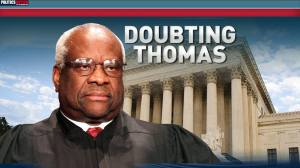
thomasThe Supreme Court issued its long awaited decision in Shelby County v. Holder was so disappointing and stalk reminder of days long past, which turned back the hands of time. 

In its decision, the Supreme Court effectively invalidated Section 4 of the landmark Voting Rights Act of 1965. As evidence of its negative impact; within hours of the ruling Texas immediately enacted a Voter ID law and rest assured many other states will revert back to their old ways denying millions of minorities, and African Americans in particular, the right to participate in America’s democracy.

I have seen and remember old Jim Crow and I am deeply troubled by the Supreme Court decision striking critical protections within the Voting Rights Act. In a 5-4 ruling, the Supreme Court struck Section 4, a provision which outlines the formula federal officials have used to determine which states must clear new voting laws with the Department of Justice. This decision ignores the persistence of discrimination in voting and weakens a vital tool that has protected the right to vote for all Americans for nearly 50 years.

Most of America knows that it was because of the Voting Rights Act that African American’s were afforded the right to vote; although not a permanent or guaranteed right to vote. Periodically it had to be reauthorized. I was one who thought there would be a president to come along and refuse to sign the reauthorization into law or a Congress such as the one we have today would take away that right. But on June 25, 2013 the Supreme Court of the United States proved me wrong by being the culprits that take affectively took that right away.

Let’s take a historical look at some history. In 1865, it was said that slavery was over meaning blacks were free. In thirty years, the Supreme Court of the 1890s ruled in the Plessy v Ferguson that ushered in government sanctioned segregation that lasted until 1965 when President Johnson signed into law a number of Civil Rights Bills including the Voting Rights Act shortly after Bloody Sunday. That means it took a hundred years for this so-called freedom to have some semblance of reality. In the last election we saw the evil forces at work with tricks and schemes to further the disenfranchise minorities, the poor and elderly their right to vote.

So many African American’s gave their lives and blood to obtain the right to vote. Justice Ruth Bader Ginsburg said, "Thanks to the Voting Rights Act, progress once the subject of a dream has been achieved and continues to be made." She went on to say "Hubris is a fit word for today's demolition of the Voting Rights Act.”

I must express my distain for the “Negro” justice on the bench because this guy sided with the majority and it is reported that he said he would like to remove the entire Voting Rights Act. Sir your collusion and opinion is a disgrace and you should be ashamed! Make no mistake what you helped them do, in my view, was done to ensure that there will never be another black president.

For the sake of our children’s future we must take a stand and not let this stand! And that’s my Thought Provoking Perspective…

I have to wonder if Uncle Thomas can remember this horrible event.


An explanation of what happened June 25, 2012

Saturday, February 16, 2013

The Case That Changed America


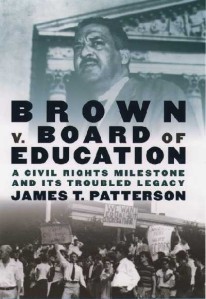
brown-v-board-of-educationOn May 17, 1954, the Warren Court’s unanimous (9-0) decision stated that “separate educational facilities are inherently unequal.” This was the day that the landmark Brown v Board of Education Supreme Court decision changed the face of America unlike any other decision before or since.

This major ruling was the cornerstone that laid the foundation for all of the civil rights African American’s know today, just as the late Thurgood Marshall, who brilliantly argued and won this case envisioned. It is also very appropriate to recognize the skillful talent of Justice Marshall for his more than fifty victories before the Supreme Court, more than any other attorney in history.

The Brown Case, as it is known, was not the first such case regarding civil rights argued before the Supreme Court. It was just the most significant of what some would say was the final battle in the courts that had been fought by African American parents since 1849, which started with Roberts v. City of Boston, Massachusetts. It is also important to note that Kansas was the site of eleven such cases spanning from 1881 to 1949.

The case was named after Oliver Brown one of 200 plaintiffs. The Brown case was initiated and organized by the National Association for the Advancement of Colored People (NAACP) leadership who recruited African American parents in Topeka, Kansas for a class action suit against the local school board. The Supreme Court combined five cases under the heading Brown v. Board of Education: Delaware, Kansas, South Carolina, Virginia, and the District of Columbia. The ultimate goal sought by the NAACP was to end the practice of “separate but equal” throughout every segment of society, including public transportation, dining facilities, public schools and all forms of public accommodations.

The Brown Supreme Court ruling determined racial segregation in public education was unconstitutional in Brown I, the first opinion. The court’s implementation mandated "with all deliberate speed" in 1955 known as Brown II. In 1979, twenty five years later, there was a Brown III because Topeka was not living up to the earlier Supreme Court ruling, which resulted in Topeka Public Schools building three magnet schools to comply with the court's findings.

As had been the case since Homer Plessy, the subject in Plessy v. Ferguson in 1896 when the U.S. Supreme Court decided that a Louisiana law mandating separate but equal accommodations for blacks and whites on intrastate railroads was constitutional. This decision provided the legal foundation to justify many other actions by state and local governments to socially separate blacks and whites.

Now that I have provided some history related to the case let me add my commentary. It has been said that as sure as things change they remain the same. First, it took 60 year to overturn Plessy with Brown and it took “with all deliberate speed” 13 years for integration to begin fully. During this period of time from 1954 to 1967, governors blocked school entrances and actually closed schools rather than comply with the law of the land. I am not going to touch on the violence that caused Presidents to send the US Army and National Guard troops to schools in order to protect the safety of those the ruling was intended benefit as a result of the Brown decision.

Since then, and over time, many scams have been devised to disenfranchise minorities and African Americans in particular. I need only remind you of “No Child Left Behind” where we see persistent patterns of underachievement for lower-income students on standardized test scores. These standardized tests serve as gatekeepers to a child's academic future, which I don’t believe was the spirit of the Brown case.

Malcolm X famously said, only a fool would allow his enemy to educate his people. Just think about the deplorable education system and the fact that most of what is taught, particularly when it comes to history, is a fallacy. Then consider the extremely high dropout rates among our children. For example, it has been reported that in the City of Baltimore more than two thirds of all students who enter high school do not graduate.

After fifty-five years, it is not unreasonable to seek and ask that the spirit of Brown be honored with effective and meaningful equal rights under the law. I understand that public education was not created to develop minds rather it was intended to simply teach reading, writing, and arithmetic. It was created to maintain a permanent underclass. Much like it was then, a travesty, in many ways it remains a travesty for the children in most Urban Public School System’s.

I, like Dr. King believe in the dream but we have unfinished business and as it stands - it is a dream deferred. That’s why it is imperative for us to celebrate this milestone and continue the struggle as the ghosts of so many greats who died for this principle: “education is the single most important ingredient necessary to neutralize those forces that breed poverty and despair”.

And that’s my Thought Provoking Perspective…


Saturday, August 11, 2012

Twenty First Century Slavery


I suppose everyone has an opinion on the prison system and incarceration. Some view it as the New Jim Crow and of course there are others who see nothing is wrong with the system at all. My view is that it makes you wonder about the fairness received by some, namely minorities, whether it works for those unable to afford justice and I think everyone will agree that it is a cash cow.

As it is report in news reports daily people are released after spending years incarcerated for crimes they did not commit. Then, there is the sad irony of people being put to death who may fall into this category and more shameful; executions of the mentally disabled and life sentences for minors. In addition, there is the fact that once released the convicts voting rights are taken away forever - in most cases.

There is a long history of lynching’s, chain gangs, and the free labor derived from this system in this country. It was not until recently that the disproportionate sentencing in crimes such as cocaine and crack clearly was unfair! Let me say again that it is not my position that laws and punishment is not necessary. What is disparaging is that it disproportionately affects the minority population of the citizenry.

I read an article recently where a Vermont man is suing the state under the 13th Amendment for the labor he was forced to perform while awaiting trial. A one-time grad student, Finbar McGarry, was arrested for allegedly firing a gun in his home and threatening to kill his family and an official at the university. In a lawsuit McGrarry alleges that the state violated his rights under the 13th Amendment -- which abolished slavery and involuntary servitude after the Civil War -- when he was forced to work in the laundry for minimal pay as an inmate.

In his $11-million lawsuit pro se, said he was forced to work three days a week for six weeks washing other inmates' laundry. He was paid a wage of 25 cents per hour and developed a bacterial infection on his neck because he was not provided sanitation in the laundry room. He says, prison officials threatened to put him "in the hole," where inmates are shackled and locked up for 23 hours per day in solitary confinement, if he refused to work.

Portions of the following was reported by Alon Harish and Alexis Shaw for ABC.

It is important to note that McGarry was released in June 2009, and all charges against him were dropped. McGarry's anti-slavery case was thrown out in November 2009 by a federal court in Brattleboro, Vt. In his opinion, U.S. Magistrate Judge John Conroy wrote that McGarry's 13th Amendment claim was without merit because his laundry work "was nothing like the slavery that gave rise to the enactment of that amendment."

But on Friday, a panel of judges from the U.S. Court of Appeals for the Second Circuit overruled the lower court's dismissal of the case, arguing that McGarry did not have to prove that his experience was akin those of African slaves before abolition.

"Contrary to the district court's conclusion, it is well-settled that the term 'involuntary servitude' is not limited to chattel slavery-like conditions," appellate judge Barrington Parker wrote in the court's opinion. "The amendment was intended to prohibit all forms of involuntary labor, not solely to abolish chattel slavery." Supreme Court precedent has established that the constitutional rights of pretrial detainees are distinct from those of convicted inmates, because criminal convictions can justify certain punishments, Parker argued.

The appellate panel remanded McGarry's case to the district court, where he will get a new trial. The state has 90 days to appeal the panel's ruling to the U.S. Supreme Court. "If you haven't been convicted at all, your pretrial detention is not a form of punishment," said Columbia Law School professor Jamal Greene. "The degree to which his liberty can be restricted is directly tied to the needs that required him to be detained. So if he was detained only to secure himself for trial, he can't be detained for punishment."

McGarry pointed to a 1986 policy under which the department developed employment programs designed to help inmates gain employable skills and reduce the cost of incarceration. The policy did not distinguish between convicts and pretrial detainees.

"At that facility, that's what was happening. It was a 'rehabilitative' labor policy, and all inmates were expected to participate in it," he said. "It was a practice that affected a lot of pretrial detainees."
In a separate lawsuit he filed while he was in jail, McGarry's chief concern was not the Constitution; it was getting injunctive relief to prevent the state from forcing him to do more labor. During his 14-hour shifts, he said, he was unable to contact his public defender, causing him to fear that his case would not be handled properly.

While all inmates may be expected to clean up their cells or wipe down tables in the mess hall, Greene said, the poorly paid, unsafe work McGarry alleged he was forced to do may have crossed a legal boundary.

Did you know the clothing worn by our soldiers are made by the cheap labor of the incarcerated? In closing, let me suggest that you read Michelle Alexander’s book “The New Jim Crow”. And that’s my Thought Provoking Perspective…


On Wednesday, September 5th at 8:00 PM (EST), The Book Tree Radio Show is pleased to announce its re-launch on BlogTalkRadio!

Saturday, July 14, 2012

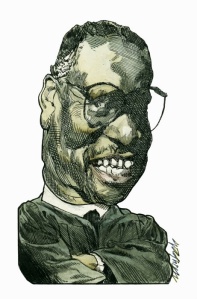
Oh Clearance!


During that God awful period of American history, which has been sanitized from the mind of today, when slavery was the law of the land there was an arrangement where African Americans were divided in two groups: – “House-Negros (I never use the N-Word but you get the point) and Field-Negros”. That same can be said of some in our community today!

For these who might not understand, let me explain:

“The house Negro, they lived in the house, with master. They dressed pretty good. They ate good, cause they ate his food, what he left. They lived in the attic or the basement, but still they lived near their master, and they loved their master, more than their master loved himself. They would give their life to save their masters house quicker than their master would. The house Negro, if the master said "we got a good house here" the house Negro say "yeah, we got a good house here". Whenever the master would said, we, he'd say we. That's how you can tell a house Negro.
If the master's house caught on fire, the house Negro would fight harder to put the blaze out than the master would. If the master got sick, the house Negro would say "What's the matter, boss, we sick?" We sick! He identified himself with his master, more than the master identified with himself. And if you came to the house Negro and said "Let's run away, Let's escape, Let's separate" the house Negro would look at you and say "Man, you crazy.
What you mean separate? Where is there a better house than this? Where can I wear better clothes than this? Where can I eat better food than this?" There was that house Negro. In those days, he was called a house nigger. And that's what we call him today, because we still got some house niggers runnin around here. This modern house Negro loves his master. He wants to live near him. He'll pay three times as much as the house is worth just to live near his master, and then brag about I'm the only negro out here.”
There are many who fall into this category but I am saddened by one in particular. I said sadden but not surprised by the actions of Clearance Thomas as he voted once again against the interest of African Americans. He is widely regarded as the most conservative member of a conservative dominated Supreme Court and far more conservative than Hugo Black, a former member of the Ku Klux Klan who served on the court from 1937-1971.

Black, a former U.S. Senator from Alabama once filibustered an anti-lynching bill and joined the KKK in the early 1920s. In fact, during the 1926 election, he gave speeches at KKK meetings throughout the state. But Black later redeemed himself by acknowledging that joining the Klan was a mistake and became one of the most liberal members of the Supreme Court, strongly backing the principle of "one man, one vote" and using the equal protection clause of the 14th Amendment to forbid racial discrimination.
“The field Negro, those were the masses. There was always more Negros in the field as there were Negros in the house. There Negro in the field caught hell. He ate leftovers. In the house, they ate high up on the hog. The Negro in the field didn't get nothing but what was left in the insides of the hog. They call them chit'lins nowadays. In those days, they called them what they were, guts! That's what you were a gut-eater. And some of you are still gut-eaters.
The field Negro was beaten, from morning til night. He lived in a shack, in a hut. He wore cast-off clothes. He hated his master. I say, he hated his master. He was intelligent. That house Negro loved his master. But that field Negro, remember, they were in the majority, and they hated their master. When the house caught on fire, he didn't try to put it out, that field Negro prayed for a wind. For a breeze.
When the master got sick, the field Negro prayed that he died. If someone come to the field Negro and said lets separate, let's run. He didn't say Where we going? He said any place is better than here". We got field Negros in America today. I'm a field Negro. The masses are the field Negros. When they see this man’s house on fire, we don't hear these little Negros talkin bout "Our Government is in trouble. They say thee Government is in trouble. Imagine a Negro, "Our Government".
The same ol slave master today has Negros who are nothing but modern Uncle Toms - 20th century Uncle Toms to keep you and me in check. Keep us under control. Keep us passive and peaceful… That's Tom making you nonviolent. It's like when you go to the dentist and the man is going to take your tooth. You're going to fight him when he starts pulling. So they squirt some stuff in your jaw called Novocain, to make you think they’re not doing anything to you. So you sit there and because you got all that Novocain in your jaw, you suffer peacefully. ahahaha.”
Some of us understand that we are that which is referred to as the “permanent underclass”. But when you can effect change and chose not to - it is simply a disgrace. In every major case that could represent justice for the least of thee - this guy voted against those interests. What makes that so strange is that Thomas, who reminds me of my uncle whose name is Tom, has benefited from affirmative action throughout his adult life. To characterize Thomas' behavior as resentment is an understatement.

Let me quote the late U.S. Appeals Court Judge Leon Higginbotham who said of Thomas, "I have often pondered how is it that Justice Thomas, an African-American, could be so insensitive to the plight of the powerless. Why is he no different, or probably worse, than many of the most conservative Supreme Court justices of the century? I can only think of one Supreme Court justice during the century who was worse than Justice Clarence Thomas: James McReynolds, a white supremacist who referred to blacks as 'niggers.'" This is a sad commentary!

I only talked about one such house-negro but there are more, and you know who they are! And that’s my Thought Provoking Perspective…


Legacy – A New Season the sequel is now available on Kindle with the hard copy released July 20th.http://www.amazon.com/dp/B008HJRPE0

Thursday, June 28, 2012

The Best Reason To Reelect Obama


Sanity prevailed today as the Supreme Court of the United States (SCOTUS) let stand what is known as Obama-care. This is a great day for us all. Now, the more important question in my mind is the age of SCOTUS. I guess I should qualify the phrase United States by saying the States are not all that united considering the state of our political divide.

I read an interesting article by Sheryl Gay Stolberg of the New York Times who quoted Justice Ruth Bader Ginsburg, known for delivering laugh lines, recalled how Justice Elena Kagan, 52, had suggested during an oral argument before the Supreme Court that people born before 1948 were old. Justice Ginsburg said, “Next year I will turn 80, God willing… I’m not all that old”.

This speaks to the current state of the Court. Justice Ginsburg is the eldest member of a court that includes four justices in their 70s, making it among the oldest courts since the New Deal era. Its decisions during this historic “flood season,” as Justice Ginsburg described the end-of-term rush, are likely to make the panel — and the tenure of some of the justices — a significant issue in the presidential campaign. This is the most significant reason to reelect President Obama because “If she dies or leaves soon and Romney wins, the Supreme Court will be the most conservative in history.”

Today, the court is announced its decision on President Obama’s health care law, one of the most consequential cases in decades, with an overwhelming affirmation – it stands. As good as this decision is for the president and the American people – it is not over yet. There is another major case looming this fall, the court will take on an affirmative action case that could end preferential treatment at public universities, and it might hear a case involving same-sex marriage.

The winner of the race for president will inherit a group of justices who frequently split 5 to 4 along ideological lines. That suggests that the next president could have a powerful impact if he gets to replace a justice of the opposing side.

It is, of course, impossible to predict when a vacancy will occur. (Justice John Paul Stevens spent 35 years on the court and retired at 90, while Justice Robert H. Jackson, who served in the 1940s and 1950s, died of a heart attack at 62.) A 2006 study in the Harvard Journal of Law and Public Policy found that the average retirement age for justices was 78.7.

Justice Ginsburg, a stalwart of the court’s liberal bloc, has been treated for pancreatic cancer. Justice Antonin Scalia, the court’s most visible conservative, is 76. Justice Anthony M. Kennedy, frequently the swing vote, is 75. And Justice Stephen G. Breyer, like Justice Ginsburg a Democratic appointee, is about to turn 74.

The New York Times provocative article mentioned an interview with Professor Kennedy who said the suggestion that a justice should retire for purely political reasons was “viewed as somewhat unseemly” by many of his colleagues. Those close to Justice Ginsburg say that while she may appear frail, she is in fact in good health.

Of course, Justices leave for a variety of reasons. Sandra Day O’Connor, for instance, left the court at 75 to take care of her husband. Professor Kennedy insists it was “not accidental” that, having been appointed by Ronald Reagan, a Republican, she resigned while George W. Bush was president.

What I want to leave you with is that the next president will have the opportunity to appoint at least two, maybe three, Justices. Only Obama will appoint sanity or dare I say Justices who will have the American people at heart. So this is the best reason to vote, and for the president. And that’s my Thought Provoking Perspective…

http://johntwills.com


Tuesday, June 26, 2012

The Court Got It Right!!!


Yesterday, the Supreme Court threw out most of the anti-Latino Arizona immigration law and neutered the rest, which was frankly a surprise to me considering the make-up of this gang. To their credit in this instance they did strike a blow for fairness and this ever elusive thing called justice. Being an African American I have seen and know bigotry firsthand so I think this qualifies me to have an opinion with respect to what this law would do if allowed to stand as the law of the land.

Of course, we now wait for the biggest decision of our lifetime – the healthcare decision. I hope Chief Justice Roberts Jr., who by the way sided with the 5 to 3 majority in immigration law remains sane and takes the position of the liberal Justices on the bench when deciding the healthcare issue. The American people could use his vote when it is rendered and expected to be announced Thursday.

This was a huge victory for justice although they did not eliminate the most notorious part of the Arizona law, which was the requirement that police can check the immigration status of anyone who is detained. This is the part known as the “papers, please” that conjures images of a police-state in my mind that could easily be expanded to include other minorities like us or just us. I can recall there was a time when such laws pertained to black people – they were called Black Codes.

However, it appears that the court had this in mind as it wrote “This opinion does not foreclose other preemption and constitutional challenges to the law as interpreted and applied after it goes into effect”. Which sounds like - we’ll be watching closely. Thankfully most of the less publicized but equally onerous and un-American provisions are now history.

More importantly, the court’s reinforcement of the main tenet was that the federal government has the responsibility for setting immigration policy, not the states. We do not need — and, thanks to this ruling, will not have — 50 sets of laws specifying who gets to live in this country and who doesn’t. This would open the floodgates to bigotry. Like I said, I have seen this before and not too long ago.

This law had another more ominous design, which would have, if sustained,  make it a state crime for anyone who failed to have proper immigration papers; in other words, failing to produce the right documents when asked could have subjected a person not just to deportation but to criminal penalties. The court ruled that this was preempted by federal law, which imposes no such sanctions.

The danger here is this as it relates to the so called “papers please law” it gives police broad authority to arrest anyone — without a warrant — suspected of some “public offense” that makes the person liable to deportation. The court recognized, and rightfully so, that this is a license for police to arrest suspected illegal immigrants indiscriminately, based solely on the possibility that they might be here without the proper documents. Keep in mind the “Arizona ”.

As the court noted in striking down this provision, “The result could be unnecessary harassment of some aliens (for instance, a veteran, college student, or someone assisting with a criminal investigation) whom federal officials determine should not be removed.” Need I say this is what African Americans have been saying all along – we call it “racial profiling”.

Thanks to Justice Anthony M. Kennedy who wrote the majority opinion for pointing out something that many who seek to participate in the immigration debate fail to understand: “As a general rule, it is not a crime for a removable alien to remain present in the United States.” I think he was right to say it’s not a crime for “illegal” immigrants to live and work here without the proper documents. By “here” I mean all 50 states. The United States is one country with one immigration policy, and the Supreme Court means to keep it this way.

In closing, until the healthcare verdict, let me ask you to recall not too long ago this state was the last to recognize Dr. Martin Luther King’s birthday as a holiday.  Therefore I say, Arizona’s thinking – draconian! VOTE!!! And that’s my Thought Provoking Perspective…

http://johntwills.com

Friday, May 4, 2012

WHEN THE WORLD CHANGED FOREVER


On May 17, 1954, the Warren Court’s unanimous (9-0) decision stated that “separate educational facilities are inherently unequal.” This was the day of the landmark Brown v Board of Education Supreme Court decision that changed the face of America unlike any other decision before or since.


It was the cornerstone that laid the foundation for all of the civil rights African American’s know today, just as the late Thurgood Marshall, who brilliantly argued and won this case envisioned. It is also very appropriate to recognize the skillful talent of Justice Marshall for his more than fifty victories before the Supreme Court, more than any other attorney in history.

The Brown case, as it is known, was not the first such case regarding civil rights argued before the Supreme Court. It was just the most significant of what some would say was the final battle in the courts that had been fought by African American parents since 1849 with Roberts v. City of Boston, Massachusetts. It is also important to note that Kansas was the site of eleven such cases spanning from 1881 to 1949.

The case was named after Oliver Brown one of 200 plaintiffs. The Brown case was initiated and organized by the National Association for the Advancement of Colored People (NAACP) leadership who recruited African American parents in Topeka, Kansas for a class action suit against the local school board. The Supreme Court combined five cases under the heading Brown v. Board of Education: Delaware, Kansas, South Carolina, Virginia, and the District of Columbia. The ultimate goal sought by the NAACP was to end the practice of “separate but equal” throughout every segment of society, including public transportation, dining facilities, public schools and all forms of public accommodations.

The Brown Supreme Court ruling determined racial segregation in public education was unconstitutional in Brown I, the first opinion. The court’s implementation mandated "with all deliberate speed" in 1955 was known as Brown II. In 1979, twenty five years later, there was a Brown III because Topeka was not living up to the earlier Supreme Court ruling, which resulted in Topeka Public Schools building three magnet schools to comply with the court's findings.

As had been the case since Homer Plessy, the subject in Plessy v. Ferguson in 1896 when the U.S. Supreme Court decided that a Louisiana law mandating separate but equal accommodations for blacks and whites on intrastate railroads was constitutional. This decision provided the legal foundation to justify many other actions by state and local governments to socially separate blacks and whites.

Now that I have provided some history related to the case let me add my commentary. It has been said that as sure as things change they remain the same. First, it took 60 year to overturn Plessy with Brown and it took “with all deliberate speed” 13 years for integration to begin fully. During the period from 1954 to 1967, governors blocked school entrances and actually closed schools rather than comply with the law of the land. I am not going to touch on the violence that caused Presidents to send the US Army and National Guard troops to schools in order to protect the safety of those the ruling was intended benefit as a result of the Brown decision.

Since then, and over time, many scams have been devised to disenfranchise minorities and African Americans in particular. I need only remind you of “No Child Left Behind” where we see persistent patterns of underachievement for lower-income students on standardized test scores. These standardized tests serve as gatekeepers to a child's academic future, which I don’t believe was the spirit of the Brown case.

This brings us to where we are today concerning the inequity that still exists. For example in Washington DC the capital of the free world with its minority public school student population of about 95% (all minorities included) suggests that schools are equally as segregated, poorly funded, and there dilapidated facilities equate to pre Brown V Board era schools. The police presence that exists today unlike then serves to save, often times, the students from themselves. About three-fourths of elementary students are poor enough to qualify for free or reduced-price lunches. The dropout rate averages 2 to 1. These are just a few issues that by any measure of academic standards or common sense suggest failure.

The Quality Counts Report, a publication from Editorial Projects in Education, which publishes the trade magazine Education Week, rated the 50 states and the District in six areas of educational performance and policy. Washington schools were ranked 51st  in the report, but the lead researcher said that Washington is more comparable to large cities than to states, which have a mix of struggling urban and higher-performing suburban and rural schools. Like school districts in most large cities, Washington schools are severely challenged with daunting problems with the most serious being a large population of students from poor families living in troubled neighborhoods.

After fifty-five years, it is not unreasonable to seek and ask that the spirit of Brown rest in the city where the decision was rendered into law. I understand that public education was not created to develop minds rather it was intended to simply teach reading, writing, and arithmetic. It was created to maintain a permanent underclass. Much like it was then, a travesty, in many ways it remains a travesty for the children in most Urban Public School System’s particularly in the city that is supposed to be the beacon of freedom around the world.

I, like Dr. King believe in the dream but we have unfinished business and as it stands - it is a dream deferred. I ask that we open our eyes and continue the struggle as the ghosts of so many greats died for this principle: “education is the single most important ingredient necessary to neutralize those forces that breed poverty and despair”.

And that’s my Thought Provoking Perspective…

Legacy – A New Season will be released June 15, 2012


Saturday, April 14, 2012

This Court!!!

The Supreme Court is shaping up to be very significant in terms of issues involving race, at least the way I see this session. The justices are poised to decide some high-profile cases that could have long-term effects and certainly a huge impact on African and Hispanic Americans.

This is very serious because Ray Charles can see that the Roberts court is more conservative than any of its recent predecessor which surely does not bode well for minorities. Can I remind you that they do wear robes, which are more dangerous than the folks who wear the white ones.

Their decisions will have a huge impact on the president who suddenly finds himself running for reelection not only against Mitt Romney and the House Republicans, but now against the Court as well. The influence of the four conservative justices has already been witnessed in the January decision on Texas' redistricting maps.

The big thing before them is the future of Healthcare, which is critical but there is another hot-button issue - anti-immigration laws. The top court will hear oral arguments April 25 on the Obama administration's challenge to Arizona's controversial law. The administration says such laws are irreconcilable with federal laws. Should the court uphold Arizona's law, Latinos would feel the effects nationwide as other state will surely follow with more to do the same.

More serious, in my opinion, is the court's ideological shift on affirmative action in an upcoming case that could undo the compromise reached in Grutter v. Bollinger. That 2003 ruling barred public colleges from using a point system to boost minority enrollment, but allowed race to be taken into account to achieve academic diversity. Justice Sandra Day O'Connor, a key swing vote, wrote the majority opinion is not there this time and her replacement, Justice Samuel Alito, reflects the court's extreme rightward turn.

Another indication is that Robert’s made this statement that should provide some insight to his thinking: "The way to stop discrimination on the basis of race is to stop discriminating on the basis of race". He wrote this regarding a 2007 decision striking down school desegregation programs in Seattle and Kentucky. If the issues of race and education or poverty were that simple!

The way this court has rendered decisions harkened back to a time I thought was long past. Maybe you can remember the Dread Scott Decision during slavery or Plessey v Ferguson which ushered in what history has recorded as “Separate but Equal”. If that does not ring a bell how about calling it as it was –Apartheid American style.

I am going to go out on a limb and say the fate of Obamacare is not as dire as it appears at this moment. I think it is possible, even likely, that the Court will uphold part if not all of the legislation because the Court is keenly aware of public opinion and hopeful still has a bit of sanity. With the public’s trust of the judicial branch tying a historic low of 63 percent, down thirteen points from just two years ago, it’s doubtful that Roberts—who has wanted to be seen as an impartial “umpire”—would choose to imperil that trust even further with a ruling that would place the Court squarely in the election-season crossfire.

Overturning Obamacare would be a political decision but this is the court that thinks – corporations are people. With that said, the other two issues – all bets are off! And that’s my Thought Provoking Perspective…

Monday, June 6, 2011

A Day Worth Remembering


I really enjoy using this venue to share information, particularly that which relates to the African American Diaspora. It has often been said, “There are no perfect men, only those with perfect intentions”. This could very well apply to Homer Adolphe Plessy, which brings me to the topic of this post.

Tuesday is the anniversary of Homer Plessy’s decision to buy a railroad ticket for a train trip from New Orleans to Covington, which is on the other side of Lake Pontchartrain. I wanted to share this in order to highlight the significance of that fateful day because it resulted in a national policy of segregation that became known as “Separate but Equal” that lasted as the law of the land for over sixty years.

It was a setup from the start says New Orleans historian Keith Weldon Medley in his book “We as Freemen” who describes how the Comite des Citoyens (Committee of Citizens), an organization of freemen of color, planned the legal strategy for more than a year. They meant to challenge the segregation law using the post-Civil War 14th Amendment’s equal-protection clause.

Plessy, a shoemaker from the Treme neighborhood, volunteered for the job and was the perfect candidate. Seven-eighths white, he was “colored” in the eyes of the law. He bought a first-class ticket, sat in the white rail car and when asked to leave, he answered that he was colored, refused to leave and was arrested by a private detective. It had all been worked out in advance.

Homer Plessy’s paternal grandfather was Germain Plessy, a white Frenchman, arrived in New Orleans with thousands of other Haitian expatriates who fled Haiti in the wake of the slave rebellion led by Toussaint L'Ouverture that wrested Haiti from Napoleon in the 1790’s. Homer Plessy was born less than three months after the issuance of Abraham Lincoln’s Emancipation Proclamation. The New Orleans city directory from 1886-1924 listed his occupations as shoemaker, laborer, clerk, and insurance agent.

As a young man, Plessy displayed a social awareness and served as vice president of an 1880’s educational-reform group. At age thirty, shoemaker Homer Plessy was younger than most members of the Comité des Citoyens. His only attribute to this effort was being white enough to gain access to the train and black enough to be arrested for doing so. He volunteered for a mission rife with unpredictable consequences and backlashes. This shoemaker sought to make an impact on society that was larger than simply making its shoes. When Plessy was a young boy, his stepfather was a signatory to the 1873 Unification Movement—an effort to establish principles of equality in Louisiana.

The Comité des Citoyens ("Citizens' Committee") was a civil rights group made up of African Americans, whites, and Creoles. The committee vigorously opposed the recently enacted Separate Car Act and other segregation laws. They retained a white New York City attorney, Albion Winegar Tourgée, who had previously fought for the rights of African Americans.

In 1892, the Citizens’ Committee asked Plessy to agree to violate Louisiana's Separate Car law that required the segregation of passenger trains by race. On June 7, 1892, Plessy, then thirty years old and resembling in skin color and physical features a white male, bought a first-class ticket on the East Louisiana Railroad running between New Orleans and Covington, the seat of St. Tammany Parish. He sat in the "whites-only" passenger car. When the conductor came to collect his ticket, Plessy told him that he was 7/8 white and that he refused to sit in the "blacks-only" car. Plessy was immediately arrested by Detective Chris C. Cain, put into the Orleans Parish jail, and released the next day on a $500 bond.

Plessy's case was heard before Judge John Howard Ferguson one month after his arrest. Tourgée argued that Plessy's civil rights, as granted by the Thirteenth and Fourteenth amendments of the U.S. Constitution, had been violated. Ferguson denied this argument and ruled that Louisiana, under state law, had the power to set rules that regulated railroad business within its borders speaking to what segregationist call “States Rights”.

The Louisiana State Supreme Court affirmed Ferguson’s ruling and refused to grant a rehearing, but did allow a petition for writ of error. This petition was accepted by the United States Supreme Court and four years later, in April 1896, arguments for Plessy v. Ferguson began. Tourgée argued that the state of Louisiana had violated the Thirteenth Amendment, that granted freedom to the slaves, and the Fourteenth Amendment, that stated, "no state shall make or enforce any law which shall abridge the privileges or immunities of citizens of the United States; nor shall any state deprive any person of life, liberty, and property, without due process of law."

On May 18, 1896, Justice Henry Billings Brown delivered the majority opinion in favor of the State of Louisiana. In part, the opinion read, "The object of the Fourteenth Amendment was undoubtedly to enforce the absolute equality of the two races before the law, but in the nature of things it could not have been intended to abolish distinctions based on color, or to enforce social, as distinguished from political equality, or a commingling of the two races upon terms unsatisfactory to the either. ... If the two races are to meet upon terms of social equality, it must be the result of voluntary consent of the individuals."

The lone dissenting vote was cast by Justice John Marshall Harlan, a Kentucky Republican. In his dissenting opinion, the first Justice Harlan wrote: "I am of opinion that the statute of Louisiana is inconsistent with the personal liberty of citizens, white and black, in that state and hostile to both the spirit and letter of the Constitution of the United States."

The "Separate but Equal" doctrine, enshrined by the Plessy ruling, remained valid until 1954, when it was overturned by the Supreme Court decision in Brown v. Board of Education and later outlawed completely by the federal Civil Rights Act of 1964. Though the Plessy case did not involve education, it formed the legal basis of separate school systems for the following fifty-eight years.

After the Supreme Court ruling, Plessy faded back into relative anonymity. He fathered children, continued to participate in the religious and social life of his community, and later sold and collected insurance for the People’s Life Insurance Company. Plessy died in 1925 at the age of sixty-one, with his obituary reading, "Homer Plessy — on Sunday, March 1, 1925, at 5:10 a.m. beloved husband of Louise Bordenave." He was buried in the Debergue-Blanco family tomb in St. Louis Cemetery #1.

Know and understand where you came for in order to know where you are going. History often repeats itself and with the makeup of today’s Supreme Court who knows what might develop. And that’s my Thought Provoking Perspective…

Wednesday, June 2, 2010

The New Miranda Rules


The Supreme Court ruled Tuesday that criminal suspects should speak up if they want to preserve their right to remain silent. This is a stunning shift concerning the latest test of the court's famous Miranda rule and shifts the burden to suspects to invoke their right to refuse questioning. If we can go back to 1966 and remember why the original decision was rendered, it is hard to understand the court’s reasoning today. When we consider law enforcement practices prior Miranda it was necessary for the court to require law enforcement to make what became known as the Miranda rights part of routine police procedures to ensure that suspects were informed of their rights. This decision is widely viewed as a huge setback to citizen’s rights.

This is a drastic shift from the spirit of the 1966 law that says; “statements made in response to interrogation by a defendant in police custody will be admissible at trial only if the prosecution can show that the defendant was informed of the right to consult with an attorney before and during questioning and of the right against self-incrimination prior to questioning by police, and that the defendant not only understood these rights, but voluntarily waived them”.

The newest member of the court, Justice Sotomayor wrote in her dissenting opinion that "Today's decision turns Miranda upside down," while accusing the majority of casting aside judicial restraint. "Criminal suspects must now unambiguously invoke their right to remain silent … which, counter intuitively, requires them to speak. At the same time, suspects will be legally presumed to have waived their rights even if they have given no clear expression of their intent to do so."

Justice Sotomayor, a former prosecutor who some had speculated might be less protective of the rights of suspects than other liberals on the court, called the decision "a substantial retreat from the protection against compelled self-incrimination." She was joined by Justices John Paul Stevens, Ruth Bader Ginsburg and Stephen G. Breyer. Justice Anthony M. Kennedy who wrote for the majority said, "Where the prosecution shows that a Miranda warning was given and that it was understood by the accused, an accused's uncoerced statement establishes an implied waiver of the right to remain silent.” Kennedy was joined, of course, by Chief Justice John G. Roberts Jr. and Justices Antonin Scalia, Clarence Thomas and Samuel A. Alito Jr.

A little history about the landmark Miranda v. Arizona 384 U.S. 436 (1966) case with its 5–4 decision of the 1966 Court, which revolutionized the way the nation's police departments were required to interrogate arrested persons by informing a suspect of their rights under the ruling, termed a Miranda warning. The Miranda decision was widely criticized when it came down, as many felt it was unfair to inform suspected criminals of their rights, as outlined in the decision.

President Nixon and many conservatives denounced Miranda for undermining the efficiency of the police arguing that the ruling would contribute to an increase in crime. Nixon, upon becoming President, promised to appoint judges who would be “strict constructionists” and who would exercise judicial restraint. Many supporters of law enforcement were angered by the decision's negative view of police officers. The federal Omnibus Crime Control and Safe Streets Act of 1968 purported to overrule Miranda for federal criminal cases and restore the "totality of the circumstances" test that had prevailed prior to Miranda.

The validity of this provision of the law, which is still codified at 18 U.S. Code 3501, was not ruled on for another 30 years because the Justice Department never attempted to rely on it to support the introduction of a confession into evidence at any criminal trial. Miranda was undermined by several subsequent decisions which seemed to grant several exceptions to the "Miranda warnings," undermining its claim to be a necessary corollary of the Fifth Amendment.

In this case the court ruled 5 to 4 that a Michigan defendant who incriminated himself in a fatal shooting by saying one word after nearly three hours of questioning had given up his right to silence, and that the statement could be used against him at trial. In the case before the court, suspect Van Chester Thompkins was read his rights and, at police request, repeated some of them out loud. But he did not sign an offered waiver of the right, and he did not acknowledge that he was willing to talk. Nor did he say that he wanted the questioning to stop.

Detectives persisted in what one called mostly a "monologue" for about two hours and 45 minutes, until one asked Thompkins whether he believed in God. Then a follow up question - "Do you pray to God to forgive you for shooting that boy down?" Thompkins answered "Yes" and looked away. The statement was used against him, along with other testimony, and Thompkins was convicted of killing Samuel Morris outside a strip mall in Southfield, Mich.

The U.S. Court of Appeals for the 6th Circuit said that Thompkins's prolonged silence "offered a clear and unequivocal message to the officers that Thompkins did not wish to waive his rights." "The fact that Thompkins made a statement about three hours after receiving a Miranda warning does not overcome the fact that he engaged in a course of conduct indicating waiver." Today the conservative arm of the Supreme Court disagreed making the case a president and now law. This decision, I believe will have a far reaching dangerous impact on a society that is becoming largely more diverse.

I am not a lawyer but I was around prior to the 1966 ruling and I will tell you that there was significant reason to establish that law because of what police departments were able to do to suspects in custody, and get away with it. So I would encourage you to advise you children and young people how to conduct themselves once they have been detained by police, and to be aware yourself that anything you say can and will be used against you.

The John T. Wills Chronicles

Monday, February 15, 2010

Brown v Board of Education – Changed the Face of America

On May 17, 1954, the Warren Court’s unanimous (9-0) decision stated that “separate educational facilities are inherently unequal.” This was the day that the landmark Brown v Board of Education Supreme Court decision changed the face of America unlike any other decision before or since. It was the cornerstone that laid the foundation for all of the civil rights African American’s know today, just as the late Thurgood Marshall, who brilliantly argued and won this case envisioned. It is also very appropriate to recognize the skillful talent of Justice Marshall for his more than fifty victories before the Supreme Court, more than any other attorney in history.

The Brown case, as it is known, was not the first such case regarding civil rights argued before the Supreme Court. It was just the most significant of what some would say was the final battle in the courts that had been fought by African American parents since 1849, which started with Roberts v. City of Boston, Massachusetts. It is also important to note that Kansas was the site of eleven such cases spanning from 1881 to 1949.

The case was named after Oliver Brown one of 200 plaintiffs. The Brown case was initiated and organized by the National Association for the Advancement of Colored People (NAACP) leadership who recruited African American parents in Topeka, Kansas for a class action suit against the local school board. The Supreme Court combined five cases under the heading Brown v. Board of Education: Delaware, Kansas, South Carolina, Virginia, and the District of Columbia. The ultimate goal sought by the NAACP was to end the practice of “separate but equal” throughout every segment of society, including public transportation, dining facilities, public schools and all forms of public accommodations.

The Brown Supreme Court ruling determined racial segregation in public education was unconstitutional in Brown I, the first opinion. The court’s implementation mandated "with all deliberate speed" in 1955 known as Brown II. In 1979, twenty five years later, there was a Brown III because Topeka was not living up to the earlier Supreme Court ruling, which resulted in Topeka Public Schools building three magnet schools to comply with the court's findings.

As had been the case since Homer Plessy, the subject in Plessy v. Ferguson in 1896 when the U.S. Supreme Court decided that a Louisiana law mandating separate but equal accommodations for blacks and whites on intrastate railroads was constitutional. This decision provided the legal foundation to justify many other actions by state and local governments to socially separate blacks and whites.

Now that I have provided some history related to the case let me add my commentary. It has been said that as sure as things change they remain the same. First, it took 60 year to overturn Plessy with Brown and it took “with all deliberate speed” 13 years for integration to begin fully. During this period of time from 1954 to 1967, governors blocked school entrances and actually closed schools rather than comply with the law of the land. I am not going to touch on the violence that caused Presidents to send the US Army and National Guard troops to schools in order to protect the safety of those the ruling was intended benefit as a result of the Brown decision.

Since then, and over time, many scams have been devised to disenfranchise minorities, and African Americans in particular. I need only remind you of “No Child Left Behind” where we see persistent patterns of underachievement for lower-income students on standardized test scores. These standardized tests serve as gatekeepers to a child's academic future, which I don’t believe was the spirit of the Brown case.

This brings us to where we are today concerning the inequity that still exists. For example in Washington DC the capital of the free world with its minority public school student population of about 95% (all minorities included) suggests that schools are equally as segregated, poorly funded, and there dilapidated facilities equate to pre Brown V Board era schools. The police presence that exists today unlike then serves to save, often times, the students from themselves. About three-fourths of elementary students are poor enough to qualify for free or reduced-price lunches. The dropout rate averages 2 to 1. These are just a few issues that by any measure of academic standards or common sense suggest failure.

The Quality Counts Report, a publication from Editorial Projects in Education, which publishes the trade magazine Education Week, rated the 50 states and the District in six areas of educational performance and policy. Washington schools were ranked 51st in the report, but the lead researcher said that Washington is more comparable to large cities than to states, which have a mix of struggling urban and higher-performing suburban and rural schools. Like school districts in most large cities, Washington schools are severely challenged with daunting problems with the most serious being a large population of students from poor families living in troubled neighborhoods.

To address these issues Mayor Adrian Fenty appointed Chancellor Michelle Rhee in 2007 to be the seventh person to lead the District of Columbia Public Schools System in a decade. This is a school district serving more than 47,000 students in 123 schools. Chancellor Rhee has made great strides in overcoming a combination of a low-performing schools and a system with an unimpressive history of policymaking that has generally not received better than a D-plus.

Under the leadership of Chancellor Rhee, the public school system has made some progress in addressing these issues. But here tenure not unlike her predecessor’s has been marked with much adversity. I choose this school district as an example but I dare say must school districts with predominately minority populations endure the same daunting challenges, which begs the question as sure as thing change they remain the same.

After fifty-five years, it is not unreasonable to seek and ask that the spirit of Brown rest in the city where the decision was rendered into law. I understand that public education was not created to develop minds rather it was intended to simply teach reading, writing, and arithmetic. It was created to maintain a permanent underclass. Much like it was then, a travesty, in many ways it remains a travesty for the children in most Urban Public School System’s particularly in the city that is supposed to be the beacon of freedom around the world.

I, like Dr. King believe in the dream but we have unfinished business and as it stands - it is a dream deferred. That’s why it is imperative for us to celebrate this milestone and continue the struggle as the ghosts of so many greats who died for this principle: “education is the single most important ingredient necessary to neutralize those forces that breed poverty and despair”.


JUST A SEASON
TWITTER
Just a Season book trailer