Showing posts with label black history month. Show all posts

Friday, February 28, 2014

To Serve

History is a historical clock that tells a people the historical time. More importantly, history tells a people where they have been and where they still must go. Often times, it is a pack of lies played on the dead. 
It's been said that there are no words that have not been spoken and no stories that have never been told but there are some that you cannot forget! I once heard it said that “I may not be the one to change the world but I can change the mind of the one who can”.
As we approach the end of the month in which we resurrected and remembered African American history. I would like to share a profound message from Dr. Martin Luther King that if taken to heart – will change the world. And that’s my thought Provoking Perspective…
Please listen to the video and make that change.

Tuesday, February 18, 2014

An Unsung Voice Of Our Times

John Henrik Clarke was the most brilliant, profound, and empowering educators of our time. Dr. Clarke was a voracious reader, inspired by Richard Wright's Black Boy. He has credited, Ms. Harris, his third grade teacher who convinced him that one-day he would be a writer. I found a little know fact about Dr. Clarke; as a youngster Clark caddied for Dwight Eisenhower and Omar Bradley "long before they became Generals or President," Clarke would later recount in describing his upbringing in rural Alabama.
He moved to Harlem and committed himself to a lifelong pursuit of factual knowledge about the history of his people and creative application of that knowledge. Over the years, Clarke became both a major historian and a man of letters. His literary accomplishments including over two hundred short stories written with "The Boy Who Painted Christ Black" is his best known.
Dr. Clarke edited numerous literary and historical anthologies including American Negro Short Stories (1966), an anthology which included nineteenth century writing from writers such as Paul Laurence Dunbar and Charles Waddell Chestnut, and continued up through the early sixties with writers such as LeRoi Jones (Amiri Baraka) and William Melvin Kelley. This is one of the classic collections of Black fiction.
Reflective of his commitment to his adopted home, Clarke also edited Harlem, A Community in Transition and Harlem, U.S.A. Never one to shy away from the difficult or the controversial, Clarke edited anthologies on Malcolm X and a major collection of essays decrying William Styron's "portrait" of Nat Turner as a conflicted individual who had a love/hate platonic and sexually-fantasized relationship with Whites. In both cases, Clarke's work was in defense of the dignity and pride of his beloved Black community rather than an attack on Whites.
What is significant is that Clarke did the necessary and tedious organizing work to bring these volumes into existence. Thereby offer an alternative outlook from the dominant mainstream views on Malcolm X and Nat Turner, both of whom were often characterized as militant hate mongers. What I found to be interesting was that Clarke's work was never simply focused on investigating history as the past, he also was proactively involved with history in the making.
As a historian Clarke also edited a book on Marcus Garvey and edited Africa, Lost and Found (with Richard Moore and Keith Baird) and African People at the Crossroads, two seminal historical works widely used in History and African American Studies disciplines on college and university campuses. Through the United Nations he published monographs on Paul Robeson and W.E.B. DuBois. As an activist-historian he produced the monograph Christopher Columbus and the African Holocaust. His most recently published book was Who Betrayed the African Revolution?
In the form of edited books, monographs, major essays and book introductions, John Henrik Clarke produced well over forty major historical and literary documents. Rarely, if ever, has one man delivered so much quality and inspiring literature. Moreover, John Henrik Clarke was also an inquisitive student who became a master teacher.
During his early years in Harlem, Clarke made the most of the rare opportunities to be mentored by many of the great 20th century Black historians and bibliophile. Clarke studied under and learned from men such as Arthur Schomburg, William Leo Hansberry, John G. Jackson, Paul Robeson, Willis Huggins and Charles Seiffert, all of whom, sometimes quietly behind the scenes and other times publicly in the national and international spotlight, were significant movers and shakers, theoreticians and shapers of Black intellectual and social life in the 20th century.
John Henrik Clarke is in many ways exemplary of the American ethos of a self-made man. Indicative of this characteristic is the fact that Clarke changed his given name of John Henry Clark to reflect his aspirations. In an obituary he penned for himself shortly before his death, John Henrik Clarke noted "little black Alabama boys were not fully licensed to imagine themselves as conduits of social and political change. ...they called me 'bubba' and because I had the mind to do so, I decided to add the 'e' to the family name 'Clark' and change the spelling of 'Henry' to 'Henrik,' after the Scandinavian rebel playwright, Henrik Ibsen.”
Body and soul, John Henrik Clarke was a true champion of Black people. He bequeathed us a magnificent legacy of accomplishment and inspiration borne out of the earnest commitment of one irrepressible young man to make a difference in the daily and historical lives of his people. And that’s my thought provoking perspective…
Viva, John Henrik Clarke!
Resource: Black College Online
Media Kit
FaceBook  John T. Wills
Like my FaceBook Page
Twitter @ John T. Wills

Monday, February 10, 2014

The Father Of Black History

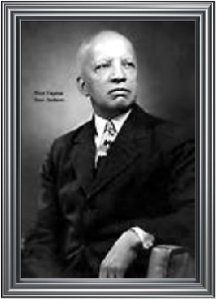
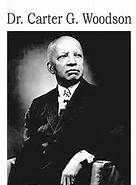
2Carter G. Woodson was the most thought provoking African America of the last century. He is credited with the father of Black History and the founder of the Journal of Negro HistoryI honor him because he had the foresight of thought or maybe a vision to create what we now know as Black History Month. I think I speak for all African America’s when I say we are grateful that he had the vision to bringing our community information about our people through what was then called Negro History Week. It evolved during the 1970s to what we now know as Black History Month.
His-Story will prove true that until 1918 there was virtually no information about black people recorded because white America claimed Negro’s had no history. Thanks to Dr. Woodson, he proved that was a lie and changed that impression and showed us that we had a mighty past. Of course there are those who will disagree but His-Story is clear that “Colored’s” given a birth certificate until about 1900. Before then it was recorded via a “Bill of Sale”.
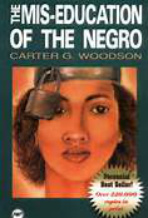
Aside from the concept of introducing Black History to us Dr. Woodson’s most enduring legacy was the novel “The Mis-Education of the Negro” originally published in 1933. When I read it many years ago, it was an amazing experience because I realized that the message remains relevant today. I feel this book should be mandatory reading for all African America’s – young and old.
I am still struck by the fact that we have not understood the powerful message contained within its pages. The thesis of Dr. Woodson's book is that Negro’s of his day were being culturally indoctrinated, rather than taught, in American schools or not taking advantage of education period. This conditioning, he claims, causes African Americans to become dependent and to seek out inferior places in the greater society of which they are a part. This assertion is clearly evident nearly eighty-years later.
He challenged his readers to become empowered by doing for themselves, regardless of what they were taught: “History shows that it does not matter who is in power... those who have not learned to do for themselves and have to depend solely on others never obtain any more rights or privileges in the end than they did in the beginning.”
Today with all the advantages concerning educational opportunities, business exposure, and social networking we are in the best position to succeed than at any time in our history. So the question is “why are we not networking and doing business with each other?” Every other ethnic community takes advantage these options to strengthen and empower themselves - while robbing our communities in the process. We will let anybody setup shop in our communities and take our money.
My point is: We must learn to do business with each other in order to gain wealth by keeping the money in our community. Some say we spend TRILLION’S annually and nearly all of it leaves our community within 15 minutes. Let me remind you that the definition of insanity is to continue to do the same thing and expect a different result. We can change the world but first we must change ourselves.
Here is a quote from the “The Mis-Education of the Negro”:
2"When you control a man's thinking you do not have to worry about his actions. You do not have to tell him not to stand here or go yonder. He will find his 'proper place' and will stay in it. You do not need to send him to the back door. He will go without being told. In fact, if there is no back door, he will cut one for his special benefit. His education makes it necessary."
That schools have set aside a time each year to focus on African-American history is Woodson's most visible legacy. His determination to further the recognition of the Negro in America and world history has inspired countless scholars. Woodson remained focused on his work throughout his life. Many see him as a man of vision and understanding. Although Woodson was among the ranks of the educated few, he did not feel particularly sentimental about elite educational institutions.
Woodson's other far-reaching activities included the founding in 1920 of the Associated Publishers, the oldest African-American publishing company in the United States. This enabled publication of books concerning blacks that might not have been supported in the rest of the market. He created the Negro History Bulletin, developed for teachers in elementary and high school grades, and published continuously since 1937. Woodson also influenced the Association's direction and subsidizing of research in African American history. He wrote numerous articles, monographs and books on Blacks. The Negro in Our History reached its eleventh edition in 1966, when it had sold more than 90,000 copies.
His friend, Dorothy Posrter Wesley, stated that "Woodson would wrap up his publications, take them to the post office and have dinner at the YMCA." He would teasingly decline her dinner invitations saying, "No, you are trying to marry me off. I am married to my work". Woodson's most cherished ambition, a six-volume Encyclopedia Africana, lay incomplete at his death on April 3, 1950 at the age of 74.
To the many who read my blog know "I believe education is the single most important ingredient necessary to neutralize those forces that breed poverty and despair". So I say it’s time to know where you came from to know where you’re going, if we are ever going to ever get there. And that’s my Thought Provoking Perspective…

Saturday, February 1, 2014

The Greatest Story Ever Told

523774_3502251759629_718678467_nI have written a series of articles on Thought Provoking Perspectives specifically designed to be a potent source of empowering knowledge for the enhancement of the minds of mankind. During Black History Month, I will post a series of different article each day speaking to the phenomenal history and difficult struggle of the African American experience. You will come to realize that our story is the “Greatest Story Ever Told!!!”
The legacy of dependency, apathy, and entrenchment of the American social order from the beginning provides clear evidence that there are those with a diabolical intent to bankrupt the souls of African Americans based on an ideology of supremacy. These stolen souls that exist today are people who bear the burden of a system that perpetrated, in the name of God, the greatest crime known to man. Hence, from the beginning, people of African descent were intended to be a nation of people living within a nation without a nationality.
I like to call this series “The Unspoken Truth”. It is intended to empower by educating people through knowledge concerning issues that many blacks continue to face today from the untreated wounds of America’s forefathers. This series is a knowledge-based examination of the African American Diaspora. As you travel with me though the next twenty-eight days, my purpose is to simply offer explanations causing people to look at and understand the root cause of the asymptomatic behaviors. I will spotlight several of the ghosts of the greats that paved the way for us to live the life we live today.
It is my sincere desire to help people understand that there is a conditioning in “certain” communities – this is not an excuse, rather an explanation as to why these behaviors were never unlearned and have been passed down from generation to generation. Over my relatively short lifetime, I have been referred to as Colored, Negro, Afro-American, Black, and African American, which were all polite terms assigned to make known that African Americans are not Americans.
Therefore, the concept of African Americans being slaves, physically or mentally, is as old as the nation itself. It is designed to deprive people of this culture, knowledge through sustained policies of control, and its history. To overcome these indignities, we must realize that education is the single most important ingredient necessary to neutralize the forces that breed poverty and despair. Regardless of how much we are held down, it is our responsibility to find a way to get up, even if the system is designed to protect the system.
As you follow the series and embark upon this journey; know that learning without thought is a labor lost; thought without learning is intellectual death; and courage is knowing what’s needed and doing it. As tenacious beings, we must understand that there is no such thing as an inferior mind. So I say it’s time for an awakening, if for no other reason than to honor those who sacrificed so much in order that we could live life in abundance.
As you experience Black History Month remember this: “You only have a minute. Sixty seconds in it. Didn’t chose it, can’t refuse it, it’s up to you to use it. It’s just a tiny little minute but an eternity in it. You can change the world but first you must change your mind.” And that is my THOUGHT PROVOKING PERSPECTIVE!

Thursday, December 19, 2013

A Practical Thought For Survival

1I am of the opinion that African Americans remain a nation of people living in a nation without a nationality. There are some that will say that because America has a black president – how could that be?

Well, this speaks to the institutions within the context of society that dictates the continuation of systems that exist within the country designed to protect the system for what some call the real Americans. It is because of this system, which has been in existence from the founding of America that has caused the demise of people of color.
Dr. Carter G. Woodson wrote the powerful novel “The Mis-Education of the Negro” in 1933, or there about, and in it he challenged his readers to become empowered by doing for themselves. He said: “Regardless of what we are taught history shows that it does not matter who is in power… those who have not learned to do for themselves and have to depend solely on others never obtain any more rights or privileges in the end than they did in the beginning.” This speaks volumes!
Dr. Woodson also said, “If you can control a man is thinking you never have to worry about what he thinks.” I will speak for me, no matter how messed up the world is and the minds of man; I am glad God made me! We must take responsibility for ourselves because life demands the survival of the fittest, just like in all other parts of the animal kingdom. As a people, African Americans have waited far too long and become much too dependent on those who are in charge of this system that was not created in our best interest.
Therefore, I say it is time to remove the shackles of bondage that mentally restrain many communities and the minds of our people. Malcolm X once said, “We spend too much time singing and not enough time swinging”. Let me be clear, I did not repeat this statement to advocate violence. Rather to suggest that we have spent centuries believing, following, and listening to the messages communicated to us by those who control our destiny making us believe that there is a better place for us when we’re dead. I say we have the right to live NOW!
I want to propose an idea that could be the answer to our salvation. There are about 42 million African Americans living in America. If each African American were to contribute just one dollar each week that would add up to forty-million dollars each week. Multiply that time’s fifty-two weeks and that’s over two-trillion dollars annually. We have people who run some of the world’s largest corporations who could manage that kind of money – invest it and make more money and as such many of the problems we face would go away.
If you find a problem with that – just think about how much most give to some pimp in the pulpit each Sunday and merely get a show and nothing else in return. Hmmm!!!
Overtime we’ve won many civil rights battles, which should never have had to be fought. Yet, we still don’t have the necessities we need to survive. So I say, as tenacious beings, it is time for survival and the time is now – if for no other reason than for our children. Happy Birthday Dr. Woodson – I wish we had listened! And that’s my Thought Provoking Perspective...

Wednesday, February 27, 2013

Affirm Section 5 Of The Voting Rights Act


th
The Supreme Court will hear a challenge to a key provision of the landmark Voting Rights Act of 1965, which was enacted to ensure that African Americans had a right that has almost always been denied since they arrived here in chains. The opposing parties are asking the Court to end a requirement forcing Alabama and other southern states to get Department of Justice approval to change its voting procedures and electoral maps.

The Voting Rights Act already allows governments that have changed their ways to get out from under this humbling need to get permission through a “bailout provision.” Nearly 250 counties and local jurisdictions have done so; thousands more could be eligible based on the absence of recent discriminatory efforts in voting. My question and it should be of every African American is why Section 5 should be removed?

History tells us that after the Civil War when slavery ended, wink, there were very clever measures designed to deny African Americans the supposed most sacred right to vote. There were Amendments to the Constitution that should have been sufficient. However, those Anti-Americans who preached liberty and justice for all found ways to circumvent the law. They used such things as Poll Taxes, Literacy Tests, and when all else failed Terror.

Then there came an era called Reconstruction which resulted in what they called “Separate but Equal” which was nothing more than American Apartheid. Of course that worked out well for the racial extremist. It took one hundred years for America to pass a law that was meaningful to work to some degree, the Voting Rights Act, and now was to dismantle.   

Let’s take a look at some very recent history, like last year and last month, to see why this provision should not be removed. In the last election, Republican went to many extremes to suppress minority votes through a myriad of state laws making it a mission to deny their right to vote.  The consequences of those desperate maneuvers, along with the accompanying vitriolic rhetoric, restrictive voter ID laws, encouraged Electoral College gimmickry and professed themselves unconcerned about long wait times at polling places tells us why this act is needed.

The viability of the bailout option could play an outsized role in the Supreme Court’s consideration of the voting rights law’s prior approval provision, although four years ago, conservative Justice Clarence Thomas said the prospect of bailing out had been “no more than a mirage.”

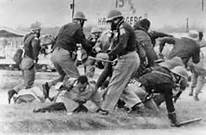
I can vividly remember “Bloody Sunday,” nearly 50 years ago, when 600 peaceful, nonviolent protesters attempting to march from Selma to Montgomery to dramatize the need for voting rights protection in Alabama. As they crossed the Edmund Pettus Bridge, state troopers under orders from the Governor attacked with tear-gassed, clubbed, whipped, and trampled them with horses. Seventeen marchers were hospitalized that day.

In response, President Lyndon Johnson introduced the Voting Rights Act and later signed it into law. It is very clear that America has come a great distance since then, in large part thanks to the act, but efforts to undermine the voting power of minorities did not end after 1965. They still persist today. Just because a man of color is the president does not mean the battle is won.


Voting rights is still and danger. So let’s not tamper with one of the few laws that have been a beacon to this thing called Democracy. And that’s my Thought Provoking Perspective…

Friday, February 22, 2013

On The Road To Jerusalem


I am keenly aware that I stand on the shoulders of the ghosts of the greats who suffered, died, and sacrificed so much for a people degraded and scorn to which some might say cursed by the wretchedness of slavery. Let me say that one of my major faults is that I understand the power of words and know that finding written words can produce truth. Taking into consideration, often times, those word were written for the times and used to sway or justify that which one might want truth to remain hidden.

Someone I know sent me an email that contained the “Confessions of Nat Turner”. I had never read it before and knew very little about the man Nat Turner other than what his-story tells. I was so surprised because it was, in my opinion, unfathomable to believe much of what his supposed attorney wrote as truth. This caused me to do my own research and see what facts were available to reinforce the only known account of the Nat Turner Rebellion. What I found was many different interpretations of the events of that rebellion. There were few facts. What we know is that there was a rebellion and he was hung. Everything else is conjecture!

Here are the facts: Nat Turner was born into slavery October 2, 1800 on a Southampton County plantation. On August 21, 1831, he led a violent disorganized insurrection. The incident ended the emancipation movement in that region and led to even harsher laws against slaves. Benjamin Turner, his owner, allowed him to be instructed in reading, writing, and religion. Sold three times in his childhood and hired out to John Travis 1820s. He became a fiery preacher and leader of slaves claiming that he was chosen by God to lead them from bondage.

Believing in signs and hearing divine voices, Turner was convinced by an eclipse of the Sun in 1831 that the time to rise up had come and he enlisted the help of four other slaves in the area. An insurrection was planned, aborted, and rescheduled for August 21, 1831, when he and six other slaves killed the Travis family, managed to secure arms and horses, and enlisted about 75 other slaves in a disorganized insurrection that resulted in the murder of 51 white people.

Afterwards, Turner hid nearby successfully for six weeks until his discovery, conviction, and hanging in Jerusalem, Virginia after a trial that lasted twenty four hours, along with 16 of his followers. The incident put fear in the heart of Southerners, ended the organized emancipation movement in that region, resulted in even harsher laws against slaves, and deepened the schism between slave-holders that would culminate in the Civil War. This is all we know as fact.

Among many, perhaps most, African-Americans in the antebellum period or even today, Turner's legacy takes on heroic status as someone willing to make slave-owners pay for the hardships that they enacted upon the millions of children, women and men they enslaved. He is not mentioned in the same vain as the KKK in that they murdered, under cover of law, countless men, women, and children in what was nothing more than state sponsored terrorism. Like John Brown, Turner also thought revolutionary violence would serve to awaken the attitudes of whites to the reality of the inherent brutality of slave-holding.

My research shows one thing clearly. The supposed confession taken by attorney Gray is a myth written to produce financial gain and to induce fear. Turner was called a beast and a savage – maybe. I would argue that is what he was made to be, as he and others were sold like animals, to which his knowledge of the Old Testament told him that even God worked through acts of violence and inflected extreme punishment upon his enemies for his people.

It is reported that Turner said before he was hung that “they crucified Jesus didn’t they”. And that’s my Thought Provoking Perspective…


Thursday, February 21, 2013

The Matriarch of Civil Rights


Dorothy Irene Height, (March 24, 1912 – April 20, 2010), the Matriarch of the civil rights movement passed away early Tuesday of natural causes in a Washington hospital. Dr. Height established a national reputation as a graceful insistent voice for civil rights and women's rights. She was regarded as the “Godmother of the Civil Rights Movement” and a tireless crusader for racial justice and gender equality spanned more than six decades.

Dr. Height was born in Richmond, Virginia. She moved with her family to Rankin, Pennsylvania near Pittsburgh early in her life where she attended racially integrated schools. She was admitted to Barnard College in 1929, but upon her arrival she was denied entrance because the school had an unwritten policy of admitting only two black students. She pursued studies instead at New York University earning a degree in 1932 and a master's degree in educational psychology the following year.

Dr. Height served on the advisory council of the White House Initiative on Historically Black Colleges and Universities and the National Advisory Council on Aging. Her awards included 36 honorary doctorates from colleges and universities, including Harvard and Princeton. In addition, Dr. Height was awarded the Presidential Medal of Freedom and on her 92nd birthday, she received the Congressional Gold Medal, the highest decoration Congress can bestow.

Dr. Height was among a coalition of African American leaders who pushed civil rights to the forefront of the American political stage after World War II. She was instrumental, and a key figure, in the struggles for school desegregation, voting rights, employment opportunities and public accommodations in the 1950’s and 1960’s. Dr Height was president of the National Council of Negro Women for 40 years, relinquishing the title at the age of 95.

National Council of Negro Women is a four million member advocacy group consisting of 34 national and 250 community based organizations. It was founded in 1935 by educator Mary McLeod Bethune, who was one of Height's mentors. Dr. Height was a civil rights activist who participated in protests in Harlem during the 1930’s. In the 1940’s, she lobbied first lady Eleanor Roosevelt on behalf of civil rights causes and in the 1950’s she prodded President Dwight D. Eisenhower to move more aggressively on school desegregation issues.

President Obama issued an official statement White House that reads as follows: Dr. Height was "a hero to so many Americans… Dr. Height devoted her life to those struggling for equality . . . witnessing every march and milestone along the way… And even in the final weeks of her life -- a time when anyone else would have enjoyed their well-earned rest Dr. Height continued her fight to make our nation a more open and inclusive place for people of every race, gender, background and faith."

As a young woman, Dr. Height made money through jobs such as ironing entertainer Eddie Cantor's shirts and proofreading Marcus Garvey's newspaper, the Negro World. She went nightclubbing in Harlem with composer W.C. Handy. Dr Height began her professional career as a caseworker for the New York City welfare department. She got her start as a civil rights activist through the Rev. Adam Clayton Powell Sr., pastor of the Abyssinian Baptist Church in Harlem, and from the pastor's son, the Rev. Adam Clayton Powell Jr., who later represented Harlem in the U.S. House of Representatives.

In the 1940’s, Dr. Height came to Washington as chief of the Phyllis Wheatley YWCA branch. She joined the staff of the national YWCA board in 1944 through 1975. She remained on that staff with a variety of responsibilities, including leadership training and interracial and ecumenical education. In 1965, she organized and became the director of the YWCA's Center for Racial Justice, and she held that position until retiring from the YWCA board in 1975.

Dr. Height became national president of the Delta Sigma Theta sorority in 1947 holding that position until 1957 when she became the fourth president of the National Council of Negro Women. She was a visiting professor at the Delhi School of Social Work in India, and she directed studies around the world on issues involving human rights.

During the turmoil of the civil rights struggles in the 1960’s, Dr. Height helped orchestrate strategies with major civil rights leaders including the Rev. Martin Luther King Jr., Roy Wilkins, A. Philip Randolph, Whitney Young, James Farmer, Bayard Rustin and John Lewis, who later served as a Democratic member of the U.S. House of Representatives from Georgia. Congressman John Lewis said when Dr. Height announced her retirement as president of the National Council of Negro Women - "At every major effort for social progressive change, Dorothy Height has been there." She was also energetic in her efforts to overcome gender bias, and much of that work predated the women's rights movement.

Dr. Height was the most influential woman at the top levels of civil rights leadership, but she never drew the major media attention that conferred celebrity and instant recognition on some of the other civil rights leaders of her time. In August 1963, Dr. Height was on the platform with King when he delivered his "I have a dream" speech at the Lincoln Memorial. Less than a month later, at King's request, she went to Birmingham, Ala. to minister to the families of four black girls who had died in a church bombing linked to the racial strife that had engulfed the city.

In 1995, Dr. Height was among the few women to speak at the Million Man March on the Mall, which was led by Louis Farrakhan, the chief minister of the Nation of Islam. "I am here because you are here," she declared. Two years later, at 85, she sat at the podium all day in the whipping wind and chill rain at the Million Woman March in Philadelphia.

She would often remark, "Stop worrying about whose name gets in the paper and start doing something about rats, and day care and low wages. . . . We must try to take our task more seriously and ourselves more lightly." She also famously said, "If the times aren't ripe, you have to ripen the times". It was important to dress well she said, "I came up at a time when young women wore hats, and they wore gloves. Too many people in my generation fought for the right for us to be dressed up and not put down."

"She was a dynamic woman with a resilient spirit, who was a role model for women and men of all faiths, races and perspectives. For her, it wasn't about the many years of her life, but what she did with them," said former U.S. Secretary of Labor Alexis M. Herman. Dr. Height is a national treasure who lived life abundantly and for the abundance of others. She will be greatly missed, not only by those of us who knew her well, but by the countless beneficiaries of her enduring legacy.

In my novel “Just a Season”, I talked about a “Dash” that will be place on our final marker between the years of one's birth and death that will represent the whole of a person’s life. I said that to say, this tiny little dash on Dr. Height's marker will not adequately give enough credit for her outstanding life’s work. It should have an inscription that says - “Servant of God, Well Done."
And that's my Thought Provoking Perspective...

Sunday, February 17, 2013

Roots - A Look At Our History


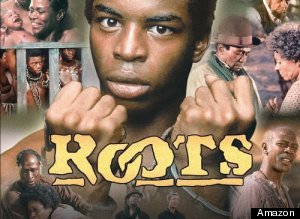
s-ROOTS-FILM-large300With Black History Month underway I would be remised of I did not pay homage to Alex Haley's groundbreaking television mini-series, “Roots”. This powerful story was the first time African Americans or dare I say the world got to see, and feel, what the slave experience was like. Sure we have seen pictures and read books but the visual presentation of the mini-series was an eye opening experience for most, as it remains one of the highest rated television shows of all time.

If you can recall the story chronicles the life of an African boy that began in Gambia, West Africa in 1750 where Kunta Kinte while trying to carry out a simple task to catch a bird sees white men carrying firearms, along with their black collaborators. He is captured by these black collaborators under the direction of white men, sold to a slave trader and placed aboard a ship to endure what we know as the Middle Passage for the long journey to America.

The ship eventually arrives in Annapolis, Maryland, where the captured Africans are sold at auction as slaves. He was sold to a Virginia plantation who gives Kunta the name Toby. The owner of the plantation assigns an older slave, Fiddler, to teach him to speak English and to train him in the ways of living and working as a chattel slave. Kunta in a persistent struggle to become free again makes several unsuccessful attempts to escape to preserve his Mandinka heritage and maintain his Mandinka roots.

The most chilling aspect of the story, for me, was when an overseer gathers the slaves and directs one of them to whip Kunta after his latest attempt to escape and continues whipping him until he finally acknowledges his new name. Then to settle a debt to his brother, the owner transfers several of his slaves, including Toby and Fiddler, to another plantation where Kunta tries again to escape, but a pair of slave catchers seize him, bind him, and chop off about half his right foot to limit his ability to run away again.

As we watched the mini-series it took us on a journey through generations of suffering until the climax when Chicken George, Haley’s grandfather, accumulated enough money to move his family to Tennessee to what was as close to freedom as they could hope for at the time. Chicken George purchased land based on the concept “God Bless the child that has his own”.

I don’t want to tell the whole story because I am sure you know it. If not the movie is well worth viewing again and again. There were then and some now, who say the epic journey of Kunta Kinte was a myth and that it was mere fiction. Those are the people who refuse to understand or see the wretchedness of the state sectioned institution of slavery. To you, unfortunately this is the foundation of America and for African Americans this is our sorted legacy that I will argue as a result the scares remain.

I’ll end by sharing these words by Maya Angelou: “history, despite its wrenching pain, cannot be unlived, but if faced with courage, need not be lived again.” We need to see this story and it was shown at the right time for us to understand! And that’s my Thought Provoking Perspective!

Saturday, February 16, 2013

The Case That Changed America


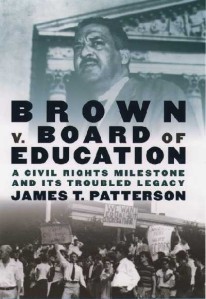
brown-v-board-of-educationOn May 17, 1954, the Warren Court’s unanimous (9-0) decision stated that “separate educational facilities are inherently unequal.” This was the day that the landmark Brown v Board of Education Supreme Court decision changed the face of America unlike any other decision before or since.

This major ruling was the cornerstone that laid the foundation for all of the civil rights African American’s know today, just as the late Thurgood Marshall, who brilliantly argued and won this case envisioned. It is also very appropriate to recognize the skillful talent of Justice Marshall for his more than fifty victories before the Supreme Court, more than any other attorney in history.

The Brown Case, as it is known, was not the first such case regarding civil rights argued before the Supreme Court. It was just the most significant of what some would say was the final battle in the courts that had been fought by African American parents since 1849, which started with Roberts v. City of Boston, Massachusetts. It is also important to note that Kansas was the site of eleven such cases spanning from 1881 to 1949.

The case was named after Oliver Brown one of 200 plaintiffs. The Brown case was initiated and organized by the National Association for the Advancement of Colored People (NAACP) leadership who recruited African American parents in Topeka, Kansas for a class action suit against the local school board. The Supreme Court combined five cases under the heading Brown v. Board of Education: Delaware, Kansas, South Carolina, Virginia, and the District of Columbia. The ultimate goal sought by the NAACP was to end the practice of “separate but equal” throughout every segment of society, including public transportation, dining facilities, public schools and all forms of public accommodations.

The Brown Supreme Court ruling determined racial segregation in public education was unconstitutional in Brown I, the first opinion. The court’s implementation mandated "with all deliberate speed" in 1955 known as Brown II. In 1979, twenty five years later, there was a Brown III because Topeka was not living up to the earlier Supreme Court ruling, which resulted in Topeka Public Schools building three magnet schools to comply with the court's findings.

As had been the case since Homer Plessy, the subject in Plessy v. Ferguson in 1896 when the U.S. Supreme Court decided that a Louisiana law mandating separate but equal accommodations for blacks and whites on intrastate railroads was constitutional. This decision provided the legal foundation to justify many other actions by state and local governments to socially separate blacks and whites.

Now that I have provided some history related to the case let me add my commentary. It has been said that as sure as things change they remain the same. First, it took 60 year to overturn Plessy with Brown and it took “with all deliberate speed” 13 years for integration to begin fully. During this period of time from 1954 to 1967, governors blocked school entrances and actually closed schools rather than comply with the law of the land. I am not going to touch on the violence that caused Presidents to send the US Army and National Guard troops to schools in order to protect the safety of those the ruling was intended benefit as a result of the Brown decision.

Since then, and over time, many scams have been devised to disenfranchise minorities and African Americans in particular. I need only remind you of “No Child Left Behind” where we see persistent patterns of underachievement for lower-income students on standardized test scores. These standardized tests serve as gatekeepers to a child's academic future, which I don’t believe was the spirit of the Brown case.

Malcolm X famously said, only a fool would allow his enemy to educate his people. Just think about the deplorable education system and the fact that most of what is taught, particularly when it comes to history, is a fallacy. Then consider the extremely high dropout rates among our children. For example, it has been reported that in the City of Baltimore more than two thirds of all students who enter high school do not graduate.

After fifty-five years, it is not unreasonable to seek and ask that the spirit of Brown be honored with effective and meaningful equal rights under the law. I understand that public education was not created to develop minds rather it was intended to simply teach reading, writing, and arithmetic. It was created to maintain a permanent underclass. Much like it was then, a travesty, in many ways it remains a travesty for the children in most Urban Public School System’s.

I, like Dr. King believe in the dream but we have unfinished business and as it stands - it is a dream deferred. That’s why it is imperative for us to celebrate this milestone and continue the struggle as the ghosts of so many greats who died for this principle: “education is the single most important ingredient necessary to neutralize those forces that breed poverty and despair”.

And that’s my Thought Provoking Perspective…


Friday, February 15, 2013

The First Civil Rights Martyr


Medgar Wiley Evers was born in Decatur, Mississippi on July 2, 1925; dying the victim of a racially motivated assassination on June 12, 1963 in Jackson, Mississippi after attending a rally. He was the third of four children of a small farm owner who also worked at a nearby sawmill. His social standing was impressed upon him every day but Evers was determined not to cave in under such pressure. He once said his mission was evident at the age eleven or twelve when a close friend of the family was lynched.

He walked twelve miles each way to earn his high school diploma and joined the Army during the Second World War. Perhaps it was during the years of fighting in both France and Germany for his and other countries' freedom that convinced Evers to fight on his own shores for the freedom of blacks. After serving honorably in the war he was discharged in 1946, he began working for the National Association for the Advancement of Colored People (NAACP) in 1952. Evers travelled throughout the state of Mississippi trying to encourage voter registration and worked tirelessly to enforce federally mandated integration laws.

On 12 June 1963, hours after President John F. Kennedy gave a televised speech condemning segregation, Evers was shot in the back by a high-powered rifle while returning home. He crawled to the house and collapsed in front of his wife and three children; he died an hour later. The rifle found at the scene belonged to Byron De La Beckwith, a member of the all-white Citizens' Council, a statewide group opposed to racial integration akin to the KKK.

Beckwith was tried twice but nearly thirty years later, thanks to the persistence of Evers' widow, Myrlie Evers-Williams, the case was reopened and Beckwith was tried and convicted in 1994, and the conviction was upheld by the state supreme court in 1997. Evers-Williams published “For Us, The Living in 1967”; Beckwith's trial was the basis for the 1996 film Ghosts of Mississippi that starred Whoopi Goldberg.

Medgar Evers position in the civil rights movement was that of field secretary for the NAACP and recognized as one of the first martyrs of the civil rights movement. His death prompted President John Kennedy to ask Congress for a comprehensive civil rights bill, which President Lyndon Johnson signed into law the following year.
The Mississippi in which Medgar Evers lived was a place of blatant discrimination where blacks dared not even speak of civil rights, much less actively campaign for them. Evers, a thoughtful and committed member of the NAACP wanted to change his native state. He paid for his convictions with his life, becoming the first major civil rights leader whose death was called an assassination.

Evers was featured on a nine-man hit list in the Deep South as early as 1955. He and his family endured numerous threats and other violent acts, making them well aware of the danger surrounding his activism. Still he persisted in his efforts to integrate public facilities, schools, and restaurants. He organized voter registration drives and demonstrations. He spoke eloquently about the plight of his people and pleaded with the all-white government of Mississippi for some sort of progress in race relations. To those people who opposed such things, he was thought to be a very dangerous man.

In some ways, the death of Medgar Evers was a milestone in the hard-fought integration war that rocked America in the 1950s and 1960s. While the assassination of such a prominent black figure foreshadowed the violence to come, it also spurred other civil rights leaders, also targeted by white supremacists, to new fervor. They, in turn, were able to infuse their followers with a new and expanded sense of purpose; one that replaced apprehension with anger.

Evers must have also had a sense that his life would be cut short when what had begun as threats turned increasingly to violence. A few weeks prior to his death, someone threw a firebomb at his home. Afraid that snipers were waiting for her outside, Mrs. Evers put the fire out with the garden hose. The incident did not deter Evers from his rounds of voter registration or from his strident plea for a biracial committee to address social concerns in Jackson. His days were filled with meetings, economic boycotts, marches, prayer vigils, and picket lines and with bailing out demonstrators arrested by the all-white police force. It was not uncommon for Evers to work twenty hours a day.

The NAACP posthumously awarded its 1963 Spingarn medal to Medgar Evers. It was a fitting tribute to a man who had given so much to the organization and had given his life for its cause. Perhaps the most encouraging aspect of Medgar Evers's story lies in the attitudes of his two sons and one daughter. Though they experienced firsthand the destructive ways of bigotry and hatred; Evers' children appear to be very well-adjusted individuals. Myrlie Evers remarked that "it has taken time to heal the wounds [from their father's assassination] and I'm not really sure all the wounds are healed. We still hurt, but we can talk about it now and cry about it openly with each other, and the bitterness and anger have gone."

As a fitting tribute, Evers was interred at Arlington National Military Cemetery in Washington DC. How many of you are willing to give your life for something greater than yourself? And that’s my Thought Provoking Perspective…


[youtube http://www.youtube.com/watch?v=8_HBdrJkmDE&fs=1&hl=en_US]

Thursday, February 14, 2013

The First Lady of Civil Rights


This is the story of Rosa Louise McCauley Parks who was greatest, most distinguished African American Woman Civil Rights Activist of our time. The woman known as “The First Lady of Civil Rights"; born February 4, 1913 in Tuskegee, Alabama. Her ancestry was a mixture of African American, Cherokee-Creek and Scots-Irish, which some say accounts for her fair complexion.

Mrs. Parks was highly respected within the local community, as in many segregated communities it was close knit and intertwined. She was secretary of the Montgomery chapter of the NAACP and had recently attended the Highlander Folk School which was a Tennessee center for workers' rights and racial equality. Although widely honored in later years for her action, she suffered for it, losing her job as a seamstress in a local department store. Eventually, having to leave Alabama for Detroit Michigan, where she found similar work.

Mrs. Parks remarked that it was the horrifying murder of Emmett Till, in August 1955 was on her mind that day when she proclaimed to be tired of giving in. On November 27, 1955, only four days before she refused to give up her seat, she had attended a mass meeting in Montgomery which focused on this case as well as the recent murders of George W. Lee and Lamar Smith. All of this and the countless crimes perpetrated by southern whites cause her to say “enough”.

After leaving work on December 1, 1955 in Montgomery, Alabama, Mrs. Parks, then 42, refused to obey the driver of the segregated city bus system who ordered her to give up her seat to make room for a white passenger. Her arrest was the catalyst for a bus boycott that would cripple the city of Montgomery lasting nearly thirteen months. This event lead to what many view as the birth of the modern civil rights movement.

Many believe this act was the first of its kind in the rigidly segregated south but it was not. In 1946 Irene Morgan, and in 1955 Sarah Louise, won rulings before the U.S. Supreme Court, and the Interstate Commerce Commission, respectively, relating to interstate bus travel. Just nine months before Parks refused to give up her seat, 15-year-old Claudette Colvin refused to move from her seat on the same bus system.

Lest we forget that in 1944, athletic star Jackie Robinson took a similar stand in a confrontation with a US Army officer in Texas, refusing to move to the back of a bus. Robinson was brought before a court martial, which acquitted him. The NAACP had accepted and litigated other cases before, such as that of Irene Morgan ten years earlier, which resulted in a victory in the U.S. Supreme Court, and the Interstate Commerce Clause grounds. The difference as it relates to the many individuals whose arrests for civil disobedience was that Mrs. Parks’ actions sparked the Montgomery Bus Boycott.

Let’s journey back to a time when Jim Crow was the law in America, black and white people were segregated in virtually every aspect of daily life and not just in the South. Bus and train companies did not provide separate vehicles for the different races but did enforce seating policies that allocated separate sections for blacks and whites. School bus transportation was unavailable in any form for black school children in the South.

Before I go any further, on Montgomery buses there was a separation point, the first four rows of bus seats were reserved for white people. Buses had "colored" sections for black people, who made up more than 75% of the bus system's riders, generally in the rear of the bus. These sections were not fixed in size but were determined by the placement of a movable sign. Black people could sit in the middle rows, until the white section was full. Then they had to move to seats in the rear, stand, or, if there was no room, leave the bus.

Black people were not allowed to sit across the aisle from white people. The driver also could move the "colored" section sign, or remove it altogether. If white people were already sitting in the front, black people could board to pay the fare, but then had to disembark and reenter through the rear door. There were times when the bus departed before the black customers who had paid made it to the back entrance.

For years, the black community had complained that the situation was unfair, and Parks was no exception: "My resisting being mistreated on the bus did not begin with that particular arrest...I did a lot of walking in Montgomery." Parks had her first run-in on the public bus on a rainy day in 1943, when the bus driver, James F. Blake, demanded that she get off the bus and reenter through the back door. 

As she began to exit by the front door, she dropped her purse. Parks sat down for a moment in a seat for white passengers to pick up her purse. The bus driver was enraged and barely let her step off the bus before speeding off. Ironically that fateful day when she refused to give up her seat, it was the same driver who she would encounter.

It was shortly after the landmark Plessey v Ferguson case that ushered in “separate but equal” in America when Montgomery passed a city ordinance for the purpose of segregating passengers by race. Conductors were given the power to assign seats to accomplish that purpose; however, no passengers would be required to move or give up their seat and stand if the bus was crowded and no other seats were available. Over time and by custom, however, Montgomery bus drivers had adopted the practice of requiring black riders to move whenever there were no white only seats left.

So, following standard practice, bus driver Blake noted that the front of the bus was filled with white passengers and there were two or three men standing, and thus moved the "colored" section sign behind Parks and demanded that four black people give up their seats in the middle section so that the white passengers could sit. Years later, in recalling the events of the day, Parks said, "When that white driver stepped back toward us, when he waved his hand and ordered us up and out of our seats, I felt a determination cover my body like a quilt on a winter night."

By Parks' account, Blake said, "Y'all better make it light on yourselves and let me have those seats." Three of them complied. Parks said, "The driver wanted us to stand up, the four of us. We didn't move at the beginning, but he says, 'Let me have these seats.' And the other three people moved, but I didn't." The black man sitting next to her gave up his seat. Parks moved, but toward the window seat; she did not get up to move to the newly repositioned colored section. Blake then said, "Why don't you stand up?" Parks responded, "I don't think I should have to stand up."

Blake called the police to arrest Parks. When recalling the incident for Eye on the Prize, a 1987 public television series on the Civil Rights Movement, Parks said, "When he saw me still sitting, he asked if I was going to stand up, and I said, 'No, I'm not.' And he said, 'Well, if you don't stand up, I'm going to have to call the police and have you arrested.' I said, 'You may do that.” He did and the world changed that moment.

“People always say that I didn't give up my seat because I was tired, but that isn't true. I was not tired physically, or no more tired than I usually was at the end of a working day. I was not old, although some people have an image of me as being old then. I was forty-two. No, the only tired I was, was tired of giving in.”

Remember her, never forget her, and honor her for all times. And that's my Thought Provoking Perspective!!!

Just a Season
Legacy – A New Season