Showing posts with label slave. Show all posts

Friday, February 21, 2014

BLACK HISTORY: Strange Fruit

Every month, it seems, there is news of another black man gunned down simply because he was black. These actions are eerily similar to the lynching’s that took place in the early half of the 20th century for pretty much the same reason as the murder by white vigilantes in our society today.
The reason could be as simple as the concept of "Manifest Destiny", which speaks to white  privilege. White America has never accepted African American’s as anything more than illegal aliens, in spite of the fact they captured the race against their will and brought to American in chains. I have repeatedly said, “We are a nation of people living in a nation without a nationality” basically because the Constitutions tells us so. You do remember the 3/5th human phrase.
In the wake of Trayvon Martin, an unarmed teenager who was shot and killed by George Zimmerman in 2012, and Jordan Davis, who was also unarmed, are the most recent high-profile examples of young black men who have been killed because white men claimed they feared for their lives.
Let’s also include the murders and shootings by the police, sanctioned by law, against African American’s such as Oscar Grant and countless others. Then there are people like Garrick Hopkins, 60, and his brother, Carl Hopkins Jr., 61, two brothers from West Virginia, who were shot and killed by a white man for what he claimed as trespassing on his land – when, in fact, they were inspecting a shed on their own property.
The attached  video is straightforward yet nuanced. The song “Strange Fruit” tells a story that must be told to our youth. We must never forget because when you forget history it is destined to repeat itself. We know the importance of Billie Holiday's recording. But this indispensable video vivid imagery the history of the struggle against lynching, something that was very real, and for Black rights with a wealth of common history of African Americans, Jewish Americans, and the American Left. It is part of our history, part of our heritage. Teach your children and learn this chapter in our past.
The song “Strange Fruit” creates immediate controversy. Call it a grim reminder of an unnecessarily painful and ugly chapter in American history. The song retains its force, because the issues it raises about the legacy of racial terrorism in American society still resonate. The story tells a song that compelled its listeners to confront the past, which was genuinely disturbing then, and it is no less disturbing today.
While many people assume Strange Fruit was written by Billie Holiday herself, it actually began as a poem by a Jewish schoolteacher and union activist from the Bronx, who later set it to music. Disturbed by a photograph of a lynching, the teacher wrote the stark verse and brooding melody about the horror of lynching under the pseudonym Lewis Allan in 1938. It was first performed at a New York teacher’s union rally and was brought to the attention of the manager of Cafe Society, a popular Greenwich Village nightclub, who introduced Billy Holiday to the writer.
LISTEN TO THE WORDS AND NEVER FORGET THE TERROR!!!

"Southern trees bear a strange fruit, Blood on the leaves and blood at the root, Black body swinging in the Southern breeze, strange fruit hanging from the poplar trees. Pastoral scene of the gallant South, The bulging eyes and the twisted mouth, Scent of magnolia sweet and fresh, And the sudden smell of burning flesh! Here is a fruit for the crows to pluck, for the rain to gather, for the wind to suck, for the sun to rot, for a tree to drop, here is a strange and bitter crop."
Let's look at the murder of young black men and boys murdered as a modern day version of lynchings or have the murders an evolution whereas black people are nothing more than pray! And that’s my thought provoking perspective…

Monday, February 17, 2014

The Movement's Unsung Hero

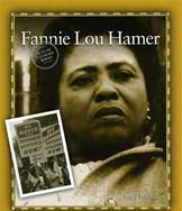
12Fannie Lou Hamer was  a civil rights activist of the movement whose passionate depiction of her own suffering in a racist society helped focus attention on the plight of African Americans throughout the South. While working with the Student Non-Violent Coordinating Committee (SNCC) in 1964; Hamer helped organize the 1964 Freedom Summer African American voter registration drive in her native Mississippi. Civil rights activist.
Born Fannie Lou Townsend on October 6, 1917 in Montgomery County, Mississippi the daughter of sharecroppers, Hamer began working the fields at an early age. Her family struggled financially, and often went hungry. In the summer of 1962, she made a life-changing decision to attend a protest meeting. She met civil rights activists there who were there to encourage African Americans to register to vote.
Hamer became active in helping with the voter registration efforts, which few in Mississippi were brave enough to do. Hamer dedicated her life to the fight for civil rights, working for the Student Nonviolent Coordinating Committee (SNCC) after going involved with the struggle. This organization was comprised mostly of African American students who engaged in acts of civil disobedience to fight racial segregation and injustice in the South. These acts often were met with violent responses by angry whites.
At the Democratic National Convention later that year, she was part of the Mississippi Freedom Democratic Party, an integrated group of activists who openly challenged the legality of Mississippi's all-white, segregated delegation. For her devotion and commitment she paid a heavy price. She was beaten within an inch of her life. So brutally that it took months for her to recover but she never gave up the fight.
During the course of her activist career, Hamer was threatened, arrested, beaten, and shot at but none of these things deterred her from her work. In 1964, Hamer helped found the Mississippi Freedom Democratic Party, which was established in opposition to the state’s all-white delegation to that year's Democratic convention. She brought the civil rights struggle in Mississippi to the attention of the entire nation during a televised session at the convention.
The next year, Hamer ran for Congress in Mississippi but was unsuccessful in her bid. Along with her political activism, Hamer worked to help the poor and families in need in her Mississippi community. She also set up organizations to increase business opportunities for minorities and to provide childcare and other family services.
Hamer died of cancer on March 14, 1977 from cancer. The encryption on her tombstone denotes her famous quote, “I am sick and tired of being sick and tired.” I’ll ask, when will this statement impact your life, whereas you will affect change. Mrs. Hamer put her life on the line for freedom. The next time you look in the mirror, ask yourself – WOULD YOU? And that’s my Thought Provoking Perspective…

Wednesday, February 12, 2014

Black History Fact: Juneteeth

Celebrate Juneteeth and Father’s DayJuneteenth is the oldest known celebration in the African American community that commemorates the ending of slavery in the United States. Dating back to 1865, it was on June 19th that the Union soldiers, led by Major General Gordon Granger, landed at Galveston, Texas with news that the war had ended and that those enslaved were now free. Note that this was two and a half years after President Lincoln’s Emancipation Proclamation - which had become official January 1, 1863.
The Emancipation Proclamation had little impact on the Texans due to the minimal number of Union troops to enforce the new Executive Order. However, with the surrender of General Lee in April of 1865, and the arrival of General Granger’s regiment, the forces were finally strong enough to influence and overcome the resistance. Later attempts to explain this two and a half year delay in the receipt of this important news have yielded several versions that have been handed down through the years.
The story that is often told is of a messenger who was murdered on his way to Texas with the news of freedom. Another story is that the news was deliberately withheld by the enslavers to maintain the labor force on the plantations. Then there is yet another story that federal troops actually waited for the slave owners to reap the benefits of one last cotton harvest before going to Texas to enforce the Emancipation Proclamation. All of which, or neither of these version could be true. Certainly, for some, President Lincoln's authority over the rebellious states was in question. Regardless, the conditions in Texas remained status quo well beyond what was statutory.
One of General Granger’s first orders of business was to read to the people of Texas, General Order Number 3 which began most significantly with:
"The people of Texas are informed that in accordance with a Proclamation from the Executive of the United States, all slaves are free. This involves an absolute equality of rights and rights of property between former masters and slaves, and the connection heretofore existing between them becomes that between employer and free laborer."
The reactions to this profound news ranged from pure shock to immediate jubilation. While many lingered to learn of this new employer to employee relationship, many left before these offers were completely off the lips of their former 'masters' - attesting to the varying conditions on the plantations and the realization of freedom. Even with nowhere to go, many felt that leaving the plantation would be their first grasp of freedom.
North was a logical destination and for many it represented true freedom, while the desire to reach family members in neighboring states drove the some into Louisiana, Arkansas and Oklahoma. Settling into these new areas as free men and women brought on new realities and the challenges of establishing a heretofore non-existent status for black people in America. Recounting the memories of that great day in June of 1865 and its festivities would serve as motivation as well as a release from the growing pressures encountered in their new territory. The celebration of June 19th was coined "Juneteenth" and grew with more participation from descendants.
The Juneteenth celebration was a time for reassuring each other, for praying and for gathering remaining family members. Juneteenth continued to be highly revered in Texas decades later, with many former slaves and descendants making an annual pilgrimage back to Galveston on this date. A range of activities were provided to entertain the masses, many of which continue in tradition today. Juneteenth almost always focused on education and self improvement. Thus, often guest speakers are brought in and the elders are called upon to recount the events of the past. Prayer services were also a major part of these celebrations.
Dress was also an important element in early Juneteenth customs and is often still taken seriously, particularly by the direct descendants who can make the connection to this tradition's roots. During slavery there were laws on the books in many areas that prohibited or limited the dressing of the enslaved. During the initial days of the emancipation celebrations, there are accounts of former slaves tossing their ragged garments into the creeks and rivers to adorn clothing taken from the plantations belonging to their former 'masters'.
Economic and cultural forces provided for a decline in Juneteenth activities and participants beginning in the early 1900’s. Classroom and textbook education in lieu of traditional home and family-taught practices stifled the interest of the youth due to less emphasis and detail on the activities of former slaves. Classroom text books proclaimed Lincoln’s Emancipation Proclamation of January 1, 1863 as the date signaling the ending of slavery - and little or nothing on the impact of General Granger’s arrival on June 19th.
The Civil Rights movement of the 50’s and 60’s yielded both positive and negative results for the Juneteenth celebrations. While it pulled many of the African American youth away and into the struggle for racial equality, many linked these struggles to the historical struggles of their ancestors. This was evidenced by student demonstrators involved in the Atlanta civil rights campaign in the early 1960’s, whom wore Juneteenth freedom buttons. Again in 1968, Juneteenth received another strong resurgence through Poor Peoples March to Washington D.C. Rev. Ralph Abernathy’s call for people of all races, creeds, economic levels and professions to come to Washington to show support for the poor.
The future of Juneteenth looks bright as the number of cities and states creating Juneteenth committees continues to increase. Respect and appreciation for all of our differences grow out of exposure and working together. Getting involved and supporting Juneteenth celebrations creates new bonds of friendship and understanding among us. This indeed, brightens our future - and that is the Spirit of Juneteenth.

Tuesday, February 4, 2014

The Great Conductor

Harriett Tubman, in my opinion, was the most courageous woman who ever lived, and my personal hero. Hidden in the tiny “dash” on her marker is her life’s work of being the great conductor of the Underground Railroad, a scout, spy, and nurse during the Civil War. I don’t know what her marker actually says, but it should contain a simple inscription that says – “Servant of God."
Harriet Tubman was born Araminta Ross sometimes referred to as "Moses." The date of her actual birth is suspect because as a slave accurate birth records were not kept. Therefore, no one can say for sure as to the actual date. She always proclaimed her birth as 1825 but most historians believe she was born around 1820 or 1821.
After escaping from the slavery into which she was born, she made thirteen missions to rescue over seventy slaves using the network of antislavery activists and safe houses known as the Underground Railroad. She once remarked that she could have saved a lot more, if they had only known they were slaves. Her courage was that of unimaginable proportion because death was the penalty for such work.
Early in her life she was told that she was of Ashanti lineage from what is now Ghana where her grandmother was captured. Her mother, Rit, struggled to keep their family together as slavery tried to tear it apart. Edward Brodess sold three of her daughters separating them from the family forever.
Once a trader from Georgia approached Brodess about buying Rit's youngest son Moses; she hid him for a month, aided by other slaves and free blacks in the community. At one point she even confronted her owner about the sale. Finally, Brodess and "the Georgia man" came toward the slave quarters to seize the child where Rit told them: "You are after my son; but the first man that comes into my house I will split his head open." Brodess backed away and abandoned the sale.
Because Tubman’s mother was assigned to "the big house" and had scarce time for her own family, as a child Tubman took care of a younger brother and a baby. At the age of five or six, she was hired out to a woman named "Miss Susan" as a nursemaid. Tubman was ordered to keep watch on her baby as it slept. When it woke or cried, Tubman was whipped.
She told of a particular day when she was lashed five times before breakfast. She carried these scars for the rest of her life. Threatened later for stealing a lump of sugar, Tubman hid in a neighbor's pig sty for five days, where she fought with the animals for scraps of food. Starving, she returned to Miss Susan's house and received a heavy beating.
Tubman was beaten and whipped regularly by her various masters to whom she had been hired out. She learned to protect herself from such abuse by wrapping herself in layers of clothing, but cried out as if she was not protected. Tubman also worked as a child for a planter where her job was to go into nearby marshes to check the muskrat traps.
Even after contracting the measles, she was sent into waist high cold water. She became very ill and was sent back to her master. Her mother nursed her back to health, whereupon she was immediately hired out again to various farms. As she grew older and stronger, she was assigned to grueling field and forest work: driving oxen, plowing, and hauling logs.
Tubman's father Ben was released from slavery at the age of forty-five, as stipulated in a former owner's will, though his real age was closer to fifty-five. He continued working as a timber estimator and foreman for the Thompson family, who had owned him as a slave.
Several years later, Tubman contacted a white attorney and paid him five dollars to investigate her mother's legal status. The lawyer discovered that a former owner had issued instructions that Rit, like her husband, would be manumitted at the age of forty-five. The record showed that a similar provision would apply to Rit's children, and that any children born after she reached forty-five years of age were legally free, but her owners ignored this stipulation.
Around 1844, she married a free black man named John Tubman. Although little is known about him or their time together, the union was complicated due to her slave status. Since the mother's status dictated that of her children, any children born to Harriet and John would be enslaved. As a result of her master’s death the likelihood that Tubman would be sold increased and the family would be broken apart as their master’s widow would sell the family's slaves. Tubman refused to wait for her owner’s family to decide her fate, despite her husband John’s efforts to dissuade her.
She escaped to Philadelphia and returned to Maryland to find her husband. However, John had married another woman named Caroline. Tubman sent word that he should join her, but he insisted that he was happy where he was. Tubman at first prepared to storm their house and make a scene, but decided he was not worth the trouble. Suppressing her anger, she found some slaves who wanted to escape and led them to Philadelphia. John and Caroline raised a family together, until he was killed sixteen years later in a roadside argument with a white man.
To be continued. And that’s my Thought Provoking Perspective…

Saturday, January 18, 2014

The Making Of A Slave

2I wrote this piece sometime ago, but I thought it was appropriate to share it on this celebratory weekend of the birth of Dr. Martin Luther King. It is relevant because some have proclaimed that a slave is born. I do not agree with this notion because a slave is made by means of a defined calculated and well thought-out plan devised for the purpose of being a beast of burden.
We know the reasons for this atrocity. It was done to build a nation on the back of human beings to obtain wealth. But what is not understood, en mass, is how it was designed to be sustainable or that slavery continues in varying forms overtime and this footnote to history seems to go unnoticed. For example, today's prison system does the same thing to minorities who are over represented in the system. 
This reminds me of the powerful words Harriet Tubman expressed succinctly concerning the effectiveness of this system of mental conditioning. She was asked shortly before her death, if she knew how many slaves she freed while conducting the Underground Railroad. She did not think about it, replying quickly, “I could have freed a lot more, if they had only known they were slaves.”
From that day in 1619, when it is believed the first Africans were dragged onto the shores of Jamestown to today where we’ve witnessed the first man of color elected President of these United States (or as Jesse would put it – from the outhouse to the White House), there is no doubt that our story is the greatest story ever told.  As it was said in scripture, “the first shall be last and the last shall be first.” But let’s understand that there was a plan, a sinister master plan, conceived at some point to ensure that people of our hue remain the least of thee.
As the story goes, a British slave owner from the West Indies was invited to Virginia sometime during the year 1712 to teach his methods to slave owners. Willie Lynch was the name of the man credited with a speech delivered on the banks of the James River. It is noteworthy to mention that the James River was named for the diabolical King of England, who was ironically the same guy responsible for the twenty-eighth version of the cherished Holy Bible.
Lynch brought with him, as he put it, a foolproof method for controlling black slaves that will last for a thousand years. Consequently, it is believed the term “lynching” was derived from his last name as a way to pay homage to him for delivering this ingenious approach. The name Willie Lynch is interesting because it may be a simple play on words. For example, Will Lynch or Will he Lynch. Whatever the reason, it no doubt had significant psychological implications that played heavily on a naive race of people.
Lynch began his historic presentation with a warm greeting: “Gentlemen, you know what your problems are; I do not need to elaborate. I am not here to enumerate your problems. I am here to introduce you to a method of solving them. In my bag here, I have a foolproof method for controlling your black slaves. I guarantee every one of you that if installed correctly it will control the slaves for at least three hundred years. My method is simple…The black slave after receiving this indoctrination shall carry on and will become self refueling and self generating for hundreds of years, maybe thousands….” The seeds of devastation were fertilized and the process of destruction was underway for the making of a race into slaves.
In the speech, Lynch outlined a number of differences among the slaves. He stressed to his audience that they should take these differences and make them bigger. These differences included such things as age, color, intelligence, fine hair vs. coarse hair, tall vs. short, male vs. female. These tactics were not new; however they were more than likely put together collectively for this specific purpose for the first time as keys to control.
This short eight paragraph speech was profound in that it was the embodiment of the cruelest demoralizing agenda ever imposed upon a people since the days when the Romans crucified our Lord. As Lynch closed his speech that day, he said, “They must love, respect, and trust only us.” This is the key to producing a successful strategy. Whether this story is true or not is cause for much speculation. However, as history demonstrates, a manufactured plan was developed by someone to achieve these results that continue to this day.
The Willie Lynch letter first appeared in the early 1970’s but gained widespread notice during the nineties, when it began appearing on the Internet. Since then, it has often been promoted as an authentic account of slavery during the 18th century, but its inaccuracies and anachronisms have led historians to conclude that it is a hoax. Let’s be honest, I don’t think any reasonable person would think that those persons present, if there was a meeting, took written notes. However, the same reasonable thinking person can see that there was a designed plan created by someone in order to sustain such division. It may have been something as simple as “divide and conquer.”
So let’s suppose the Willie Lynch story is a modern creation; either the concept was ingenious or the biggest urban myth ever. Then it begs the question, why are we still fighting amongst ourselves. Further, how can the ruling people, or anyone for that matter, justify a philosophy for building and maintaining a government which sanctioned murder, among other atrocities, to enslave human beings?  This I know, and mind you I was not taught this in school nor did anyone explain that the government, through legislative sessions, passed laws to ensure that our bondage was sustained.
This wicked system was sanctioned by the church in the name of God. Therefore, it is important to understand, when the church endorsed slavery and the vehicle that drove it, this meant in the eyes of the system that God himself authorized this immoral agenda. If this was the mentality of the church, and it is a historical fact that religion sanctioned and justified enslaving people for centuries. It begs the question, does that mentality still exist?
When I look at the mass and over population of today’s prisons with mostly people of color; I don’t see much difference than the chains around ones neck or on the wrists. And that is my Thought Provoking Perspective...

Wednesday, December 25, 2013

A Slave's Christmas

slave xmas
African American, arguably, are the most religious people on this little rock called earth and have always been since arriving in this place the slaves called “merica”. With that said, I am sure many have wondered, in spite of the wretched system of slavery, how was it celebrated by the slave population?
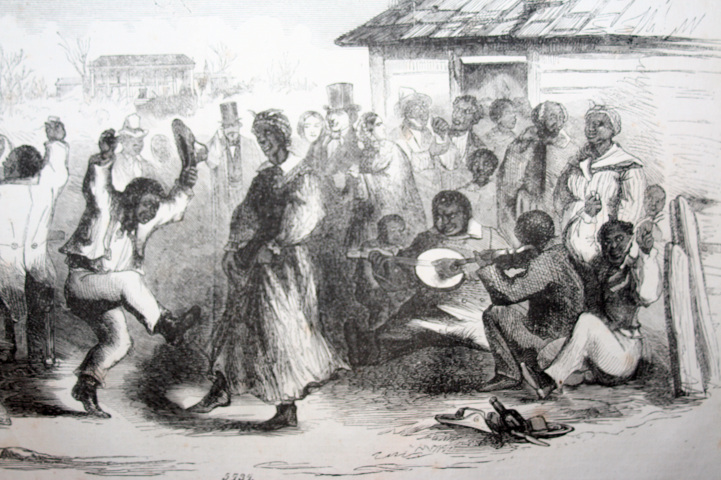
The American slaves experienced the Christmas holidays in many different ways. Joy, hope, and celebration were naturally a part of the season for many. For other slaves, this holiday conjured up visions of freedom and even the opportunity to bring about that freedom. Still others saw it as yet another burden to be endured.
I suppose the enslaved African Americans; if there was ever any joy, it might well have been during the Christmas. At least their captures, in the spirit of Jesus’ birth allowed them to have a day free from drudgery. The prosperity and relaxed discipline associated with Christmas often enabled slaves to interact in ways that they could not during the rest of the year.
They may well have received material goods from their masters: perhaps the slave’s yearly allotment of clothing, an edible delicacy, or a present above and beyond what he or she needed to survive. For this reason, among others, slaves frequently married during the Christmas season – if it was allowed. More than any other time of year, Christmas provided slaves with the latitude and prosperity that made a formal wedding possible.
This ironic annual inversion of power occasionally allowed slaves to acquire real power. Henry, a slave whose tragic life and death is recounted in Martha Griffith Browne’s Autobiography of a Female Slave, saved “Christmas gifts in money” to buy his freedom. Some slaves saw Christmas as an opportunity to escape. They took advantage of a relaxed work schedules and the holiday travels of slaveholders, who were too far away to stop them.
While some slaveholders, presumably treated the holiday as any other workday, numerous authors record a variety of holiday traditions, including the suspension of work for celebration and family visits. Because many slaves had spouses, children, and family, who were owned by different masters and lived on other properties. Slaves often requested passes to travel and visit family during this time. Some slaves used the passes to explain their presence on the road and delay the discovery of their escape through their masters’ expectation that they would soon return from their “family visit.”
Jermain Loguen plotted a Christmas escape, stockpiling supplies and waiting for travel passes, knowing the cover of the holidays was essential for success: “Lord speed the day!–freedom begins with the holidays!” These plans turned out to be wise, as Loguen and his companions were almost caught crossing a river into Ohio, but were left alone because the white men thought they were free men “who have been to Kentucky to spend the Holidays with their friends”.
It was during Christmas that Harriet Tubman helped her brothers escape. Their master intended to sell them after Christmas but was delayed by the holiday. The brothers were expected to spend the day with their elderly mother but met Tubman in secret. She helped them travel north, gaining a head start on the master who did not discover their disappearance until the end of the holidays. Likewise, William and Ellen Crafts escaped together at Christmastime. They took advantage of passes that were clearly meant for temporary use.
“This same Jesus, whom the civilized world now worship as their Lord, was once lowly, outcast, and despised; born of the most hated people of the world . . . laid in the manger of a stable at Bethlehem . . . this Jesus is worshiped now”. For Ann, Christmas symbolized the birth of the very hope she used to survive her captivity. Not all enslaved African Americans viewed the holidays as a time of celebration and hope. Rather, Christmas served only to highlight their lack of freedom.
Frederick Douglass described the period of respite that was granted to slaves every year between Christmas and New Year’s Day as a psychological tool of the oppressor. In his 1845 Narrative, Douglass wrote that slaves celebrated the winter holidays by engaging in activities such as “playing ball, wrestling, running foot-races, fiddling, dancing, and drinking whiskey”. He took particular umbrage at the latter practice, which was often encouraged by slave owners through various tactics.
In My Bondage and My Freedom, Douglass concluded“the license allowed [during the holidays] appears to have no other object than to disgust the slaves with their temporary freedom, and to make them as glad to return to their work, as they were to leave it”. While there is no doubt that many enjoyed these holidays, Douglass acutely discerned that they were granted not merely in a spirit of charity or conviviality, but also to appease those who yearned for freedom, ultimately serving the ulterior motives of slave owners.
Now we know! And that is my Thought Provoking Perspective!
Make these books the gift that keeps on giving.

Wednesday, July 31, 2013

The Curse Of Willie Lynch

th (13)Some have proclaimed that a slave was born. I disagree with this notion because a slave was made by means of a defined calculated and well thought-out plan devised for the purpose of being a beast of burden. We know the reasons for this atrocity which was to build a nation and to obtain wealth for the culprits. But what is not understood, en mass, is how it was designed to be sustainable. That part has become little more than a footnote to history.

I’m reminded of the powerful words of Harriet Tubman who expressed succinctly the effectiveness of this system of mental conditioning. She was asked shortly before her death, if she knew how many slaves she freed while conducting the Underground Railroad. She did not think about it, replying quickly, “I could have freed a lot more, if they had only known they were slaves.”

From that day in dreadful in 1619 when the first Africans were dragged onto the shores of Jamestown until today where we’ve witnessed the first man of color elected President of these United States (or as Jesse would put it – from the outhouse to the White House), there is no doubt that our story is the greatest story ever told. As it is said in scripture, “the first shall be last and the last shall be first.” But let’s understand that there was a plan, a sinister plan, conceived at some point to ensure that people of African descent remains the least of thee.

Here is the look at the plan; as the story goes, a British slave owner from the West Indies was invited to Virginia sometime during the year 1712 to teach his methods to slave owners. Willie Lynch was the name of the man credited with a speech delivered on the banks of the James River. It is noteworthy to mention that the James River was named for the diabolical King of England, who was ironically, the same guy responsible for the twenty-eighth version of the cherished Holy Bible.

Lynch brought with him, as he put it, a foolproof method for controlling black slaves that will last for a thousand years. Consequently, it is believed the term “lynching” was derived from his last name as a way to pay homage to him for delivering this ingenious approach. The name Willie Lynch is interesting because it may be a simple play on words. For example, Will Lynch or Will he Lynch. Whatever the reason, it no doubt had significant psychological implications that played heavily on a naive race of people.

Lynch began his historic presentation with a warm greeting: “Gentlemen, you know what your problems are; I do not need to elaborate. I am not here to enumerate your problems. I am here to introduce you to a method of solving them. In my bag here, I have a foolproof method for controlling your black slaves. I guarantee every one of you that if installed correctly it will control the slaves for at least three hundred years. My method is simple…The black slave after receiving this indoctrination shall carry on and will become self refueling and self generating for hundreds of years, maybe thousands….” The seeds of devastation were fertilized and the process of destruction was underway for the making of a race into slaves.

In the speech, Lynch outlined a number of differences among the slaves. He stressed to his audience that they should take these differences and make them bigger. These differences included such things as age, color, intelligence, fine hair vs. coarse hair, tall vs. short, male vs. female. These tactics were not new; however they were more than likely put together collectively for this specific purpose for the first time as keys to control.

This short eight paragraph speech was profound in that it was the embodiment of the cruelest demoralizing agenda ever imposed upon a people since the days when the Romans crucified our Lord. As Lynch closed his speech that day, he said, “They must love, respect, and trust only us.” This is the key to producing a successful strategy. Whether this story is true or not is cause for much speculation. However, as history demonstrates, a manufactured plan was developed by someone to achieve these results that continue to this day.

The Willie Lynch letter first appeared in the early 1970s gaining widespread notice during the nineties, when it began appearing on the Internet. Since then, it has often been promoted as an authentic account of slavery during the 18th century, but its inaccuracies and anachronisms have led historians to conclude that it is a hoax. Let’s be honest, I don’t think any reasonable person would think that those persons present, if there was a meeting, took written notes. However, the same reasonable thinking person can see that there was a designed plan created by someone in order to sustain such division. It may have been something as simple as “divide and conquer.”

So let’s suppose the Willie Lynch story is a modern creation; either the concept was ingenious or the biggest urban myth ever. Then it begs the question, why are we still fighting amongst ourselves. Further, how can the ruling people, or anyone for that matter, justify a philosophy for building and maintaining a government which sanctioned murder, among other atrocities, to enslave human beings?  I know, and mind you, I was not taught this in school nor did anyone explain that the government, through legislative sessions, passed laws to ensure that our bondage was sustained.

This wicked system was sanctioned by the church in the name of God. Therefore, it is important to understand, when the church endorsed slavery and the vehicle that drove it, this meant in the eyes of the system that God himself authorized this immoral agenda. If this was the mentality of the church, and it is a historical fact that religion sanctioned and justified enslaving people for centuries. It begs the question, does that mentality still exist?

And that is my Thought Provoking Perspective!

"Just a Season"
Legacy – A New Season 

Friday, February 22, 2013

On The Road To Jerusalem


I am keenly aware that I stand on the shoulders of the ghosts of the greats who suffered, died, and sacrificed so much for a people degraded and scorn to which some might say cursed by the wretchedness of slavery. Let me say that one of my major faults is that I understand the power of words and know that finding written words can produce truth. Taking into consideration, often times, those word were written for the times and used to sway or justify that which one might want truth to remain hidden.

Someone I know sent me an email that contained the “Confessions of Nat Turner”. I had never read it before and knew very little about the man Nat Turner other than what his-story tells. I was so surprised because it was, in my opinion, unfathomable to believe much of what his supposed attorney wrote as truth. This caused me to do my own research and see what facts were available to reinforce the only known account of the Nat Turner Rebellion. What I found was many different interpretations of the events of that rebellion. There were few facts. What we know is that there was a rebellion and he was hung. Everything else is conjecture!

Here are the facts: Nat Turner was born into slavery October 2, 1800 on a Southampton County plantation. On August 21, 1831, he led a violent disorganized insurrection. The incident ended the emancipation movement in that region and led to even harsher laws against slaves. Benjamin Turner, his owner, allowed him to be instructed in reading, writing, and religion. Sold three times in his childhood and hired out to John Travis 1820s. He became a fiery preacher and leader of slaves claiming that he was chosen by God to lead them from bondage.

Believing in signs and hearing divine voices, Turner was convinced by an eclipse of the Sun in 1831 that the time to rise up had come and he enlisted the help of four other slaves in the area. An insurrection was planned, aborted, and rescheduled for August 21, 1831, when he and six other slaves killed the Travis family, managed to secure arms and horses, and enlisted about 75 other slaves in a disorganized insurrection that resulted in the murder of 51 white people.

Afterwards, Turner hid nearby successfully for six weeks until his discovery, conviction, and hanging in Jerusalem, Virginia after a trial that lasted twenty four hours, along with 16 of his followers. The incident put fear in the heart of Southerners, ended the organized emancipation movement in that region, resulted in even harsher laws against slaves, and deepened the schism between slave-holders that would culminate in the Civil War. This is all we know as fact.

Among many, perhaps most, African-Americans in the antebellum period or even today, Turner's legacy takes on heroic status as someone willing to make slave-owners pay for the hardships that they enacted upon the millions of children, women and men they enslaved. He is not mentioned in the same vain as the KKK in that they murdered, under cover of law, countless men, women, and children in what was nothing more than state sponsored terrorism. Like John Brown, Turner also thought revolutionary violence would serve to awaken the attitudes of whites to the reality of the inherent brutality of slave-holding.

My research shows one thing clearly. The supposed confession taken by attorney Gray is a myth written to produce financial gain and to induce fear. Turner was called a beast and a savage – maybe. I would argue that is what he was made to be, as he and others were sold like animals, to which his knowledge of the Old Testament told him that even God worked through acts of violence and inflected extreme punishment upon his enemies for his people.

It is reported that Turner said before he was hung that “they crucified Jesus didn’t they”. And that’s my Thought Provoking Perspective…


Sunday, February 17, 2013

Roots - A Look At Our History


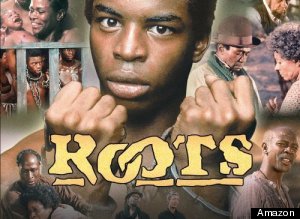
s-ROOTS-FILM-large300With Black History Month underway I would be remised of I did not pay homage to Alex Haley's groundbreaking television mini-series, “Roots”. This powerful story was the first time African Americans or dare I say the world got to see, and feel, what the slave experience was like. Sure we have seen pictures and read books but the visual presentation of the mini-series was an eye opening experience for most, as it remains one of the highest rated television shows of all time.

If you can recall the story chronicles the life of an African boy that began in Gambia, West Africa in 1750 where Kunta Kinte while trying to carry out a simple task to catch a bird sees white men carrying firearms, along with their black collaborators. He is captured by these black collaborators under the direction of white men, sold to a slave trader and placed aboard a ship to endure what we know as the Middle Passage for the long journey to America.

The ship eventually arrives in Annapolis, Maryland, where the captured Africans are sold at auction as slaves. He was sold to a Virginia plantation who gives Kunta the name Toby. The owner of the plantation assigns an older slave, Fiddler, to teach him to speak English and to train him in the ways of living and working as a chattel slave. Kunta in a persistent struggle to become free again makes several unsuccessful attempts to escape to preserve his Mandinka heritage and maintain his Mandinka roots.

The most chilling aspect of the story, for me, was when an overseer gathers the slaves and directs one of them to whip Kunta after his latest attempt to escape and continues whipping him until he finally acknowledges his new name. Then to settle a debt to his brother, the owner transfers several of his slaves, including Toby and Fiddler, to another plantation where Kunta tries again to escape, but a pair of slave catchers seize him, bind him, and chop off about half his right foot to limit his ability to run away again.

As we watched the mini-series it took us on a journey through generations of suffering until the climax when Chicken George, Haley’s grandfather, accumulated enough money to move his family to Tennessee to what was as close to freedom as they could hope for at the time. Chicken George purchased land based on the concept “God Bless the child that has his own”.

I don’t want to tell the whole story because I am sure you know it. If not the movie is well worth viewing again and again. There were then and some now, who say the epic journey of Kunta Kinte was a myth and that it was mere fiction. Those are the people who refuse to understand or see the wretchedness of the state sectioned institution of slavery. To you, unfortunately this is the foundation of America and for African Americans this is our sorted legacy that I will argue as a result the scares remain.

I’ll end by sharing these words by Maya Angelou: “history, despite its wrenching pain, cannot be unlived, but if faced with courage, need not be lived again.” We need to see this story and it was shown at the right time for us to understand! And that’s my Thought Provoking Perspective!

Saturday, December 22, 2012

A Slave’s Christmas


slave xmasAfrican American, arguably, are the most religious people on this little rock called earth and have always been since arriving in this place the slaves called “merica”. With that said, I am sure many have wondered, in spite of the wretched system of slavery, how was it celebrated by the slave population?

The American slaves experienced the Christmas holidays in many different ways. Joy, hope, and celebration were naturally a part of the season for many. For other slaves, this holiday conjured up visions of freedom and even the opportunity to bring about that freedom. Still others saw it as yet another burden to be endured.

I suppose the enslaved African Americans; if there was ever any joy, it might well have been during the Christmas. At least their capturers, in the spirit of Jesus’ birth allowed them to have a day free from drudgery. The prosperity and relaxed discipline associated with Christmas often enabled slaves to interact in ways that they could not during the rest of the year.

They may well have received material goods from their masters: perhaps the slave’s yearly allotment of clothing, an edible delicacy, or a present above and beyond what he or she needed to survive. For this reason, among others, slaves frequently married during the Christmas season – that is if it was allowed. More than any other time of year, Christmas provided slaves with the latitude and prosperity that made a formal wedding possible.

This ironic annual inversion of power occasionally allowed slaves to acquire real power. Henry, a slave whose tragic life and death is recounted in Martha Griffith Browne’s Autobiography of a Female Slave, saved “Christmas gifts in money” to buy his freedom. Some slaves saw Christmas as an opportunity to escape. They took advantage of a relaxed work schedules and the holiday travels of slaveholders, who were too far away to stop them.

While some slaveholders presumably treated the holiday as any other workday, numerous authors record a variety of holiday traditions, including the suspension of work for celebration and family visits. Because many slaves had spouses, children, and family who were owned by different masters and who lived on other properties to which slaves often requested passes to travel and visit family during this time. Some slaves used the passes to explain their presence on the road and delay the discovery of their escape through their masters’ expectation that they would soon return from their “family visit.”

Jermain Loguen plotted a Christmas escape, stockpiling supplies and waiting for travel passes, knowing the cover of the holidays was essential for success: “Lord speed the day!–freedom begins with the holidays!” These plans turned out to be wise, as Loguen and his companions were almost caught crossing a river into Ohio, but were left alone because the white men thought they were free men “who have been to Kentucky to spend the Holidays with their friends”.

It was during Christmas that Harriet Tubman helped her brothers escape. Their master intended to sell them after Christmas but was delayed by the holiday. The brothers were expected to spend the day with their elderly mother but met Tubman in secret. She helped them travel north, gaining a head start on the master who did not discover their disappearance until the end of the holidays. Likewise, William and Ellen Crafts escaped together at Christmastime. They took advantage of passes that were clearly meant for temporary use.

Christmas could represent not only physical freedom, but spiritual freedom, as well as the hope for better things to come. The main protagonist of Martha Griffin Browne’s Autobiography of a Female Slave, Ann, found little positive value in the slaveholder’s version of Christmas equating it with “all sorts of culinary preparations” and extensive house cleaning rituals but she saw the possibility for a better future in the story of the life of Christ.

“This same Jesus, whom the civilized world now worship as their Lord, was once lowly, outcast, and despised; born of the most hated people of the world . . . laid in the manger of a stable at Bethlehem . . . this Jesus is worshiped now”. For Ann, Christmas symbolized the birth of the very hope she used to survive her captivity. Not all enslaved African Americans viewed the holidays as a time of celebration and hope. Rather, Christmas served only to highlight their lack of freedom.

Frederick Douglass described the period of respite that was granted to slaves every year between Christmas and New Year’s Day as a psychological tool of the oppressor. In his 1845 Narrative, Douglass wrote that slaves celebrated the winter holidays by engaging in activities such as “playing ball, wrestling, running foot-races, fiddling, dancing, and drinking whiskey”. He took particular umbrage at the latter practice, which was often encouraged by slave owners through various tactics.

In My Bondage and My Freedom, Douglass concluded that “the license allowed [during the holidays] appears to have no other object than to disgust the slaves with their temporary freedom, and to make them as glad to return to their work, as they were to leave it”. While there is no doubt that many enjoyed these holidays, Douglass acutely discerned that they were granted not merely in a spirit of charity or conviviality, but also to appease those who yearned for freedom, ultimately serving the ulterior motives of slave owners.

Now we know! And that is my Thought Provoking Perspective!

Make these books the gift that keeps on giving.


Sunday, July 22, 2012

The Making of a Slave


Some have proclaimed that a slave was born. I do not agree with this notion because a slave was made by means of a defined calculated and well thought-out plan devised for the purpose of being a beast of burden. We know the reason for this atrocity was to build a nation through and to obtain wealth. But what is not understood, en mass, is how it was designed to be sustainable or that varying forms reappear overtime and this footnote to history has been erased or usually unnoticed.

This reminds me of the powerful words Harriet Tubman expressed succinctly concerning the effectiveness of this system of mental conditioning. She was asked shortly before her death, if she knew how many slaves she freed while conducting the Underground Railroad. She did not think about it, replying quickly, “I could have freed a lot more, if they had only known they were slaves.”

From that day in 1619, when it is believed the first Africans were dragged onto the shores of Jamestown to today where we’ve witnessed the first man of color elected President of these United States (or as Jesse would put it – from the outhouse to the White House), there is no doubt that our story is the greatest story ever told.  As it was said in scripture, “the first shall be last and the last shall be first.” But let’s understand that there was a plan, a sinister master plan, conceived at some point to ensure that people of our hue remain the least of thee.

As the story goes, a British slave owner from the West Indies was invited to Virginia sometime during the year 1712 to teach his methods to slave owners. Willie Lynch was the name of the man credited with a speech delivered on the banks of the James River. It is noteworthy to mention that the James River was named for the diabolical King of England, who was ironically the same guy responsible for the twenty-eighth version of the cherished Holy Bible.

Lynch brought with him, as he put it, a foolproof method for controlling black slaves that will last for a thousand years. Consequently, it is believed the term “lynching” was derived from his last name as a way to pay homage to him for delivering this ingenious approach. The name Willie Lynch is interesting because it may be a simple play on words. For example, Will Lynch or Will he Lynch. Whatever the reason, it no doubt had significant psychological implications that played heavily on a naive race of people.

Lynch began his historic presentation with a warm greeting: “Gentlemen, you know what your problems are; I do not need to elaborate. I am not here to enumerate your problems. I am here to introduce you to a method of solving them. In my bag here, I have a foolproof method for controlling your black slaves. I guarantee every one of you that if installed correctly it will control the slaves for at least three hundred years. My method is simple…The black slave after receiving this indoctrination shall carry on and will become self refueling and self generating for hundreds of years, maybe thousands….” The seeds of devastation were fertilized and the process of destruction was underway for the making of a race into slaves.

In the speech, Lynch outlined a number of differences among the slaves. He stressed to his audience that they should take these differences and make them bigger. These differences included such things as age, color, intelligence, fine hair vs. coarse hair, tall vs. short, male vs. female. These tactics were not new; however they were more than likely put together collectively for this specific purpose for the first time as keys to control.

This short eight paragraph speech was profound in that it was the embodiment of the cruelest demoralizing agenda ever imposed upon a people since the days when the Romans crucified our Lord. As Lynch closed his speech that day, he said, “They must love, respect, and trust only us.” This is the key to producing a successful strategy. Whether this story is true or not is cause for much speculation. However, as history demonstrates, a manufactured plan was developed by someone to achieve these results that continue to this day.

The Willie Lynch letter first appeared in the early 1970’s but gained widespread notice during the nineties, when it began appearing on the Internet. Since then, it has often been promoted as an authentic account of slavery during the 18th century, but its inaccuracies and anachronisms have led historians to conclude that it is a hoax. Let’s be honest, I don’t think any reasonable person would think that those persons present, if there was a meeting, took written notes. However, the same reasonable thinking person can see that there was a designed plan created by someone in order to sustain such division. It may have been something as simple as “divide and conquer.”

So let’s suppose the Willie Lynch story is a modern creation; either the concept was ingenious or the biggest urban myth ever. Then it begs the question, why are we still fighting amongst ourselves. Further, how can the ruling people, or anyone for that matter, justify a philosophy for building and maintaining a government which sanctioned murder, among other atrocities, to enslave human beings?  This I know, and mind you I was not taught this in school nor did anyone explain that the government, through legislative sessions, passed laws to ensure that our bondage was sustained.

This wicked system was sanctioned by the church in the name of God. Therefore, it is important to understand, when the church endorsed slavery and the vehicle that drove it, this meant in the eyes of the system that God himself authorized this immoral agenda. If this was the mentality of the church, and it is a historical fact that religion sanctioned and justified enslaving people for centuries. It begs the question, does that mentality still exist?

And that is my Thought Provoking Perspective!

Saturday, April 14, 2012

The Civil War - Beware the Facts Might Change!!!

The prolific French writer, historian, and philosopher Voltaire said, “History is a pack of tricks we play upon the dead”. This statement could not be more profound. I refer to history as His-Story.

If you are not aware, we are about to enter into five years of untruths, unreal assessments, and in some cases out and out lies, as we mark the 150th anniversary of the Civil War. This was a critical point in time because a divided nation faced a crisis. It started in the early morning hours of April 12, 1861, when Confederate batteries fired upon federal troops occupying Fort Sumter. Union forces surrendered the next day after 34 hours of shelling; the bloodiest war in the nation’s history had begun.

There is no question this was a significant event in the country’s history. However, we should be candid about its causes and not allow the distortions of contemporary politics or long-standing myths to cloud our understanding of why the nation fell apart. There will be a lot of misinformation that will surely come, as both sides of the debate relive this chapter of American history. So be prepared for the revisionists to create many illusions pertaining to the facts as they relate to the realities of Civil War history.

It’s already begun with a surge of activity, especially among conservatives, to adjust the story to reflect contemporary political positions. One prominent effort occurred in Texas when the state school board revised social studies standards to increase study of Confederate leaders and reduce emphasis on the Founding Fathers’ commitment to separation of church and state. Some wanted to stop referring to the slave trade and substitute a euphemistic phrase, the "Atlantic triangular trade." Thankfully, after opposition, that idea was dropped.

There was a case in Virginia where the Department of Education conceded its error in allowing a misleading textbook to be used in classrooms. They, against opposition, allowed the history book to continue to be used and the offending passage remained. Even after admitting that the inaccurate passage was "outside of accepted Civil War scholarship." The disputed passage was a gross falsehood that says two battalions of African American soldiers fought for the Confederacy under famed Gen. Stonewall Jackson. The department would go on to say that it anticipates teachers "will have no difficulty working around one objectionable sentence".

Also in Virginia, a few years ago, the new Governor signed a proclamation honoring the Civil War and made no mention of slavery, which again after considerable controversy he revised the proclamation. Let me add that Richmond, Virginia was the home of the Confederate capital. Sure the First Amendment protects the Confederate sympathizers' right to write this nonsense but it is up to us to do our due diligence to understand, although we were never taught the truth, that it is untrue.

Before I go any further, let’s be clear, the war was NOT fought to free the slaves. That narrative came much later when the north was not winning and needed a reason to allow colored solders to fight. Abraham Lincoln, Honest Abe, although not a proponent of slavery, had no desire to end slavery at the onset of the war. He was for the free-labor ideology of equal opportunity and upward mobility.

The issue of slavery, as he stated, “was the morality and future of the slaves and of slavery”. He believed if the nation remained divided on the issue of slavery, the nation would not last. If you recall he borrowed a statement made by Jesus to support this position; “A house divided against itself cannot stand.”

Actually, Honest Abe was considering the option of sending the slaves back to Africa or somewhere outside of America to solve the problem. IN FACT, as an experiment, he sent thousands to Haiti and the Dominican Republic. This experiment was not successful because many became ill and died causing him to reevaluate the decision. He also had another plan, which was to acquire land in South America to host this unwanted population to include other locations as well.

On the other side, the south, secessionist, saw it this way. Their leader Confederate President Jefferson Davis, a major slaveholder, justified secession in 1861 as an act of self-defense against the incoming Lincoln administration. Abraham Lincoln's policy of excluding slavery from the territories, Davis said, would make "property in slaves so insecure as to be comparatively worthless . . . thereby annihilating in effect property worth thousands of millions of dollars."

The Confederate vice president, Alexander Stephens said, "Our new government is founded upon exactly the opposite idea… Its foundations are laid, its cornerstone rests, upon the great truth that the Negro is not equal to the white man; that slavery subordination to the superior race is his natural and normal condition. This, our new government, is the first, in the history of the world, based upon this great physical, philosophical and moral truth." These guys were very straightforward in their belief that the proper status of the Negro in America’s form of civilization, if free, would be the immediate cause of the rupture.

Views such as this continue today, from various quarters, because there remains enormous denial over the fact that the central cause of the war was our national disagreement about race, slavery, or more specific states' rights. The historian Douglas Egerton says, "The South split the Democratic Party and later the country not in the name of states' rights but because it sought federal government guarantees that slavery would prevail… routinely shifted their ideological ground in the name of protecting free labor." I believe it was all about states’ rights similar to today’s conservative perspective.

Let’s be clear slavery was about one thing – economics. The institution and the economics derived from it built America and that wealth made America a powerful force in the world as a result. Therefore, those who try to rewrite or obscure the reality of this evil do so wishing the greatest crime ever inflected upon a people had never ended or that it would return. I suggest that you listen carefully to those who use the code word “States Rights” and hear what they are not saying.

The Confederacy broken up the United States and launched a war that killed 620,000 Americans in a vain attempt to keep 4 million people in slavery does not confer honor upon their lost cause. It’s been 150 years of folks, like back then and now, trying to change the narrative to justify why the war was fought. Some say slavery. Some say tariffs. Others say the Constitution. I found this quote where one captured Confederate soldier, as he was being marched off to prison, was asked, "Why are you fighting?" He is said to have grunted, "Because you're here."

If I can remind you this sounds very similar to what the Tea Baggers and the conservatives are saying now! And that’s my Thought Provoking Perspective…