Thought Provoking Perspectives is a powerful blog designed as a potent source of empowering knowledge to broaden the information base with those who share my passion for the written word. I firmly believe education is the single most important ingredient necessary to neutralize those forces that breed poverty and despair. @JohnTWills
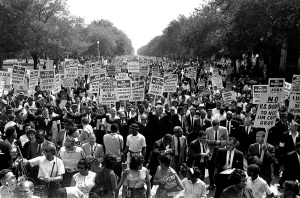
Today all eyes were on Washington as a celebration of the 50th Anniversary of the “March on Washington” for Jobs and Justice took place. August 28, 1963 marked a pivotal moment in America as the March on Washington, dubbed the greatest demonstration for freedom in the history of the United States. No question a historic event which attracted more than 250,000 Americans demanding equality in jobs and civil rights.
Off the top, let me say that I think it was a great day back in August 1963 where people of all stripe came to Washington trying to obtain equal treatment under the law. Just in case anyone may have forgotten - America’s extreme racial practices were worst than the system of Apartheid in South Africa or anywhere else in the world.
Comes now, on this day, August 23, 2013, most have proclaimed “how far we [Blacks] have come.” I can agree in some sense but I will say that if we have come so far – why are we marching? Also, in my opinion, marching is a strategy not a solution. The few adjustments to the laws, overtime, have been taken away. We face the same issues the original organizers who marched fifty-years ago. As I see it “just as sure as things change they remain the same”.
I called the march a great show because there was much collective talk about the need for a continued effort to seek what should be granted in the first place. Therefore, I fear the same show will return to the same venue in fifty-years.
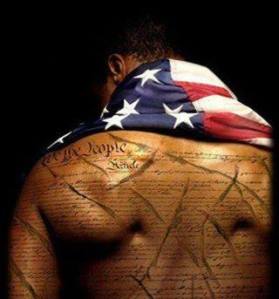
I will start and end the discussion of what was meant by the so-called dream right here. In the all mighty living document - the Constitution - it says clearly that Negroes are 3/5’s human and to this day no amendment has been added to change that to make blacks whole and thereby full citizens. Therefore, the so-called dream will never be realized unless and until this is done. So the cause of truth and justice should start there!
On this day that most are celebrating and singing “We Shall Overcome Someday”. The question is “what day and in whose lifetime”. I will leave you with this and pray that in fifty-years there will be no need for a March for Job’s and Justice. And that’s my Thought Provoking Perspective…
In the wake of George Zimmerman not guilty verdict a man, in my view a vigilante, that hunted him down and killed a young black boy in his gated neighborhood. Although we know the end result of the night of the murder; we do not know all of the particulars of that night, but we do know for sure, if we can believe what we hear from the jury members, George Zimmerman did get a jury of his peers; obviously of his mindset.
As I think about history I am reminded of a time when slave catchers roamed the nation in a historical context surrounding and preceding this case. I came to realize that people of African descent who were required to carry “freedom papers” to prove they belonged when they were and when they did not produce them the encounter often ended with similar outcomes from the Zimmerman types; upholding a system of racial slavery and the bodies of laws which restricted and criminalized black mobility and autonomy.
These laws resulting in blackness being synonymous with enslavement, and the movement and activities of black people were severely curtailed. There was no right to bear arms which was banned for the purpose of control. This legal system relied upon all white colonists to police and survey black bodies. They were the eyes and ears of the law, and the courts gave them great latitude in assessing where black people could and could not be at any given time.
Overtime the criminal justice slave system became more sophisticated with the courts requiring blacks to carry documents which validated their rights to be in certain spaces and their ability to navigate their freedom to move. Enslaved people carried pieces of paper called slave passes, documents written by their owners, which indicated their destination, time of departure, arrival and return, and sometimes the purpose of their journey.
Even free people of African descent were required to carry “freedom papers” at all times to validate their free status and hence delineate the places where they could be. Any white person, regardless of their legal authority, could demand to see these documents and interrogate a black person at any time, without any justifiable cause. If the black person in question could not produce such documents, they could be arrested, beaten, maimed or murdered with impunity.
Towns and communities hired groups of white men, everyday citizens, to “patrol” Southern space, which was a more formal arm of this system of surveillance. These vigilantes had the power to control and police black movement in any way they saw fit, with the sanction of law behind their actions, no matter how brutal they might be. Black people lived in constant fear of these men that evolved into the KKK.
People of this ilk during and after Reconstruction created “Black Codes” not only sought to maintain a cheap, servile labor force throughout the South, they also criminalized black movement and were arrested for violating Black Codes. After arrest, they were fined, jailed, and often times their labor was sold to white landowners who forced them to work as though they were slaves again. Over time, this kind of law and order morphed into its most extreme and horrific manifestation; the lynching of African-Americans throughout the twentieth century.
This is the legacy of America’s racial past that is similar to George Zimmerman’s decision to kill Trayvon Martin and his acquittal. This mindset is part of the reason why black males are suspicious and criminal to many whites who assume they are “up to something” simply because they were moving through space.
Zimmerman was simply doing what many Southern whites have done for centuries and believes they are right to do so. Martin seemed out of place, and Zimmerman was going to find out where he belonged. When Trayvon Martin did not present his “freedom papers” that night, when he elected not to explain why he was where he was; he chose to confront, and Zimmerman stalked the boy and killed him because it was “God’s plan”.
The Police department seemed to agree with Zimmerman’s assessment of Martin’s alleged out-of-place-ness. Therefore, on the night of February 26, 2012, George Zimmerman decided that Trayvon Martin was not entitled to move freely as a free American. He was not entitled to be free without verifying his freedom to a white man. When Zimmerman came upon a black male body that refused to justify his movement through a space that he deemed off limits, he enacted a brand of “law and order” which generations of white Southerners have practiced.
History is known to repeat itself. It looks like we are witnessing a return to America’s wretched past. And that’s my Thought Provoking Perspective…
I was being interviewed recently by a radio show host who asked a
question that I had not thought much about. The question was “what was
the message that I was trying to send and why did I create THOUGHT
PROVOKING PERSPECTIVES?” It made me wonder if the 14,000 plus followers
wanted to know the answer too. My response was simple – to empower the
minds of mankind. I understand that word have meaning and are powerful.
Therefore, if I can induce thought and cause one to see things from a
different perspective – I say well done.
Some have commented that
my topics are racial, liberal, and too long. I say they are detailed
reminders of the ghost of the great who paved the way and wrote the
Greatest Story Ever Told! And the perspective’s relating to the
political topics; well, they are reminders that as much as things change
they remain the same and that history is written by the victor to
enslave minds. With that said, this Sunday morning I will not take you
to church but I will give you the word!
Think about the message and maybe you can find the strength to make a difference. And That's my Thought Provoking Perspective...
I want to add my Thought Provoking Perspective to a Tweet that has gotten everybody in an uproar. Chris Rock posted a Tweet recently that said in essence Independence Day is a “white man’s holiday”. I thought there was such a thing as freedom of speech at least that is what is professed in the Constitution. It reminds me of the saying “the truth hurts” – people - what Chris said was true!
I wrote a blog a few days ago where I talked about the glory of the celebration and the fact that this freedom it represents was only for some and that blacks, women, and everyone but white men were excluded from the concept of freedom. I am sure most of you have heard of this thing called slavery that ended after a half a million people died to end it nearly a hundred years later!
Let me ask that you Google “Juneteenth” and maybe you will get a different perspective of what the African America community knows that has today been forgotten. Then there was this thing called Civil Rights that has not been fully achieved to date. I will go further and say “this is still the last plantation”. As evidence of this might be a comment by the insane Herman Cain it the video I have added.
Maybe, just maybe, we could address the race issue if America and its people would face the reality of the story, His-Story, was true. And that’s my Thought Provoking Perspective…
Legacy - A New Season is available...
It’s been several years since “Just a Season” and it’s time to move on. Generations have come and gone, life is bearable after all, and hope lives in a little boy and in a man who almost lost all hope. “Legacy – A New Season” is the long awaited saga to the epic novel “Just a Season” that will take you on an awe inspiring journey through the African American Diaspora, as told by a loving grandfather to his grandson in the oral African tradition at a time when America changed forever.
We, you and I, have spent the last thirty days visiting what I call Brownsville, you know, those segregated places mandated by law as a result of the wretched system of “Separate but Equal” or more commonly known as “Jim Crow”. I’ve resurrected the ghost of the greats that changed the world, which have caused me to live a life promised to all Americans. Having said that, I readily admit there is still a long way to go.
I have shared the African American journey that no doubt is the greatest story ever told. Maybe I’ll say this more succinctly by quoting Jesse – “From the outhouse to the White House”. The irony of this was that Africans is dragged onto the shores of this place the slaves called “merica” to now having a man of African descent in the White House as President.
This evolution brought about our acquiescence to political agendas, abdicating our own economic self-sufficiency for the greater good and most working so diligently for the economic well-being of other people. Since the 13th, 14th and 15th Amendments were written many died for the rights described therein, we continue to fight for equality.
Since Black History month has come to an end. I want to leave you with this thought from “The Mis-Education of the Negro,” the most profound novel ever written in my opinion, originally published in 1933 by Dr. Carter G. Woodson, who is known as the father of Black History Montn. I might add that this book should be mandatory reading for all African Americans – young and old.
The thesis of Dr. Woodson's book is that Negroes of his day were being culturally indoctrinated rather than taught in American schools, or not even given the advantage of education. This conditioning, he claims, causes African Americans to become dependent, seeking out inferior places in the greater society of which they are a part. This assertion is clearly evident nearly eighty years later.
He challenged his readers to become empowered by doing for themselves, regardless of what they were taught: “History shows that it does not matter who is in power... those who have not learned to do for themselves and have to depend solely on others never obtain any more rights or privileges in the end than they did in the beginning.”
This goes beyond the imagination, irrespective of the many promises that have been made and broken, that fairness exists. Don’t worry, we have been taught that when we die there is a place where there is a mansion with streets paved with gold. Rather, let's agree with the great Curtis Mayfield who wrote: “people get ready there’s a train a comin. You don’t need no ticket. All you need is faith to get on board… you just thank the lord.”
I have said with each post during this Black History Month that “Black History is American History”. Therefore, I say, we have witnessed the first man of African decent elected president of these United States and nothing more significant has happened since the resurrection of Christ. I am thankful to have lived to see what no one living or dead ever thought would occur. God Bless America and let’s re-elect President Barrack Obama so the greatest story ever told continues!
Reverend Dr. Martin Luther King, Jr. the most revered leader of our time, was born January 15, 1929 and murdered on April 4, 1968. Dr. King’s most notable accomplishments were the Montgomery Bus Boycott, being the founder and first President of the Southern Christian Leadership Conference, the famed March on Washington, and being the youngest person to receive the Nobel Peace Prize.
His main legacy was to secure progress in civil rights for the American Negro and poor people in the United States, and for this reason he has become a human rights icon recognized as a martyr. He was posthumously awarded the Presidential Medal of Freedom, the Congressional Gold Medal, a National Holiday, and will be honored with a monument on the Washington Mall in DC.
He was born in Atlanta, Georgia, the son of the Reverend Martin Luther King, Sr. who was born "Michael King." Few people know that Martin Luther King, Jr. was originally named "Michael King, Jr." until the family traveled to Europe in 1934 and visited Germany. His father soon changed both of their names to Martin Luther in honor of the German Protestant leader Martin Luther. King sang with his church choir at the 1939 Atlanta premiere of the movie Gone with the Wind.
King married Coretta Scott, on June 18, 1953, on the lawn of her parents' house in her hometown of Heiberger, Alabama; they had four children. At the age of twenty-five he became Pastor of the Dexter Avenue Baptist Church in Montgomery, Alabama, where his trajectory to greatness was launched in 1954. He skipped both the ninth and the twelfth grade and entered Morehouse College at age fifteen without formally graduating from high school. In 1948, he graduated from Morehouse with a Bachelor of Arts degree in sociology, and enrolled in Crozer Theological Seminary in Chester, Pennsylvania, from which he graduated with a Bachelor of Divinity degree in 1951. King then began doctoral studies in systematic theology at Boston University and received his Doctor of Philosophy on June 5, 1955, with a dissertation on "A Comparison of the Conceptions of God in the Thinking of Paul Tillich and Henry Nelson Wieman."
King was originally skeptical of many of Christianity's claims. Most striking perhaps was his denial of the bodily resurrection of Jesus during Sunday school at the age of thirteen. From this point he stated, "doubts began to spring forth unrelentingly.” However, throughout his career of service, he wrote and spoke frequently, drawing on his experience as a preacher, which he understood to be his purpose. For example, in his “letter from Birmingham Jail,” written in 1963, is a passionate statement of his crusade for justice. It was confirmed when he became the youngest recipient to receive the coveted Nobel Peace Prize for leading non-violent resistance to racial prejudice in the United States.
We have been taught to believe that Mrs. Parks’ refusal to give up her seat that day was an anomaly. Many Blacks refused, at one time or another, to give up their seats in the white only section usually resulting in being run out of town. There was a committee silently waiting for an instance where they could take it through the legal system to put an end to this unholy system. For example, in March 1955 a fifteen-year-old school girl, Claudette Colvin refused to give up her bus seat to a white man in compliance with the Jim Crow Laws. King was on the committee from the Birmingham African American community that looked into the case; the committee decided to wait for a better case to pursue.
On December 1, 1955, the case that they were waiting for appeared. Mrs. Rosa Parks was arrested for refusing to give up her seat. The Montgomery Bus Boycott planned by E. D. Nixon and led by King emerged. The boycott lasted for 385 days crippling the city economically. The situation became so tense that King's house was bombed and he was arrested during this campaign. The case ultimately ended with a United States District Court ruling in Browder v. Gayle that ended racial segregation on all Montgomery public buses and throughout the south.
In 1957, Dr. King, Ralph Abernathy, and other civil rights activists founded the Southern Christian Leadership Conference (SCLC), a group created to harness the moral authority and organizing power of black churches to conduct non-violent protests in the service of civil rights reform. King led the SCLC until his death. Over his career Dr. King narrowly escaped death as his life was in constant danger, but he remained faithful to a non-violent philosophy modeled by Gandhi's non-violent techniques. Dr. King believed that organized non-violent protest against the system of southern segregation known as Jim Crow would lead to extensive media coverage of the struggle for black equality and voting rights.
It is my opinion that this was the single most powerful tool in the arsenal of the civil rights movement. This explosive media coverage, both journalistic and television footage of the daily deprivation and indignities suffered by southern blacks, and of segregationist violence and harassment of civil rights marchers produced a wave of sympathetic public opinion. This was in large part what convinced the majority of Americans that the civil rights movement was the most important issue in American politics in the early 1960’s. King organized and led marches for the right to vote, desegregation, labor rights and other basic civil rights. Most of these rights were successfully enacted into law with the passage of the Civil Rights Act of 1964 and the Voting Rights Act of 1965.
Dr. King was sought out for assistance all over the nation to improve the state of the deprived Negro in campaigns like the Albany Movement, Birmingham, Selma, Augustine, and the famed March on Washington. After the campaign ran low on adult volunteers, SCLC's strategist, James Bevel, initiated the recruitment of children for what became known as the "Children's Crusade." During the protests, the Birmingham Police Department led by Bull Connor, used high pressure water jets and police dogs to control protesters including the little children. King and the SCLC were criticized by many for putting children in harm's way but by the end of the campaign it was a resounding success. Connor lost his job, the "Jim Crow" signs in Birmingham came down, and public places became open to blacks.
History will most remember Dr. King for his famous “I have a dream speech” during the March on Washington for Jobs and Freedom that took place on August 28, 1963. Dr. King, representing SCLC, was among the leaders of the so-called "Big Six" civil rights organizations who were instrumental in the organization of this massive event. The other leaders and organizations comprising the Big Six were Roy Williams from the NAACP, Whitney Young of the Urban League, A. Philip Randolph of the Brotherhood of Sleeping Car Porters, John Lewis of SNCC, and James Farmer of the Congress of Racial Equality with King's colleague Bayard Rustin the primary logistical and strategic organizer.
The march originally was conceived as an event to dramatize the desperate condition of blacks and a very public opportunity to place their grievances squarely before the seat of power in the nation's capital. King’s leadership role was another which caused controversy because he was one of the key figures who acceded to the wishes of President Kennedy in changing the focus of the march. It is a fact that Kennedy initially opposed the march outright, because he was concerned it would negatively impact the drive for passage of civil rights legislation, but the organizers stood their ground concerning the march. Organizers firmly intended to challenge the federal government for its failure to safeguard the civil rights of the Negro.
However, the group acquiesced to presidential pressure and the event ultimately took on a far less strident tone. As a result, some civil rights activists felt it presented a sanitized representation of racial harmony. Malcolm X called it the "Farce on Washington" and members of the Nation of Islam were not permitted to attend the march. In spite of that, the march did make specific demands that were important to the movement. The demands were an end to racial segregation in public schools, meaningful civil rights legislation, a law prohibiting racial discrimination in employment, protection of civil rights workers from police brutality, a two dollar minimum wage for all workers, and self government for Washington, DC, which was controlled by the Dixiecrats.
Despite tensions, the march was a resounding success. More than a quarter million people of diverse ethnicities attended the event sprawling from the steps of the Lincoln Memorial on the National Mall and around the reflecting pool. At the time, it was the largest gathering of protesters in Washington's history. Martin Luther King Jr. expressed a view that black Americans, as well as other disadvantaged Americans, should be compensated for historical wrongs. In an interview conducted for Playboy in 1965, he said that granting black Americans only equality could not realistically close the economic gap between them and whites. He stated, "It should benefit the disadvantaged of all races."
What disturbs me about the movement was the “fact” that Attorney General Robert F. Kennedy, who was supposed to be a friend of the Negro, warned King to discontinue his suspect associations. It was Kennedy who felt compelled to issue the written directive authorizing the FBI to wiretap King and other leaders of the Southern Christian Leadership Conference. J. Edgar Hoover used the bureau over the next five years in attempts to force King out of the preeminent leadership position. This led Hoover to imply that King was a Communist and aggressively dog him for the rest of his life. He was concerned that allegations of Communists in the SCLC would derail the Administration's civil rights initiatives.
For his part, King adamantly denied having any connections to Communism, stating in the 1965 Playboy interview that "there are as many Communists in this freedom movement as there are Eskimos in Florida," while claiming that Hoover was "following the path of appeasement of political powers in the South." He went on to say that his concern for communist infiltration of the civil rights movement was meant to "aid and abet the salacious claims of southern racists and the extreme right-wing elements." Hoover did not believe his pledge of innocence and replied by saying that King was "the most notorious liar in the country."
After King gave his "I Have a Dream" speech during the March on Washington on August 28, 1963, the FBI described King as "the most dangerous and effective Negro leader in the country." In December 1963, FBI officials were gathered for a special conference and alleged that King was "knowingly, willingly and regularly cooperating with and taking guidance from communists" whose long-term strategy was to create a "Negro-labor" coalition detrimental to American security.
The attempt to prove that King was a Communist was related to the feeling of many segregationists that blacks in the South were happy with their lot but had been stirred up by "communists" and "outside agitators." The civil rights movement arose from activism within the black community dating back to before World War I. In response to the FBI's comments regarding communists directing the civil rights movement, King said that "the Negro revolution is a genuine revolution, born from the same womb that produces all massive social upheavals, the womb of intolerable conditions and unendurable situations."
Starting in 1965, King began to express doubts about the United States' role in the Vietnam War. In an April 4, 1967 appearance at the Riverside Church in New York, exactly one year before his death, King delivered a speech titled "Beyond Vietnam." In the speech, he spoke strongly against the United States' role in the war, insisting that the U.S. was in Vietnam "to occupy it as an American colony" and calling the U.S. government "the greatest purveyor of violence in the world today." King also was opposed to the war on the grounds that the war took money and resources that could have been spent on social welfare services like the War on Poverty.
Many white southern segregationists vilified King and this speech soured his relationship with many members of the mainstream media. Life Magazine called the speech "demagogic slander that sounded like a script for Radio Hanoi," and the Washington Post declared that King had "diminished his usefulness to his cause, his country, his people.” King stated that North Vietnam "did not begin to send in any large number of supplies or men until American forces had arrived in the tens of thousands." King also criticized the United States' resistance to North Vietnam's land reforms. He accused the United States of having killed a million Vietnamese, "mostly children."
In 1968, King and the SCLC organized his last campaign, the "Poor People's Campaign," to address issues of economic justice. The campaign culminated in a march on Washington, DC, demanding economic aid to the poorest communities of the United States. King traveled the country to assemble "a multiracial army of the poor" that would march on Washington to engage in non-violent civil disobedience at the Capitol until Congress created a bill of rights for poor Americans. However, the campaign was not unanimously supported by other leaders of the civil rights movement. Rustin resigned from the march stating that the goals of the campaign were too broad, the demands unrealizable, and thought these campaigns would accelerate the backlash and repression on the poor and the black.
Unfortunately, before the march was realized Dr. King went to Memphis, Tennessee, in support of black sanitary public works employees who had been on strike for higher wages and better treatment. In one incident, black street repairmen received pay for two hours when they were sent home because of bad weather, but white employees were paid for the full day. On April 3, King addressed a rally and delivered his "I’ve Been to the Mountaintop" address at Mason Temple, the world headquarters of the Church of God in Christ. King's flight to Memphis had been delayed by a bomb threat against his plane.
In the close of the last speech of his career, in reference to the bomb threat, King said the following: “And then I got to Memphis. And some began to say the threats, or talk about the threats that were out. What would happen to me from some of our sick white brothers? Well, I don't know what will happen now. We've got some difficult days ahead. But it doesn't matter with me now. Because I've been to the mountaintop. And I don't mind. Like anybody, I would like to live a long life. Longevity has its place. But I'm not concerned about that now. I just want to do God's will. And He's allowed me to go up to the mountain. And I've looked over. And I've seen the promised land. I may not get there with you. But I want you to know tonight, that we, as a people, will get to the promised land. And I'm happy, tonight. I'm not worried about anything. I'm not fearing any man. Mine eyes have seen the glory of the coming of the Lord.”
The next evening at 6:01 p.m., April 4, 1968, a shot rang out as King stood on the motel's second floor balcony. The bullet entered through his right cheek, smashing his jaw, then traveled down his spinal cord before lodging in his shoulder. Abernathy heard the shot from inside the motel room and ran to the balcony to find King on the floor. After emergency chest surgery, King was pronounced dead at St. Joseph’s Hospital at 7:05 p.m. According to biographer Taylor Branch, King's autopsy revealed that though only thirty-nine years old, he had the heart of a sixty-year-old man, perhaps a result of the stress of thirteen years in the civil rights movement. The assassination led to a nationwide wave of riots in more than 100 cities. Presidential candidate Robert Kennedy was on his way to Indianapolis for a campaign rally when he was informed of King's death. He gave a short speech to the gathering of supporters informing them of the tragedy and asking them to continue King's idea of non-violence.
President Lyndon B. Johnson declared April 7 a national day of mourning for the civil rights leader. Vice-President Hubert Humphrey attended King's funeral on behalf of Lyndon B. Johnson, as there were fears that Johnson's presence might incite protests and perhaps violence. At his widow's request, King's last sermon at Ebenezer Baptist Church was played at the funeral. It was a recording of his "Drum Major" sermon, given on February 4, 1968. In that sermon, King made a request that at his funeral no mention of his awards and honors be made, but that it be said that he tried to "feed the hungry," "clothe the naked," "be right on the Vietnam war question," and "love and serve humanity." His good friend Mahalia Jackson sang his favorite hymn, "Take My Hand, Precious Lord," at the funeral. The city of Memphis quickly settled the strike on terms favorable to the sanitation workers.
Two months after King's death, escaped convict James Earl Ray was captured at London Heathrow Airport while trying to leave the United Kingdom on a false Canadian passport in the name of Ramon George Sneyd on his way to white ruled Rhodesia. Ray was quickly extradited to Tennessee and charged with King's murder. He confessed to the assassination on March 10, 1969, though he recanted this confession three days later. On the advice of his attorney Percy Foreman, Ray pleaded guilty to avoid a trial conviction and thus the possibility of receiving the death penalty. Ray was sentenced to a 99-year prison term.
Ray fired Foreman as his attorney, from then on derisively calling him "Percy Fourflusher." He claimed a man he met in Montreal, Quebec with the alias "Raoul" was involved and that the assassination was the result of a conspiracy. He spent the remainder of his life attempting, unsuccessfully, to withdraw his guilty plea and secure the trial he never had. On June 10, 1977, shortly after Ray had testified to the House Select Committee on Assassinations that he did not shoot King, he and six other convicts escaped from Brushy Mountain State Penitentiary in Petos, Tennessee. They were recaptured on June 13 and returned to prison.
Ray's lawyers, as do I, maintained Ray was a scapegoat similar to the alleged John F. Kennedy assassin Lee Harvey Oswald. As seen by conspiracy theorists, Ray was a thief and burglar, but he had no record of committing violent crimes with a weapon. Those suspecting a conspiracy in the assassination point out the two separate ballistics tests conducted on the Remington Gamemaster recovered by police had neither conclusively proved that Ray had been the killer nor that it had even been the murder weapon. Moreover, witnesses surrounding King at the moment of his death say the shot came from another location, from behind thick shrubbery near the rooming house, which had been inexplicably cut away in the days following the assassination, and not from the rooming house window.
In 1997, King's son Dexter Scott King met with Ray, and publicly supported Ray's efforts to obtain a new trial. Two years later, Corretta Scott King, along with the rest of King's family, won a wrongful death claim against Loyd Jowers and "other unknown co-conspirators." Jowers claimed to have received $100,000 to arrange King's assassination. The jury of six whites and six blacks found Jowers guilty and that government agencies were party to the assassination. William F. Pepper represented the King family in the trial.
In 2000, the United States Department of Justice completed the investigation about Jowers' claims but did not find evidence to support allegations about conspiracy. The investigation report recommended no further investigation unless some new reliable facts are presented. The New York Times reported a church minister, Rev. Ronald Denton Wilson, claimed his father, Henry Clay Wilson, not James Earl Ray, assassinated Martin Luther King, Jr. He stated, "It wasn't a racist thing; he thought Martin Luther King was connected with communism, and he wanted to get him out of the way."
In my opinion, the argument that Ray acted alone is simply fantasy. How can we be expected to believe a two bit crook could develop a plan to kill King and travel the world broke? In 2004, Jesse Jackson, who was with King at the time of his death said, “The fact is there were saboteurs to disrupt the march. And within our own organization, we found a very key person who was on the government payroll. So infiltration within, saboteurs from without and the press attacks. ...I will never believe that James Earl Ray had the motive, the money and the mobility to have done it himself. Our government was very involved in setting the stage for, and I think the escape route for James Earl Ray.”
On the international scene, King's legacy included influences on the Black Consciousness Movement and Civil Rights Movement in South Africa. King's wife, Coretta Scott King, followed her husband's footsteps and was active in matters of social justice and civil rights until her death in 2006. The same year that Martin Luther King was assassinated, she established the King Center in Atlanta, Georgia, dedicated to preserving his legacy and the work of championing non-violent conflict resolution and tolerance worldwide. We are blessed that Dr. King was allowed to walk among us and change the world.
On that December evening, when Rosa Parks refused to give up her seat on a Montgomery bus leading to her arrested for a violation of Chapter 6, Section 11 segregation law of the Montgomery City code. In spite of the fact that she was not even technically seated in the white-only designated section on the bus; she was in a colored section. Regardless, fate dictated it to be the day that changed American and to a larger extent – the world forever.
Mrs. Parks would later recall asking the officer who arrested her, "Why do you push us around?" The officer's response was "I don't know, but the law's the law, and you're under arrest." This woman of great dignity thought, as she was being arrested, that this will be the very last time that she would ever ride in humiliation of this kind again.
Later that evening E.D. Nixon and Clifford Durr bailed Parks out of jail and that very night Nixon and members of the Women’s Political Council stayed up all night mimeographing over 35,000 handbills announcing a bus boycott. The Women's Political Council was the first group to officially endorse the boycott.
On Sunday morning, December 4, 1955, plans for the Montgomery Bus Boycott were announced at all black churches in the area and in a front-page article in The Montgomery Advertiser. By the end of the day, a church rally was held and those attending agreed unanimously to continue the boycott until they were treated with the level of courtesy they expected, until black drivers were hired, and until seating in the middle of the bus was handled on a first-come basis.
Four days later, Parks was tried and convicted for disorderly conduct as well as violating a local ordinance. The trial lasted 30 minutes and she was fined $10, plus $4 in court costs. Parks appealed her conviction and formally challenged the legality of racial segregation. Mrs. Parks would later say:
I did not want to be mistreated; I did not want to be deprived of a seat that I had paid for. It was just time... there was opportunity for me to take a stand to express the way I felt about being treated in that manner. I had not planned to get arrested. I had plenty to do without having to end up in jail. But when I had to face that decision, I didn't hesitate to do so because I felt that we had endured that too long. The more we gave in, the more we complied with that kind of treatment, the more oppressive it became.
On Monday, December 5, 1955, after the success of the one-day boycott, a group of 16 to 18 people gathered at the Mt. Zion AME Zion Church to discuss boycott strategies. The group agreed that a new organization was needed to lead the boycott effort if it were to continue. It was Rev. Ralph Abernathy who suggested the name Montgomery Improvement Association. The name was adopted, the MIA was formed, and march to justice was on. Its members elected as their president a relative newcomer to Montgomery, a young and mostly unknown minister of Dexter Avenue Baptist Church, Dr. Martin Luther King, Jr.
Fifty leaders from the African American community gathered that Monday night to discuss the proper actions to be taken in response to Parks' arrest. E.D. Nixon said, "My God, look what segregation has put in my hands!" Parks was the ideal plaintiff for a test case against city and state segregation laws. Plans for such a protest had been underway for some time. Claudette Colvin a 15-year-old, unwed and pregnant, was one of the first to be considered for such a case but she was deemed unacceptable to be the center of a civil rights mobilization.
Mrs. Parks was regarded one of the finest citizens of Montgomery, not one of the finest Negro citizens, but one of the finest citizens of Montgomery. Parks was securely married and employed, possessed a quiet and dignified demeanor, and was politically savvy, which was a huge plus for the cause.
On the day of Parks' trial, which was Monday, December 5, 1955, the WPC distributed the 35,000 leaflets. The handbill read, "We are...asking every Negro to stay off the buses Monday in protest of the arrest and trial ... You can afford to stay out of school for one day. If you work, take a cab, or walk. But please, children and grown-ups, don't ride the bus at all on Monday. Please stay off the buses Monday."
It rained that day, but the black community persevered in their boycott. Some rode in carpools, while others traveled in black-operated cabs that charged the same fare as the bus, 10 cents. Most of the remainder of the 40,000 black commuters walked, some as far as 20 miles (30 km). In the end, the boycott lasted for 381 days. Dozens of public buses stood idle for months, severely damaging the bus transit company's finances, until the law requiring segregation on public buses was lifted.
Some segregationists retaliated with terrorism. Black churches were burned or dynamited. Martin Luther King's home was bombed in the early morning hours of January 30, 1956, and E.D. Nixon's home was also attacked. However, the black community's bus boycott marked one of the largest and most successful mass movements against racial segregation. It sparked many other protests, and it catapulted King to the forefront of the Civil Rights Movement.
To sum up the actions of the time Dr. King wrote in his 1958 book Stride Toward Freedom that Parks' arrest was the precipitating factor, rather than the cause, of the protest: "The cause lay deep in the record of similar injustices…. Actually, no one can understand the action of Mrs. Parks unless he realizes that eventually the cup of endurance runs over, and the human personality cries out, 'I can take it no longer.'"
On May 17, 1954, the Warren Court’s unanimous (9-0) decision stated that “separate educational facilities are inherently unequal.” This was the day that the landmark Brown v Board of Education Supreme Court decision changed the face of America unlike any other decision before or since. It was the cornerstone that laid the foundation for all of the civil rights African American’s know today, just as the late Thurgood Marshall, who brilliantly argued and won this case envisioned. It is also very appropriate to recognize the skillful talent of Justice Marshall for his more than fifty victories before the Supreme Court, more than any other attorney in history.
The Brown case, as it is known, was not the first such case regarding civil rights argued before the Supreme Court. It was just the most significant of what some would say was the final battle in the courts that had been fought by African American parents since 1849, which started with Roberts v. City of Boston, Massachusetts. It is also important to note that Kansas was the site of eleven such cases spanning from 1881 to 1949.
The case was named after Oliver Brown one of 200 plaintiffs. The Brown case was initiated and organized by the National Association for the Advancement of Colored People (NAACP) leadership who recruited African American parents in Topeka, Kansas for a class action suit against the local school board. The Supreme Court combined five cases under the heading Brown v. Board of Education: Delaware, Kansas, South Carolina, Virginia, and the District of Columbia. The ultimate goal sought by the NAACP was to end the practice of “separate but equal” throughout every segment of society, including public transportation, dining facilities, public schools and all forms of public accommodations.
The Brown Supreme Court ruling determined racial segregation in public education was unconstitutional in Brown I, the first opinion. The court’s implementation mandated "with all deliberate speed" in 1955 known as Brown II. In 1979, twenty five years later, there was a Brown III because Topeka was not living up to the earlier Supreme Court ruling, which resulted in Topeka Public Schools building three magnet schools to comply with the court's findings.
As had been the case since Homer Plessy, the subject in Plessy v. Ferguson in 1896 when the U.S. Supreme Court decided that a Louisiana law mandating separate but equal accommodations for blacks and whites on intrastate railroads was constitutional. This decision provided the legal foundation to justify many other actions by state and local governments to socially separate blacks and whites.
Now that I have provided some history related to the case let me add my commentary. It has been said that as sure as things change they remain the same. First, it took 60 year to overturn Plessy with Brown and it took “with all deliberate speed” 13 years for integration to begin fully. During this period of time from 1954 to 1967, governors blocked school entrances and actually closed schools rather than comply with the law of the land. I am not going to touch on the violence that caused Presidents to send the US Army and National Guard troops to schools in order to protect the safety of those the ruling was intended benefit as a result of the Brown decision.
Since then, and over time, many scams have been devised to disenfranchise minorities, and African Americans in particular. I need only remind you of “No Child Left Behind” where we see persistent patterns of underachievement for lower-income students on standardized test scores. These standardized tests serve as gatekeepers to a child's academic future, which I don’t believe was the spirit of the Brown case.
This brings us to where we are today concerning the inequity that still exists. For example in Washington DC the capital of the free world with its minority public school student population of about 95% (all minorities included) suggests that schools are equally as segregated, poorly funded, and there dilapidated facilities equate to pre Brown V Board era schools. The police presence that exists today unlike then serves to save, often times, the students from themselves. About three-fourths of elementary students are poor enough to qualify for free or reduced-price lunches. The dropout rate averages 2 to 1. These are just a few issues that by any measure of academic standards or common sense suggest failure.
The Quality Counts Report, a publication from Editorial Projects in Education, which publishes the trade magazine Education Week, rated the 50 states and the District in six areas of educational performance and policy. Washington schools were ranked 51st in the report, but the lead researcher said that Washington is more comparable to large cities than to states, which have a mix of struggling urban and higher-performing suburban and rural schools. Like school districts in most large cities, Washington schools are severely challenged with daunting problems with the most serious being a large population of students from poor families living in troubled neighborhoods.
To address these issues Mayor Adrian Fenty appointed Chancellor Michelle Rhee in 2007 to be the seventh person to lead the District of Columbia Public Schools System in a decade. This is a school district serving more than 47,000 students in 123 schools. Chancellor Rhee has made great strides in overcoming a combination of a low-performing schools and a system with an unimpressive history of policymaking that has generally not received better than a D-plus.
Under the leadership of Chancellor Rhee, the public school system has made some progress in addressing these issues. But here tenure not unlike her predecessor’s has been marked with much adversity. I choose this school district as an example but I dare say must school districts with predominately minority populations endure the same daunting challenges, which begs the question as sure as thing change they remain the same.
After fifty-five years, it is not unreasonable to seek and ask that the spirit of Brown rest in the city where the decision was rendered into law. I understand that public education was not created to develop minds rather it was intended to simply teach reading, writing, and arithmetic. It was created to maintain a permanent underclass. Much like it was then, a travesty, in many ways it remains a travesty for the children in most Urban Public School System’s particularly in the city that is supposed to be the beacon of freedom around the world.
I, like Dr. King believe in the dream but we have unfinished business and as it stands - it is a dream deferred. That’s why it is imperative for us to celebrate this milestone and continue the struggle as the ghosts of so many greats who died for this principle: “education is the single most important ingredient necessary to neutralize those forces that breed poverty and despair”.
On this January day, we celebrate the Birthday of Dr. Martin Luther “The King”. I am grateful that God sent him to us with a special gift to change the world. Today HIS-story speaks of the good reverend with profound reverence, in fact placing him second only to Jesus. Now, please understand that I believe Dr. King’s place in history is well deserved, secure, and beyond reproach. However, I lived through and during the time in which he lived meaning HIS-story does not accurately reflect what I remember, witnessed and know to be true.
Dr. King’s career or national presence began in 1955 when a seamstress refused to give up her seat on a segregated public bus in Birmingham, Alabama. He was responsible for the hugely successful boycott that paralyzed the city and forced changes to long held separate but equal policies. It was during this period that his home was bombed with his lovely wife and babies inside. He was arrested many – many times for peacefully asking for the most basic of human dignities. He was assaulted, stabbed, trampled by horses, and made out to be a communist. He was called a villain and names like “Martin Luther Coon”, and worst. In fact, he was viewed as a terrorist in his day.
During the time in which he lived it was well known in our community that Dr. King had a mutually antagonistic relationship with the government’s top police agency; particularly its director, who ordered surveillance of him and his organization for years. Wiretaps were placed in his home, office phones and they bugged his hotel rooms as he traveled around the country. The agency tried to discredit him through revelations regarding his private life. Reports regarding his supposed extramarital and sexual affairs were distributed to the executive branch, friendly reporters, funding sources, and potential coalition partners, as well as to his lovely wife.
They had followed his every step, yet claimed not to know who fired the shot. So in light of all this surveillance and counterintelligence activity it was not too difficult to conclude that they knew exactly who murdered him and all involved. When the culprit was arrested it was revealed that he was merely a petty thief who was not capable of robbing the Girl Scouts. Let me put this in context, this guy had a few hundred dollars in twenty dollar bills yet managed to escape traveling halfway around the world before being caught.
I can vividly recall that dreadful day, April 4th, 1968, asking the question most of us asked; how could the Prince of Peace be murdered? WHY? My knowledge of history tells me that anytime someone appears who has the power to change the system, eliminating the change agent is the system’s way of preservation. In other words the system is designed to protect the system. Aside from winning the Nobel Peace Prize, leaving us with brilliant written words, the enormous sacrifices risking his life, and losing it for peace – I honor this great man on this day and always. It is because of that wretched part of society that demonized him while he lived that we should appreciate his life and take into consideration as we celebrate his legacy.
My deepest heartfelt memory of Dr. King was the night before his death when he gave a speech that appeared as if he knew he was going to die. It was the most passionate speech I had ever heard. In that speech, he proclaimed that he’d been to the mountaintop and had seen the other side. Further, he proclaimed he did not fear any man for his eyes had seen the coming of the Lord.
HIS-story calls him a dreamer as they say he had a dream. I say, he was a brave visionary or maybe by exercising the wisdom of God’s gift that he could see the future. Dr. King’s left us with a very powerful message delivered August 28, 1963 on the Mall in front of the Lincoln Memorial in Washington DC via the famous “I have a Dream Speech” - (Excerpts):
• "In a sense we've come to our nation's capital to cash a check. When the architects of our republic wrote the magnificent words of the Constitution and the Declaration of Independence, they were signing a promissory note to which every American was to fall heir. This note was a promise that all men - yes, black men as well as white men - would be guaranteed the unalienable rights of life, liberty and the pursuit of happiness. It is obvious today that America has defaulted on this promissory note, insofar as her citizens of color are concerned. Instead of honoring this sacred obligation, America has given the Negro people a bad check, a check which has come back marked 'insufficient funds."
• "It would be fatal for the nation to overlook the urgency of the moment. This sweltering summer of the Negro's legitimate discontent will not pass until there is an invigorating autumn of freedom and equality. Nineteen sixty-three is not an end, but a beginning. Those who hope that the Negro needed to blow off steam and will now be content will have a rude awakening if the nation returns to business as usual."
• "The marvelous new militancy which has engulfed the Negro community must not lead us to a distrust of all white people. For many of our white brothers as evidenced by their presence here today have come to realize that their destiny is tied up with our destiny and they have come to realize that their freedom is inextricably bound to our freedom. We cannot walk alone."
• "I have a dream that one day this nation will rise up and live out the true meaning of its creed: 'We hold these truths to be self-evident, that all men are created equal."
• "I have a dream that my four little children will one day live in a nation where they will not be judged by the color of their skin, but by the content of their character."
• "I have a dream that one day on the red hills of Georgia the sons of former slaves and the sons of former slave owners will be able to sit down together at a table of brotherhood."
• "This is our hope. This is the faith that I go back to the South with. With this faith we will be able to hew out of the mountain of despair a stone of hope. With this faith we will be able to transform the jangling discords of our nation into a beautiful symphony of brotherhood. With this faith we will be able to work together, to pray together, to struggle together, to go to jail together, to stand up for freedom together, knowing that we will be free one day."
• "Now is the time to lift our nation from the quicksand of racial injustice to the solid rock of brotherhood. Now is the time to make justice a reality for all of God's children."
• "Let freedom ring. And when this happens, and when we allow freedom ring—when we let it ring from every village and every hamlet, from every state and every city, we will be able to speed up that day when all of God's children—black men and white men, Jews and Gentiles, Protestants and Catholics will be able to join hands and sing in the words of the old Negro spiritual: "Free at last! Free at last! Thank God Almighty, we are free at last!"
Never forget that injustice to anyone is an injustice to everyone. We can change the world but first we must change ourselves. The "Kings" message was simple like Moses he was saying “Let my people go”…

 Posts
Posts


 Today all eyes were on Washington as a celebration of the 50th Anniversary of the “March on Washington” for Jobs and Justice took place. August 28, 1963 marked a pivotal moment in America as the March on Washington, dubbed the greatest demonstration for freedom in the history of the United States. No question a historic event which attracted more than 250,000 Americans demanding equality in jobs and civil rights.