Showing posts with label Jamestown. Show all posts

Friday, January 10, 2014

The Jamestown Sin

2The Jamestown Colony, England’s first permanent settlement in North America was a marshy wasteland, poor for agriculture and a breeding ground for malaria carrying mosquitoes. The settlement was such a harsh environment that only thirty-two of the estimated one hundred original settlers survived the first seven months. His-Story describes this as the “starving times” but all would change.
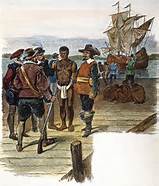
On August 20, 1619, the first African “settlers” reached North America as cargo onboard a Dutch man-of-war ship that rode the tide into Jamestown, Virginia carrying Captain Jope and a cargo of twenty Africans. It seems strange to me, but history cannot tell us why this mysterious ship anchored off Jamestown. It is believed the captain needed food and in exchange for food he offered his cargo of Africans as payment.
When the deal was consummated, Antoney, Isabella, and eighteen other Africans disembarked. Although they were not the first Africans to arrive in North America, they were the first African “settlers”. Regarded as indentured servants rather than slaves, fifteen were purchased to serve their redemption time working for Sir George Yardley, the Governor of Virginia and proprietor of the thousand-acre Flowerdew Hundred plantation.
In ten years, by the 1630’s, the colony had established a successful economy based on tobacco through the use of the Africans. Slavery was born and slave trading became big business. These human souls were acquired in Africa for an average price of about twenty-five dollars each, paid primarily in merchandise. They were sold in the Americas for about one hundred fifty dollars each. As the price of slaves increased, so did the inhumane overcrowding of the ships.
This was the beginning of the worst crime every inflicted upon a people and the most morally reprehensible agenda the world has ever known. Adding to this in justice and more horrifying was that the perpetrators believed their actions were sectioned by God with a religious manifestation that justified Slavery. The next two-hundred years was a designed systematic effort to destroy millions of lives through in documentation, brutality, savagery, and terror. I am always struck by the use of the word civilization in this matter because the root word is “civil” and there is/was NOTHING civil about the institution of slavery, which means chattel making human beings property and servants for life.
The business of slave trading had one purpose – PROFIT. The process would begin with the African being paid to venture into the interior of the continent, capture other Africans, put them on a death march to the coast and sell their captives to Europeans. Now, if capturing and stealing the victims was not misery enough what was to follow surely was in every sense of the word.
A typical slave ship traveling from Gambia, the Gold Coast, Guinea, or Senegal would take four to eight weeks to reach New England, Chesapeake Bay, the Gulf of Mexico, or the West Indies. Africans from Senegal were the most prized because many were skilled artisans. Ibos from Calabar were considered the most undesirable because of their, high suicide rate. Women, men, and children were crammed so tightly in the ships that out of a load of seven hundred, three or four slaves would be found dead each morning.
Most ships had three decks with the lower two used for transporting slaves. The lowest deck extended the full length of the ship and was no more than five feet high. The captives were packed into tomb like compartments side by side to utilize all available space. In the next deck, wooden planks like shelves, extended from the sides of the ship where the slaves were chained in pairs at the wrists and ankles crammed side by side. Men occupied middle shelves and were most often chained in pairs and bound to the ship’s gunwales or to ringbolts set into the deck. Women and children were sometimes allowed to move about certain areas of the ship.
There was no sanitation, although buckets were provided for use as toilets, which were not emptied regularly. The ships smelled of excrement, disease, and death. It is estimated that between 15 and 20 percent of the slaves died in route to the colonies, mostly from diseases associated with overcrowding, spoiled or poisoned food, contaminated water, starvation, thirst, and suicide. Others were thrown overboard; shot, or beaten to death for various reasons.
A typical slave ship coming directly to the American mainland from Africa weighed about one to two hundred tons, although some were slightly larger. Slave ships were eventually built especially for human cargo. These slave ships could carry as many as four hundred slaves and a crew of forty-seven, as well as thirteen thousand pounds of food. They were long, narrow, fast, and designed to direct air below decks. Shackling irons, nets, and ropes were standard equipment.
The competition at slave markets on the African coast grew so exceptionally that historians estimate that as many as 60 million human souls were captured and taken from the continent of Africa to be sold in to bondage. It is estimated that as many as one-third of that number did not survive the trip called the “Middle Passage” to reach the shores of a place like Jamestown in the name of God.
Did you know the first registered slave ship was named “The Good Ship Jesus” and in the name of God the greatest crime the world has known began in this place called “Jamestown”.
I am reminded of the powerful words of Sojourner Truth who was asked shortly before her death, if she knew how many slaves she freed while conducting the Underground Railroad. She did not think about it – replying quickly, “I could have freed a lot more, if they had only known they were slaves.”
My hope is that one day the devastating effect of bondage will be removed and we will be able to join hands and sing in the words of the old Negro spiritual, “Free at last, free at last. Thank God Almighty, we are free at last.” And that’s my Thought Provoking Perspective…

Tuesday, June 19, 2012

The Horror of Slavery


It was in the year of our Lord 1691 on a day that will live in infamy and the day that America lost its soul.  I want to resurrect or remind you of the horrors of that often horrific journey day in black history. It is with this remembrance of these heart wrenching events of our unimaginable struggle that African Americans must teach our children and never forget. It is here that I call the scene of the crime.

The Jamestown Colony, England's first permanent settlement in North America, was a marshy wasteland, poor for agriculture, and a breeding ground for malaria-carrying mosquitoes. The settlement was such a harsh environment that only thirty-two of the estimated one hundred original settlers survived the first seven months. HIS-Story describes this as the “starving times,” but all would change.

On August 20, 1619, the first African “settlers” reached North America as cargo onboard a Dutch man-of-war ship that rode the tide into the shores of Jamestown, Virginia, carrying Captain Jope and a cargo of twenty Africans. It seems strange to me, but history cannot tell us why this mysterious ship anchored off Jamestown. It is believed the cap¬tain needed food and in exchange for food he offered his cargo of Africans as payment.

When the deal was consummated, Antoney, Isabella, and eighteen other Africans disem¬barked. Although they were not the first Africans to arrive in North America, they were the first African “settlers.” Regarded as indentured servants rather than slaves, fifteen were purchased to serve their redemption time working for Sir George Yardley, the Gover¬nor of Virginia and proprietor of the thousand-acre Flowerdew Hundred Plantation. In ten years, by the 1630’s, the colony, through the use of the Africans, had established a successful economy based on tobacco.

Slavery was born and the slave trade became big business. These human souls were acquired in Africa for an average price of about twenty-five dollars each, paid primarily in merchandise. They were sold in the Americas for about one hundred fifty dollars each. As the price of slaves increased, so did the inhumane overcrowding of the ships.

This was the beginning of the worst crime ever inflicted upon a people and the most morally reprehensible agenda the world has ever known. Adding to this injustice and more horrifying was that the perpetrators believed their actions were sanctioned by God with a religious manifestation that justified slavery. The next two-hundred years were a designed systematic effort to destroy millions of lives through indoctrination, brutality, savagery, and terror.

I am always struck by the use of the word civilization in this matter because the root word is “civil” and there was nothing civil about the institution of slavery. To be clear a slave is chattel – a human being considered property and servant for life. The business of slave trading had one purpose – profit. The process would begin with an African being paid to venture into the interior of the continent, capture other Africans, put them on a death march to the coast and sell these captives to Europeans. Now, if stealing and capturing the victims was not misery enough, what was to follow surely was in every sense of the word.

This horrible journey, known as the “Middle Passage”, ended with a lifetime of bondage awaiting the captives at the end of the voyage. A typical slave ship traveling from Gambia, the Gold Coast, Guinea, or Senegal, would take four to eight weeks to reach New England, Chesapeake Bay, the Gulf of Mexico, or the West Indies. Women, men, and children were crammed so tightly in the cargo ships that out of a load of seven hun¬dred, three or four would be found dead each morning. Africans from Senegal were the most prized commodity be¬cause many were skilled artisans. Ibos from Calabar were considered the most undesirable because of their high suicide rate.

Most ships had three decks with the lower two used for transporting slaves. The lowest deck extended the full length of the ship and was no more than five feet high. The captives were packed into tomb-like compartments side by side to utilize all available space. In the next deck, wooden planks like shelves extended from the sides of the ship where the slaves were chained in pairs at the wrists and ankles – crammed side by side. Men occupied middle shelves and were most often chained in pairs and bound to the ship's gunwales or to ringbolts set into the deck. Women and children were sometimes allowed to move about cer¬tain areas of the ship.

A typical slave ship coming directly to the American mainland from Africa weighed about one to two hundred tons, although some were slightly larger. Slave ships were eventually built especially for human cargo. These slave ships could carry as many as four hundred slaves and a crew of forty-seven, as well as thirteen thousand pounds of food. They were long, narrow, fast, and designed to direct air below decks. Shack¬ling irons, nets, and ropes were standard equipment.

The competition at slave markets on the African coast grew so exceptionally that historians estimate that as many as 60 million human souls were captured and taken from the continent of Africa to be sold into bondage. It is estimated that as many as one-third of that number did not survive the “Middle Passage” to reach the shores of a place like Jamestown.

Did you know the first registered slave ship was named “The Good Ship Jesus,” and in the name of God the greatest crime the world has known began in this place called Jamestown? The devastating effects of bondage would have an effect on a race of people for centuries.

I will continue to pray that we will be able, one day, to join hands and sing in the words of the old Negro spiritual, "Free at last, free at last. Thank God Almighty, we are free at last." And that's my Thought Provoking Perspective.

Legacy – A New Season is coming!
Visit: http://johntwills.com
AMAZON.com

Saturday, February 27, 2010

Jamestown – “The Scene of the Crime”

It is my hope, truly, that I’ve been a source of empowerment as you’ve traveled this wonderful journey known as Black History Month through the articles I’ve posted. During this expedition, I’ve tried to resurrect those legendary segregated communities I’ve called “Brownsville”, recalled heart wrenching events, and victories resulting from unimaginable struggle that African Americans had to endure. I would be remised if I did not include an article that takes us back to the scene of the crime.

The Jamestown colony, England's first permanent settlement in North America was a marshy wasteland, poor for agriculture and a breeding ground for malaria carrying mosquitoes. The settlement was such a harsh environment that only thirty-two of the estimated one hundred original settlers survived the first seven months. His-story describes this as the “starving times” but all would change.

On August 20, 1619, the first African “settlers” reached North America as cargo onboard a Dutch man-of-war ship that rode the tide into Jamestown, Virginia carrying Captain Jope and a cargo of twenty Africans. It seems strange to me, but history cannot tell us why this mysterious ship anchored off Jamestown. It is believed the captain needed food and in exchange for food he offered his cargo of Africans as payment.

When the deal was consummated, Antoney, Isabella, and eighteen other Africans disembarked. Although they were not the first Africans to arrive in North America, they were the first African “settlers”. Regarded as indentured servants rather than slaves, fifteen were purchased to serve their redemption time working for Sir George Yardley, the Governor of Virginia and proprietor of the thousand-acre Flowerdew Hundred plantation.

In ten years, by the 1630’s, the colony had established a successful economy based on tobacco through the use of the Africans. Slavery was born and slave trading became big business. These human souls were acquired in Africa for an average price of about twenty-five dollars each, paid primarily in merchandise. They were sold in the Americas for about one hundred fifty dollars each. As the price of slaves increased, so did the inhumane overcrowding of the ships.

This was the beginning of the worst crime every inflicted upon a people and the most morally reprehensible agenda the world has ever known. Adding to this in justice and more horrifying was that the perpetrators believed their actions were sectioned by God with a religious manifestation that justified Slavery. The next two-hundred years was a designed systematic effort to destroy millions of lives through in documentation, brutality, savagery, and terror. I am always struck by the use of the word civilization in this matter because the root word is “civil” and there is/was NOTHING civil about the institution of slavery, which means chattel making human beings property and servants for life.

The business of slave trading had one purpose – PROFIT. The process would begin with the African being paid to venture into the interior of the continent, capture other Africans, put them on a death march to the coast and sell their captives to Europeans. Now, if capturing and stealing the victims was not misery enough what was to follow surely was in every sense of the word.

A typical slave ship traveling from Gambia, the Gold Coast, Guinea, or Senegal would take four to eight weeks to reach New England, Chesapeake Bay, the Gulf of Mexico, or the West Indies. Africans from Senegal were the most prized because many were skilled artisans. Ibos from Calabar were considered the most undesirable because of their, high suicide rate. Women, men, and children were crammed so tightly in the ships that out of a load of seven hun¬dred, three or four slaves would be found dead each morning.

Most ships had three decks with the lower two used for transporting slaves. The lowest deck extended the full length of the ship and was no more than five feet high. The captives were packed into tomb like compartments side by side to utilize all available space. In the next deck, wooden planks like shelves, extended from the sides of the ship where the slaves were chained in pairs at the wrists and ankles crammed side by side. Men occupied middle shelves and were most often chained in pairs and bound to the ship's gunwales or to ringbolts set into the deck. Women and children were sometimes allowed to move about certain areas of the ship.

There was no sanitation, although buckets were pro¬vided for use as toilets, which were not emptied regularly. The ships smelled of excrement, disease, and death. It is estimated that between 15 and 20 percent of the slaves died in route to the colonies, mostly from diseases associated with overcrowding, spoiled or poisoned food, contaminated water, starvation, thirst, and suicide. Others were thrown overboard; shot, or beaten to death for various reasons.

A typical slave ship coming directly to the American mainland from Africa weighed about one to two hundred tons, although some were slightly larger. Slave ships were eventually built especially for human cargo. These slave ships could carry as many as four hundred slaves and a crew of forty-seven, as well as thirteen thousand pounds of food. They were long, narrow, fast, and designed to direct air below decks. Shackling irons, nets, and ropes were standard equipment.

The competition at slave markets on the African coast grew so exceptionally that historians estimate that as many as 60 million human souls were captured and taken from the continent of Africa to be sold in to bondage. It is estimated that as many as one-third of that number did not survive the trip called the “Middle Passage” to reach the shores of a place like Jamestown in the name of God. Did you know the first registered slave ship was named “The Good Ship Jesus” and in the name of God the greatest crime the world has known began in this place called “Jamestown”.

I am reminded of the powerful words of Sojourner Truth who was asked shortly before her death, if she knew how many slaves she freed while conducting the Underground Railroad. She did not think about it - replying quickly, “I could have freed a lot more, if they had only known they were slaves.” My hope is that one day the devastating effect of bondage will be removed and we will be able to join hands and sing in the words of the old Negro spiritual, "Free at last, free at last. Thank God Almighty, we are free at last."

Just a Season
Book Trailer
Twitter

Sunday, September 27, 2009

Never Forget

The Jamestown colony, England's first permanent settlement in North America, was a marshy land poor for agriculture and a breeding ground for malaria-carrying mosquitoes. The settlement was such a wasteland that only thirty-two of the approximately one hundred original settlers survived the first seven months. His-story describes this as the “starving times” but all would change.

On August 20, 1619, the first African “settlers” reached North America as cargo onboard a Dutch man-of-war ship that rode the tide into Jamestown, Virginia carrying Captain Jope and a cargo of twenty Africans. It seems strange to me, but history cannot tell us why this mysterious ship anchored off Jamestown. It is believed the captain needed food. In exchange for food he offered his cargo of Africans as payment.

When the deal was consummated, Antoney, Isabella, and eighteen other Africans disembarked. Although they were not the first Africans to arrive in North America, they were the first African “settlers”. Regarded as indentured servants rather than slaves, fifteen were purchased to serve their redemption time working for Sir George Yardley, the governor of Virginia and proprietor of the thousand-acre Flowerdew Hundred plantation.

In ten years, by the 1630’s, the colony had established a successful economy based on tobacco through the use of the Africans. Slavery was born and slave trading became big business. These human souls were acquired in Africa for an average price of about twenty-five dollars each, paid primarily in merchandise. They were sold in the Americas for about one hundred fifty dollars each. As the price of slaves increased, so did the inhumane overcrowding of the ships.

This was the beginning of the worst crime every inflicted upon a people and the most morally reprehensible agenda the world has ever known. Adding to this in justice and more horrifying was that the perpetrators believed that their actions were sectioned by God with a religious manifestation that justified Slavery. The next two-hundred years was a designed systematic effort to destroy millions of lives through indocumentation, brutality, savagery, and horror.

I am always struck by the use of the word civilization in this matter because the root word is “civil” and there is/was NOTHING civil about the institution of slavery, which means chattel making human beings property and servants for life.
The business of slave trading had one purpose – PROFIT. The process would begin with the African being paid to venture into the interior of the continent, capture other Africans, put them on a death march to the coast and sell their captives to Europeans. Now, if capturing and stealing the victims was not misery enough. What was to follow surely was in every sense of the word.

A typical slave ship traveling from Gambia, the Gold Coast, Guinea, or Senegal would take four to eight weeks to reach New England, Chesapeake Bay, the Gulf of Mexico, or the West Indies. Africans from Senegal were the most prized because many were skilled artisans. Ibos from Calabar were considered the most undesirable because of their high suicide rate. Women, men, and children were crammed so tightly in the ships that out of a load of seven hundred slaves, three or four would be found dead each morning.

Most ships had three decks with the lower two used for transporting slaves. The lowest deck extended the full length of the ship and was no more than five feet high. Slaves were packed into it side by side to utilize all available space. In the next deck, wooden planks like shelves extended from the sides of the ship where chained in pairs at the wrists and ankles crammed side by side. Men occupied middle shelves and were most often chained in pairs and bound to the ship's gunwales or to ringbolts set into the deck. Women and children were sometimes allowed to move about certain areas of the ship.

There was no sanitation, although buckets were provided for use as toilets, which were not emptied regularly. The ships smelled of excrement, disease, and death. It is estimated that between 15 and 20 percent of the slaves died en route to the colonies, mostly from diseases associated with overcrowding, spoiled and poisoned food, contaminated water, starvation and thirst, and suicide. Others were thrown overboard; shot, or beaten to death for various reasons.

A typical slave ship coming directly to the American mainland from Africa carried about two hundred slaves and weighed about one hundred to two hundred tons, although some were slightly larger. Slave ships were eventually built especially for human cargo. They were long, narrow, and fast, and were designed to direct air below decks. Shackling irons, nets, and ropes were standard equipment. These slave ships could carry as many as four hundred slaves and a crew of forty-seven, as well as thirteen thousand pounds of food.

The competition at slave markets on the African coast grew so exceptionally that historians estimate that as many as 60 million human souls were captured and taken from the continent of Africa to be sold in to bondage. It is also estimated that as many as one-third of that number did not survive the trip called the Middle Passage to reach the shores of a place like Jamestown in the name of God. My last point is this – the first registered slave ship was named “The Good Ship Jesus”.

I am reminded of the powerful words of Sojourner Truth who was asked shortly before her death, if she knew how many slaves she had recued during her while conducting the Underground Railroad. She did not think about the question quickly replying, “I could have freed a lot more, if they had only known they were slaves.” My hope is that one day the devastating effect of bondage will be removed and we will be able to join hands and sing the words of the old Negro spiritual, "Free at last, free at last. Thank God Almighty, we are free at last."

JUST A SEASON