Showing posts with label rap. Show all posts

Wednesday, October 30, 2013

The King Of New York

"Excellence is my presence. Never tense, never hesitant." – Biggie Smalls
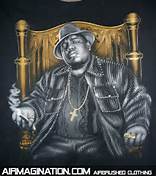
4These are the words left to us mere mortals by the man whose government name was Christopher Wallace aka Biggie Smalls, also known as Notorious B.I.G. Gone too soon but his impact will live forever. He was born May 21, 1972, in Bedford–Stuyvesant (colloquially known as Bed-Stuy) a neighborhood in the north central portion of the New York City borough of Brooklyn where some say is city’s roughest borough. There he grew up to become a drug dealer and a hustler but his legacy was that of a master lyricist.

I have known many artists in my lifetime who have recorded and sold millions of records whereas Mr. Big recorded only three that solidified his place in music history for all-time. He started experimenting with music as a teenager and, not long after, befriended Puffy Combs and with the guidance of Tupac Shakur turned ashy into classy. His 1994 debut album, Ready to Die, was a smash hit and Life After Death became a classic.
Around his neighborhood, Biggie Smalls, as he called himself then, began building a reputation as a musician. After a tape of his landed in the hands of Mister Cee, a well-known DJ, Smalls was featured in the hip-hop publication, The Source.

Almost immediately, The Notorious B.I.G., as he now called himself, appearing on a 1993 remix of Mary J. Blige’s "Real Love," and followed it up with a second Blige remix, "What's the 411?" His debut as a solo artist came with the single, "Party and Bullshit," on the soundtrack to the film, Who's the Man? (1993).
It is my view that the release of his debut album, Ready to Die, which told the story of his life, from drug dealer to rapper, was as prophetic as Marvin Gaye’s “What’s Going On”. Backed with hits like "Juicy" and "Big Poppa," the record went platinum and the young hip-hop artist became a full-fledged star. That same year, The Source named the rapper "Best New Artist," "Best Live Performer" and "Lyricist of the Year."

As his star power increased, Biggie did his best to share his prestige. He backed the work of several rappers that he'd originally performed with while starting out in Brooklyn, and took to the studio in support of other artists on Sean "Puffy" Combs's label. He also teamed up with such stars as Michael Jackson and R. Kelly. By the close of 1995, Biggie was one of music's best-selling and most sought after performers.

Big’s success and wealth hardly brought peace to Biggie's life. He was often quoted as saying,” More money more problems”. In the immediate aftermath of Ready to Die's popularity, the rapper found himself in constant fear. In 1994, he told The New York Times that he was disliked for having more money, which came with his fame.

It was after the murder of Tupac Shakur that amplified Biggie's fears about his own life, and his concern was tragically validated on March 9, 1997. Biggie, who had just come out of the Soul Train Music Awards, was sitting in an SUV when another vehicle pulled up to his car, opened fire and killed him. His murder shook the music world, prompting fears that the hip-hop world might erupt into a full-fledged war, ending numerous other lives. Biggie was only 24 years old at the time.

In the wake of Big's killing, the record Life After Death was a giant hit, selling nearly 700,000 copies in its first week. Two years later, Born Again, an album of unreleased material from Biggie, was released. A third album of extra material, Duets: The Final Chapter, was released in 2005.

Today, Biggie is still one of the music industry's most admired hip-hop artists. Several musicians have paid tribute to Biggie by mentioning him in their songs, and his musical style has been emulated by countless up-and-coming artists. There is no doubt that Big's talent as a writer and rapper who rose from where so many are lost will continue to be acknowledged for decades to come.

If Big's was alive today, there would be so many so-called rapper starving and unheard of. Knowing it or not, or call it destiny the Notorious B.I.G. proved there is Life After Death and it’s called forever. And that’s my thought provoking perspective…

Monday, June 13, 2011

A Salute to Black Music Month - Motown


This month, Black Music Month, is as profound to the African America Diaspora as Black History Month. We are the inventors and creators of sounds that changed world cultures.

If we were to begin way back in the cradle of civilization centuries ago it all began with the drum. When we were captured and brought to the so-called New World we brought with us the rhythms that dictate our souls. It is a fact that African American people are responsible for the great music known as Jazz, Gospel, Blues, Soul, R&B, Rap, Hip Hop, and just about every musical sound we hear that featured and directly speak to the glorious past.

During the despicable era of slavery and segregation prior to the Civil Rights Movement the hallowing sounds of gospel music delivered an in-your-face sound that fed the souls of a people and that outlet produced some of the most timeless music ever created. Before I go further, let’s remember that it was Michael Jackson whose music video was the first black music to air on MTV.

This brings me to historic and game-changing record label - Motown and its founder Mr. Barry Gordy. Let's be honest, can you imagine a world without The "Motown Sound". For many who don’t know or have forgotten, prior to Motown Records rarely did you see the face of an African American on the cover of an album or black music heard on white radio. The music we enjoyed was called “race music” and it was segregated in the same way America was prior to 1959, when Motown was founded. Prior to Motown Records few black performers enjoyed anything close to crossover success. By the way, an album is what was used to play music before CD’s.

Motown was the first record label owned by an African American to primarily feature African-American artists and its soul-based subsidiaries were the most successful proponents of what came to be known as The Motown Sound, which was a style of soul music with a distinct influence. From its Hitsville U.S.A building on 2648 West Grand Boulevard, Detroit, Michigan that served as Motown's headquarters produced the most universally recognized stable of songwriters and performers of our time or anytime.

The music produced by Motown made a nation of people living in this nation without a nationality proud with its awe-inspiring run of hits that spoke to the essence of our souls. Form a tiny little basement studio we were introduced to Michael Jackson, the Supremes, Diana Ross, Smokey Robinson, the Miracles, Mary Wells, Marvin Gaye, the Temptations, Four Tops, the Commodores, Lionel Richie, Stevie Wonder, Jr. Walker and the All Stars, David Ruffin, Eddie Kendricks, Gladys Knight and the Pips, Rick James, Nick Ashford and Valerie Simpson, Teena Marie, DeBarge, the Jackson Five, Martha and the Vandellas, the Marvelettes and Motown's Funk Brothers studio band; just to name a few of the artists that graced our souls and touched our hearts making us proud.

Many of Motown's best-known hits were written by Smokey Robinson, Barrett Strong, Norman Whitfield and the songwriting trio of Holland-Dozier-Holland who became major forces in the music industry. For example, it’s a known fact in the music industry that in order to get a number one hit song someone would have to write more than thirty songs. Holland-Dozier-Holland had a string of more than fifty hits in a row with some becoming number one with several different artists like the hit “I heard it through the Grapevine”. This is profound and will never happen again. No songwriter will ever achieve this feat – guaranteed.

Although Mr. Gordy sold Motown and it’s now in the hands of others its legacy resides in a very special place in my heart. I’m sure with you and millions around the world as well. So again I say, thank you Motown for the music, the love, the magic, and the many great memories.

Lastly, to the legends who are no longer able to perform for us today - thank you for your contribution - Rest in Peace. My guess is that they are walking around heaven all day singing with gleeful harmony the same way as it touched our souls when they were with us in this earthly realm. It must make haven more glorious and wonderful than I could ever imagine. And that’s my Thought Provoking Perspective.

JUST A SEASON

Wednesday, June 1, 2011

Gil Scott-Heron remembered R.I.P


The phenomenon that was Gil Scott-Heron was truly a powerful voice that spoke to the world with profound essence. I’ve often heard that genius is a rare gift and those who have been given “IT” walk a fine line between that which we appreciate and that which they know themselves to be. To me he was Gil. I will call him that because he was one of us and from the first time I heard him; it felt like he was within me. His astute stature demands, however that he be called Mr. Heron and with that said, the bother will live forever and his prose will be eternal.

I must admit that it took me a minute to find the words to pay homage to this remarkable man. I don’t know for sure why I could not find the words; whether from shock or I didn't want to believe he was gone. Regardless, I will say with certainty that he was real, and although troubled, I felt his pain and I admired him for living life on life’s terms.

Moreover, his political commentary is what impressed me. He had the ability to rebuke bygone bogeymen such as Nixon, Reagan, and Agnew. Darts were also flung at contemporary targets, notably Barack Obama. “My president’s black / But the plan remains the same,’’ rapped Enoch 7th Prophet and who can forget the classics “The Revolution Will Not Be Televised’’, “Winter in America’’, “Beginnings (First Minute of a Brand New Day)”, and “Whitey on the Moon.’’

This man was the precursor to rap with some saying he was the “Godfather of Rap” although he often bristled at the suggestion that his work had prefigured rap. “I don’t know if I can take the blame for it,” he said in an interview last year with the music Web site The Daily Swarm. He preferred to call himself a “bluesologist,” drawing on the traditions of blues, jazz and Harlem renaissance poetics.

For sure, he was a poet and recording artist whose syncopated spoken style and mordant critiques of politics, racism and mass media made him a notable voice of black protest culture in the 1970s and an important early influence on hip-hop. He did establish much of the attitude and the stylistic vocabulary that would characterize the socially conscious work of early rap groups like Public Enemy and Boogie Down Productions. He also remained part of the DNA of hip-hop by being sampled by stars like Kanye West. Chuck D, the leader of Public Enemy, told The New Yorker in 2010 that Gil Scott-Heron is the manifestation of the modern word… He and the Last Poets set the stage for everyone else.”

Gil once described “Washington, D.C. as both capital and home town: “Symbols of democracy, pinned up against the coast / Outhouse of bureaucracy, surrounded by a moat / Citizens of poverty are barely out of sight / Overlords escape in the evening with people of the night.” He lived most of his adult life in New York, yet also spent some years in Washington, including a stint in the 1970s when he taught English at Federal City College (a predecessor of the University of the District of Columbia).

He was born in Chicago on April 1, 1949, and reared in Tennessee and New York. His mother was a librarian and an English teacher; his estranged father was a Jamaican soccer player. In his early teens, Mr. Scott-Heron wrote detective stories, and his work as a writer won him a scholarship to the Fieldston School in the Bronx, where he was one of 5 black students in a class of 100. Following in the footsteps of Langston Hughes, he went to the historically black Lincoln University in Pennsylvania, and he wrote his first novel at 19, a murder mystery called “The Vulture.” A book of verse, “Small Talk at 125th and Lenox,” and a second novel, “The Nigger Factory,” soon followed.

Working with a college friend, Brian Jackson, Mr. Scott-Heron turned to music in search of a wider audience. His first album, “Small Talk at 125th and Lenox,” was released in 1970 on Flying Dutchman, a small label, and included a live recitation of “Revolution” accompanied by conga and bongo drums. Another version of that piece, recorded with a full band including the jazz bassist Ron Carter, was released on Mr. Scott-Heron’s second album, “Pieces of a Man,” in 1971.

“Revolution” established Mr. Scott-Heron as a rising star of the black cultural left, and it’s cool, biting ridicule of a nation anesthetized by mass media has resonated with the socially disaffected of various stripes — campus activists, media theorists, coffeehouse poets — for four decades. With sharp, sardonic wit and a barrage of pop-culture references, he derided society’s dominating forces as well as the gullibly dominated:

During the 1970s, Mr. Scott-Heron was seen as a prodigy with significant potential, although he never achieved more than cult popularity. He recorded 13 albums from 1970to 1982, and was one of the first acts that the music executive Clive Davis signed after starting Arista Records in 1974. In 1979, Mr. Scott-Heron performed at Musicians United for Safe Energy’s “No Nukes” benefit concerts at Madison Square Garden, and in 1985, he appeared on the all-star anti-apartheid album “Sun City.”
But by the mid-1980s, Mr. Scott-Heron had begun to fade, and his recording output slowed to a trickle. In later years, he struggled publicly with addiction. Since 2001, Mr. Scott-Heron had been convicted twice for cocaine possession, and he served a sentence at Rikers Island in New York for parole violation.

Some of the content for this article appeared in print on May 29, 2011, on page A26 of the New York edition with the headline: Gil Scott-Heron, a Voice of Protest And a Music Pioneer, Dies at 62. R.I.P.

ON THE BOTTLE


THE REVOLUTION WILL NOT BE TELEVISED