Showing posts with label soul. Show all posts

Monday, May 5, 2014

The House Of Soul

There was once a time, not too long ago, when the music African American’s created was rarely heard by the masses. The great music that African American performers created was not allowed to be played on the radio. It was called “race music, but the white performers stole this music. So many of those African America performers never made much money, if any at all as a result, and I am stopping short of calling this crime what it was.
Then came a man name Berry Gordy, who changed the face of music and I, for one, would like to take this opportunity pay homage. THANK YOU Mr. Gordy for Motown, your vision and contribution to the world.

Most people do not know or remember that prior to Motown Records few black performers enjoyed anything close to crossover success. Their music was, then, called “race music” and was segregated in the same manner as the rest of America prior to 1959, when Motown was founded. Let me also remind you that rarely could the face of a black person be seen on an album cover prior to Motown’s founding. By the way, an album is what was used for music before CD’s.

Motown a company that primarily featured African American artists and its soul-based subsidiaries became the most successful proponents of what came to be known as “The Motown Sound”. This was a style of soul music with a distinct influence on all who heard it. From its Hitsville U.S.A Building on 2648 West Grand Boulevard, Detroit, Michigan that served as Motown's headquarters. The label produced the most universally recognized stable of songwriters and performers of our time or anytime.

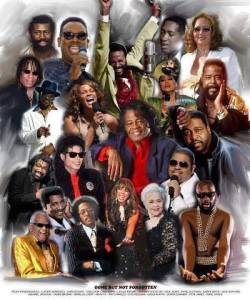
From this tiny little basement studio the world was introduced to Michael Jackson, the Supremes, Diana Ross, Smokey Robinson, the Miracles, Mary Wells, Marvin Gaye, the Temptations, Four Tops, the Commodores, Lionel Richie, Stevie Wonder, Jr. Walker and the All Stars, David Ruffin, Eddie Kendricks, Gladys Knight and the Pips, Rick James, Nick Ashford and Valerie Simpson, Teena Marie, DeBarge, the Jackson Five, Martha and the Vandellas, the Marvelettes and Motown's Funk Brothers studio band just to name a few of the artists that graced our souls and touched our hearts making us proud.

Many of Motown's best-known hits were written by Barrett Strong, Norman Whitfield and the songwriting trio of Holland-Dozier-Holland, who became major forces in the music industry. For example, it’s a known fact in the music industry that in order to get a number one hit song someone would have to write more than thirty songs. Holland-Dozier-Holland had a string of more than fifty hits in a row with some becoming number one with several different artists, like the hit “I heard it through the Grapevine”. This is profound and will never happen again. No songwriter will ever achieve this feat – guaranteed.

Mr. Gordy did sell Motown and it’s now in the hands of others. However, its legacy resides in a very special place in my heart, and I’m sure millions around the world. So again I say, thank you Motown for the music, the love, the magic, and the many great memories.

Lastly, to the legends that are no long able to perform for us today - thank you for your contribution - Rest in Peace. I know walking around heaven all day listening to the harmony of your souls must make haven more glorious and wonderful than I could ever imagine. And that’s my Thought Provoking Perspective…


Wednesday, February 19, 2014

Happy Birthday To A Musical Genius


The genius of William "Smokey" Robinson, Jr., the most prolific singer-songwriter of our lifetime, is priceless. A thousand years from now you will hear Smokey’s music. To prove my point, “My Girl” first recorded by the Temptations is timeless, and the recording sounds as fresh today as it did in 1965. Smokey is also a record producer, former record executive, and one of the founders of the music label that changed the world - Motown.

Robinson is most notable for being a songwriter, sure, but he was also the founder and front man of The Miracles, for which he also served as the group's chief songwriter and producer. Robinson led the group from its 1955 origins as The Five Chimes until 1972 when he announced retirement from the stage to focus on his role as Motown’s vice president.

Smokey was born in Detroit and raised on the city's North End section. At one point, he and Diana Ross were next-door neighbors, who he had known since she was eight. He later told reporters when he was a child; his uncle christened him "Smokey Joe", which he assumed was a "cowboy name for me" until he was later told that Smokey was a pejorative term for dark-skinned blacks. He once said that he remembers his uncle saying to him, "I'm doing this so you won't ever forget that you're black."

In August 1958, Robinson met songwriter Berry Gordy, who had recently stopped writing songs for Jackie Wilson after getting into a royalty dispute with Wilson's label. Gordy took an interest in Smokey and his group to which Gordy was more impressed at the fact that Robinson was a writer than as a singer. Gordy agreed to work with them and with his help the Matadors released their first single. Following this, the group changed its name to The Miracles after Claudette Rogers replaced Emerson Rogers.

After a number of failures and difficulties with money, Smokey suggested to Gordy that he start his own label, which Gordy agreed. Following the forming of Tamla Records, later reincorporated as Motown, the Miracles became one of the first acts signed to the label. In late 1960, the group recorded their first hit single, “Shop Around”, which became Motown's first million-selling single. Between 1960 and 1970, Smokey would produce 26 top forty hits with the Miracles.

By 1969, Robinson had voiced his opinion on wanting to retire from the road to focus on raising a family with wife Claudette and their two children, and to focus on his duties as Motown's Vice President. However, the late success of the group's track, "Tears of a Clown", caused Robinson to stay with the group until 1972. Robinson's last performance with the group was in July 1972 in Washington DC.

After a year of retirement, Smokey announced his comeback with the release of the album titled “Smokey” in 1973. The album included the Miracles tribute song, "Sweet Harmony" and the hit ballad "Baby Come Close". That same year, former Beatle George featured the track "Pure Smokey" as a tribute to his idol. In 1974, Robinson's second album, Pure Smokey was released but failed to produce hits.

Robinson answered his critics the following year with A Quiet Storm, released in 1975. The album launched three singles - the number-one R&B hit "Baby That’s Backatcha”, "The Agony & The Ecstasy" and "Quiet Storm". With his nearly sixty years in the music industry, he is still one of the most respected and gifted musicians to grace the stage or play the game.

Try to imagine for a moment what the world would be like if we had never been blessed with the legend known by the name – “Smokey” – we love you and thank you for paving the way. God Bless you and that is my Thought Provoking Perspective…


http://johntwills.com

Sunday, February 9, 2014

The Chess Record Story

In the spirit of Black History Month I offer the story of the record company that introduced the world to the blues. Yes, I am talking about the ghost of the greats, which laid the founders for Rock and Roll. History is long and only marks a period of time but this story is the beginning of the music we enjoy today. This is the story of the legendary Chess Records Family.
                                                

        Leonard Chess

                
                  Phil Chess
Leonard and Phil Chess, two Polish born immigrants, founded Chess Records the pre-eminent Blues label of the 50s and 60s.Eventually they created a monopoly of Chicago music recording, doing sessions and releasing recordings by every major blues performer from John Lee Hooker, Elmore James, "King of the Slide Guitar", to Bo Diddley through Jimmy Reed, Chuck Berry and everyone in between.
Brothers Phil and Leonard Chess owned the upscale Macamba nightclub on Chicago's Southside. Chess Records "Home of the Electric Blues" was started by brothers Leonard and Phil Chess in the late forties. Leonard and Phil Chess - two enterprising immigrant brothers from Poland - bought into fledgling Aristocrat Records, a label that had been formed a short time before by Evelyn Aron and her husband.
By the time they got involved with Aristocrat, Leonard and Phil were already aware of what sort of music might sell in the Black community that of a young Delta-born-and-bred slide guitarist: Muddy Waters. Waters had previously recorded for Columbia, the company but none of his work was released. When he recorded "Gypsy Woman" and "Little Anna Mae" for Aristocrat the Chess brothers found in him the means to distinguish their little company from the hundreds of other independent R&B labels springing up across the country.
At the beginning, Leonard and Phil focused their recording and publishing ventures primarily in the area of popular jazz, but soon expanded into blues, receiving their first Billboard recognition in 1947. By 1949 Aristocratic Records which became Chess Records in 1950, was a fixture in the world of music and its recordings and the songs published by Arc Music remain the most impressive collection of blues music in the world.
From their experiences in the nightclub business on the South side of Chicago, the Chess brothers understood the popular preferences of their predominantly African-American audiences, but also saw the marketability of blues music to a broader audience. In the beginning Chess Records was ran as a two man business, with Phil overseeing the nightclub and the offices of Aristocrat/Chess and Arc, while Leonard alternately scouted talent, produced the sessions, and hand delivered fresh recordings to radio stations in the Chicago area.
Willie Dixon
Slide guitarist Robert Nighthawk's pre-war popularity made him a nice acquisition, and the 1948 session that produced his "My Sweet Lovin' Woman" was doubly important because it introduced bassist Willie Dixon, an artist whose talent as a producer/songwriter/ session player during the 1950s and 1960s vastly contributed to the label's long-term success.
McKinley Morganfield aka Muddy Waters and sideman Little Walter


In 1950, the Chess brothers launched Chess Records with Gene Ammons'  "My Foolish Heart," followed by Waters' "Rollin' Stone." Guitarist Jimmy Rogers made his Chess debut August of 1950, with t "That's All Right" and "Luedella." Little Walter who revolutionized the role of the harmonica in Chicago blues with his astonishing flights of amplified fancy. Walter's legacy is punctuated by his slew of hits during the '50s: "Mean Old World," "Off The Wall," "You're So Fine," and the 1955 Dixon-penned R&B chart-topper, "My Babe."
Chester Burnett aka Howlin' Wolf
Despite his  success with  local talent, Leonard Chess, aided by Sam Phillips, began to look outside Chicago for talent. Phillips supervised Memphis pianist Roscoe Gordon's smash "Booted" (1952) and shipped Chess masters by Rufus Thomas, Dr. Isaiah Ross, Joe Hill Louis, and Bobby Bland, but his top contribution to the label's legacy was Chester Arthur Burnett, a.k.a.  Howlin' Wolf. With Ike Turner playing the piano both sides of Wolf's first Phillips-produced Chess 78, "How Many More Years" and "Moanin' At Midnight," proved major sellers in 1951. By 1953, Wolf had left Memphis for Chicago, recording more hits including "Who Will Be Next" and "Smokestack Lightnin'."
Eddie Boyd 
Willie Mabon
                                                  Memphis Slim 
A host of other blues legends recorded for Chess during the early and mid-1950s. Memphis Slim, Eddie Boyd and Willie Mabon, assuredly did. Boyd's 1953  "24 Hours" and "Third Degree" both sold very well, as did Mabon's "I Don't Know" (1952) and "I'm Mad" (1953), both number one R&B smashes.
John Lee Hooker
John Lee Hooker first recorded for Chess in 1950. Joe Williams made the charts that same year with "Every Day I Have The Blues." Big Bill Broonzy and Washboard Sam recorded  material in '53 that straddled the fence between pre-war Chicago blues and the brasher new style.Memphis Minnie likewise attempted to resuscitate her career with a 1952 Checker single, "Me And My Chauffeur." On the jazzier side of the tracks, saxmen Leo Parker, Tab Smith, Lynn Hope, and Eddie Johnson kept things swinging. By the early-1950s, Water's group added pianist Otis Spann. Though he was now a star in his own right, Little Walter still recorded behind his ex-boss on Waters' immortal "I'm Your Hoochie Coochie Man" and "I'm Ready."
Rice Miller a/k/a Sonny Boy Williamson II
In 1955  new talent was added to the Chess stable. Sonny Boy Williamson, a blues legend across the Mississippi Delta thanks to his King Biscuit Time radio broadcasts, joined Checker, a Chess subsidiary label.  For his first recording "Don't Start Me Talkin'" Chess paired him with most of Water's band. Bo Diddley was signed in 1955 too. His first two-sided smash for Checker, the self-titled "Bo Diddley" and "I'm A Man.
But no one at Chess had the impact on the future of popular music that Chuck Berry did. Berry accepted Water's advice regarding the advantages of working with Leonard Chess, signing with the label in May of 1955 and his first unforgettable hit, "Maybellene."
There were also vocal at Chess. Harvey Fuqua's the Moonglows from Louisville had a 1954 hit with  "Sincerely," and The Flamingos, a Chicago quintet fronted by Nate Nelson, scored big for Checker in 1956 with their dreamy "I'll Be Home" and "A Kiss From Your Lips."
As Berry, Bo, and the vocal groups sold platters by the crates, some of the blues greats that had epitomized Chess during its early years of operation began to recede into the background. But mainstays Muddy, Sonny Boy, and Wolf hung tough, Wolf doing some of his best work during the early '60s when Dixon wrote "Back Door Man," "The Red Rooster," and "Hidden Charms" for him (the latter manically energized by Hubert Sumlin's elastic guitar work).
In 1960, Dixon recruited younger Chicago blues talent, signing guitarists Buddy Guy ("First Time I Met The Blues" and "Broken Hearted Blues") and Otis Rush (1960's "So Many Roads, So Many Trains")
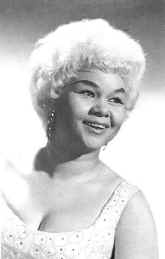
Etta James
Etta James also made her Chess debut in 1960, scoring no less than four hits for the imprint that year alone. Etta's magnificent work for Argo (and later Cadet and Chess) over the next 16 years uncovered depths of passion and pain barely
hinted at on her previous waxings. She waxed the torch ballads "At Last" and "Trust In Me" (both major hits in 1961) surrounded by sumptuous strings, rocked the house with a gospel-rooted "Something's Got A Hold On Me" the next year, and set Muscle Shoals ablaze in '67 with her strutting "Tell Mama," sounding equally confident in all three diverse settings.
Fontella Bass
In addition to James had many female artists during the mid-1960s that Jan Bradley ("Mama Didn't Lie"), Sugar Pie De Santo ("Slip-In Mules"), ("I Had A Talk With My Man"), Fontella Bass ("Rescue Me"), Jackie Ross ("Selfish One"), Jo Ann Garrett ("Stay By My Side"), Laura Lee ("Dirty Man"), and the Gems, whose precocious membership included Minnie Riperton. Even Irma Thomas joined the Chess in 1967, recording in Muscle Shoals. protégé Koko Taylor scored the last Chicago blues hit for Checker in 1966 with her growling "Wang Dang Doodle."
As rhythm and blues merged with gospel influences to form the basis of soul, Chess was right on top of the trend. Little Milton Campbell who had hits with "We're Gonna Make It," "Who's Cheating Who?" and "Grits Ain't Groceries."
The Dells
Along with Little Milton, were the Dells, ("There Is" and "Stay In My Corner") the Radiants ("Voice Your Choice"), Billy Stewart ("Summertime," "Sitting In The Park"), Bobby Moore & the Rhythm Aces ("Searching For My Love"), Tony Clarke, James Phelps, and Bobby McClure.
Tommy Tucker's "Hi-Heel Sneakers," a huge '64 hit on Checker, traveled bluesier terrain, while the Ramsey Lewis Trio, with Eldee Young on bass and Red Holt on drums, turned out to be a crossover sensation when their grooving instrumental remakes of "The In Crowd" and "Hang On Sloopy" vaulted up the R&B and pop charts in 1965. Nor was the Chess combine deficient in humor - albums by veteran comics Moms Mabley and Pigmeat "Here Comes The Judge" Markham made sure of that.
Chuck Berry remained at Chess into 1966, seemingly rejuvenated after serving a prison term (his 1964 hits included "No Particular Place To Go" and "You Never Can Tell"). After unwisely switching to Mercury Records for a few lean years, he returned home to Chess and scored his biggest pop hit of all in 1972 with "My Ding-A-Ling." Bo Diddley recorded a slew of Checker LPs throughout the decade, his trademark beat never faltering.
2120 South Michigan Avenue
So inspired by the magnificent output of Chess were the Rolling Stones that they immortalized the label's famous address, 2120 S. Michigan Avenue, in song on one of their early LPs.
During this time, Muddy Waters and Howlin' Wolf tried their best to cope with '60s trends. "Muddy Waters Twist" was admittedly nothing to write home about, but his '63 Folk Singer LP was a heartening return to his Delta roots, and 1969's Fathers and Sons set united Muddy with adoring disciples Mike Bloomfield and Paul Butterfield. Though at the tail end of the decade producer Marshall Chess submerged Waters and Wolf in a quagmire of psychedelia, each legend emerged with his vaunted reputation intact.
In 1969, Leonard Chess died, stilling the heart and soul of Chess Records. Earlier that year, he and Phil had sold the company to GRT where producers Ralph Bass and Gene Barge tried their best to hold things together. Sadly, though, the momentum that Chess had long enjoyed quickly began to erode. In 1975, GRT closed down the logo, selling it to All Platinum Records of Englewood, New Jersey.
Finally, in 1985, MCA acquired the rights to the massive Chess catalog. At the start of 1987, MCA Vice President of Catalog Development & Special Markets A&R, Andy McKaie began to mount an ambitious long-term reissue campaign of the invaluable Chess masters - an ongoing program that rages full steam ahead all year long in 1997 with the 50th anniversary celebration.
"The impact of Chess was far wider and greater than any of the others, ranging from the impact of the Chicago blues sound, the Chuck Berry/Bo Diddley School of rock & roll, and the vocal group sounds," he continues. "The range of that impact was so great that it's still being felt today.
It was the profound music that made the artists of Cadillac Records the groundbreaking home for black music. And that's my Thought Provoking Perspective…
Courtesy of DK Peneny, Published 3/98 - Last update 10/15/2009
 

Tuesday, January 28, 2014

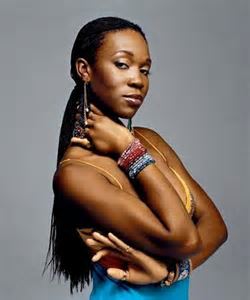
India Arie Writes Angry Open Letter About The Grammys: Black Artists Are Excluded

23
I was unable to reblog this article from India Arie’s Tumblr Page. There I have shared her open letter via Thought Provoking Perspectives. The outspoken singer addresses and issue that many in the African American community have complained about for a long time. Now, musicians and artist are now speaking out. What are your thoughts?
_____________________________
The outspoken singer India Arie, who is not afraid to speak her mind, let loose after the Grammys for 2014.  Speaking along with a chorus of many other black performers who are determining that the Grammys are virtually worthless, Arie gave her honest opinions about this and other musical awards shows, which are focused mainly on awarding popularity and sales, but only concerned with musical quality as a complete afterthought.
Writing on her tumblr page, Arie started off by stating that the “Music industry’s biggest night” is not what it’s cracked up to be:
 Though it’s called “Music industries biggest night” the #Grammys are NOT about the music, it’s a popularity contest. The voting process allows people, to vote on name recognition alone – the music industry politics is a whole NUTHER conversation.  Too much to go into here.
The American Music Awards is a show that awards sales and popularity – the #Grammys are SAID to be about the music.
Arie, who is known for producing conscious and authentically black music, also says that the African American musical community loses when its best artists are not represented at the show every year.   She says that this is a consistent pattern of denial and embarrassment toward the black musical community that simply should not be tolerated.
NOW the BIGGER losers, are ALL of black music. Where was the black music community represented in last nights #Grammy show? Performers and Winners (or not) … Where were the black artists?
And this isn’t the first time the #Grammy’s has had a show all but excluding young black America and black artists in general, although we set the worlds musical trends. Why NOT televise the lifetime achievement awards of the Isley Brothers? SURELY they deserved to be on televised stage LAST NIGHT! While other artists were on stage TWICE?
So, India Arie makes some valid points in her letter, which leads to an open question:  Why don’t black artists simply boycott the Grammys?  Rather than complaining about the Grammys to people who don’t care, she might be able to mobilize other artists who think the same way and get them to join her in a battle against the awards show by simply not showing up.   Her complaints about the Grammys are nothing new and have been around for 40 years.  Is it time to do something or just keep getting upset because someone else is choosing not to acknowledge you?

Sunday, January 26, 2014

Introducing Kathryn Sabir-Beach

2It gives me great pleasure to introduce Kathryn Sabir-Beach, who will be a frequent contributor to Thought Provoking Perspectives. This profound lady of thought will offer writings concerning issues that are of interest to women. Moreover, she is a budding poet and will share some of her poetry. Kathryn is new to the literary world but aspires to one day become an English Professor, as she strives to hone her creative writing skills.
Kathryn is a Honolulu native currently living in the Washington DC Metro area seeking to live a childhood dream to touch the hearts and souls of the world through her passion and literary skills. Her passion has been confined or maybe caged within for far too long and now have expressed a strong desire for it to be free. Kathryn is currently working on her first book with hopes of its release later this year. I am very pleased and take great pleasure in allowing this very special lady the opportunity to offer her expressions through this vehicle.
Through one of our communications with Kathryn she remarked: “I want my passion and devotion for the written word to be the mirror of my mind for all to see.” I was profoundly impressed with that statement and compelled to lend my assistance to a young woman who has the drive and creativity to touch the minds of mankind. I believe the rent for our existence is to be of service to the benefit of others. Therefore, I cordially ask that you welcome my friend as warmly as I have and feel the passion that comes from deep within her soul.
MY PROMISE
I'll love you until tomorrow,
and since tomorrow will never come,
I'll love you until forever,
until there Is no moon or sun.
We’ll do this together, I promise,
and my promise is no lie.
I would fight the world for you
until our souls may fly.
So breathe in this peace I offer you
feel it in your soul.
Breathe out the pain that's followed you,
before the darkness swallows you whole.
The love I've grown to love is beautifully untold.
It was vowed, mine to have and hold.
There’s no need to fret my dear.
For your love is protected here.
If a smile it may bring,
I would fight the world for you
until all sorrows learn to sing.
Know deeply that I love you.
Trust deeply that I care.
Even when your sun has set
this darkness we will share.
For I'll love you until tomorrow.
And if tomorrow never comes,
you'll be loved until you're forever,
until our souls may fly as one.

Kathryn Sabir-Beach © 2014

Friday, January 17, 2014

The Teddy Bear

3It is always a great pleasure for me pay homage to the ghost of the greats who made a huge impact on the world and the lives of us who live in it. Today, artists have one or two hits and they are called legends. I find this laughable because, frankly, there is no body of work, in most cases, to support the label or prove worthy of attention. Black artists and icons have mastered their craft and created genres that will last forever.
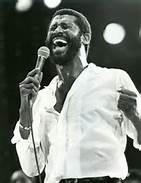
NO ONE did it better than the man we affectionately call “Teddy” - Theodore Pendergrass – one of the greatest R&B singer and songwriter of our time. Teddy rose to fame as lead singer of Harold Melvin and the Blue Notes in the early 1070s prior to his hugely successful solo career at the end of the decade. In a horrible twist of fate, in 1982, Teddy was severely injured in an auto accident resulting in his being paralyzed from the chest down. After his injury, he founded the Teddy Pendergrass Alliance, a foundation that helps those with spinal cord injuries.
Teddy was not unlike most R&B singers he sang often at church and dreamed of being a pastor being ordained as a minster at the age of 10. In his early career, he sang with the Edison Mastersingers and dropped out of school in the eleventh grade to pursue the music business, recording his first song "Angel With Muddy Feet." The recording, however, was not a commercial success.
It was the result of a chance encounter with the Blue Notes' founder, Harold Melvin, who convinced Pendergrass to play drums in the group. Then fate stepped in and during a performance Teddy began singing along, and Melvin, impressed by his vocals, made him the lead singer. Before Pendergrass joined the group, the Blue Notes had struggled to find success. That all changed when they landed a recording deal with Philadelphia International Records in 1971, thus beginning Teddy’s successful collaboration with label founders Kenny Gamble and Leon Huff. From this point there was no turning back.
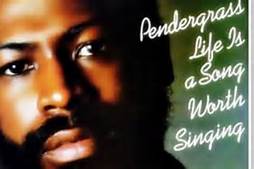
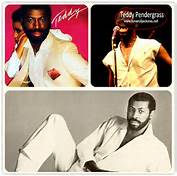
I will briefly list a few of Teddy’s most memorable hits that took him high in the stratosphere starting with his self-titled album, which went platinum on the strength of the disco hit, "I Don't Love You Anymore." Its follow-up single, "The Whole Town's Laughing At Me," became a top 20 R&B hit. It was quickly followed by Life Is a Song Worth Singing. That album was even more successful with its singles including "Only You" and "Close the Door.”
2The disco single, "Get Up, Get Down, Get Funky, Get Loose" was popular in dance clubs and after that came two more successes, Teddy and the live release, Live Coast to Coast. Hits off Teddy included "Come and Go With Me" and "Turn Off The Lights.” This was followed by the album, “TP” that included his signature song, "Love TKO” and "Is It Still Good to You." Between 1977 and 19981, Teddy landed five consecutive platinum albums, which was a then-record setting number for a rhythm and blues artist.
Teddy’s popularity became so massive at the end of 1977 with sold-out audiences packing his shows; his manager soon noticed that a huge number of his audience consisted of women of all races. They devised a plan for his next tour to play to just female audiences, starting a trend that continues today called "women's only concerts."
With five platinum albums and two gold albums, Teddy was on his way to be what the media was calling him, "the black Elvis" not only in terms of his crossover popularity but also due to him buying a mansion akin to Elvis' Graceland, located just outside of his hometown of Philadelphia. By early 1982, Pendergrass was the leading R&B male artist of his day usurping competition including closest rivals Marvin Gaye and Barry White.
2Then tragedy struck on the night of March 18, 1982, in the East Falls section of Philadelphia on Lincoln Drive near Rittenhouse Street, Teddy was involved in an automobile accident. He lost control of his Rolls-Royce Silver Spirit - the car hit a guard rail, crossed into the opposite traffic lane, and hit two trees and was trapped in the wreckage for 45 minutes; leaving him a quadriplegic, paralyzed from the chest down.
He kept recording through the 1990s in spite of being wheelchair bond and give the world his final hit in 1994, which was a hip-hop leaning "Believe in Love". His most lasting memory for the world was “Wake Up Everybody” a tune that has been covered by a diverse range of acts from Simply Red, Patti LaBelle, Babyface, Little Brother, Kanye West, Cam’ron, Twista, Tyrese Gibson, DMX, 9th Wonder, and DJ Green Lantern.
Sadly, on January 13, 2010, the man we knew as “Teddy” left us to sing with the angels. I’ll tell you, and if you knew Teddy, the world will never be the same without his uniquely profound soulful voice. And that’s my thought provoking perspective…

Monday, September 2, 2013

At The Crossroads

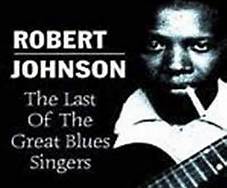
th00It is a great joy to share the glorious past of the ghost of the greats whose shoulders. One of which is the story of the great Delta Blues-man Robert Johnson. The history of music is littered with tragic figures and none are more tragic than Robert Johnson’s story that will live for eternity. Legend has it that he sold his soul to the devil at the crossroads for his story to live for all times.

Robert Leroy Johnson is among the most famous of all the Delta Blues musicians whose landmark recordings from 1936-37 display a remarkable combination of singing, guitar skills, and tremendous songwriting talent that have influenced generations of musicians. This amazing, ultimate star-crossed musical genius laid the early framework of rock and roll decades before that term was even imagined.

Not much is known about Johnson’s shadowy, poorly documented life and violent death at age 27, which is one of the reason that have given rise to much legend. With that being true the music and legacy he left behind is irrefutable and unparalleled.

He is considered by some to be the “Grandfather of Rock-and-Roll” for his vocal phrasing, original songs, and guitar style. His music has influenced a range of musicians, including Led Zeppelin, Bob Dylan, Jimi Hendrix, The Allman Brothers Band, The Rolling Stones, The White Stripes, The Black Keys, Peter Gabriel, Neil Young, and Warren Zevon. Eric Clapton called Johnson “the most important blues musician who ever lived.

Johnson was conceived in an extramarital affair and born in Hazelhurst, Miss. in 1911. Most of his biographical details have been lost to history, but what's known is that he learned guitar in his teens, got married, and had a girl who died in childbirth. The death led Johnson to throw himself even deeper into his music. He fled to Robinsonville, Miss. where he was influenced by early blues legends Son House and Willie Brown.

By 1933, Johnson remarried and began playing the guitar professionally. He once related the tale of selling his soul to the devil at a crossroads in exchange for his talent. Johnson tells the story in his song "Crossroads Blues." Playing for tips up and down the Delta, Johnson gained in popularity. But as he grew in fame and was known as a noted philanderer. He would also walk off in the middle of performances and not be seen or heard from for weeks at a time.

In 1936, he was put in contact with Columbia Records talent scout Ernie Oertle, who took him to San Antonio, Tex. where Johnson recorded classics including "Sweet Home Chicago," "There's A Hell Hound On My Trail," and his signature "Terraplane Blues."

Johnson began to tour nationally and became known for his unique voice and halting guitar riffs. But in 1938, as the legend goes, the devil caught up with him. While playing at a juke joint, he flirted with a woman whose husband became jealous. The man laced Johnson's whiskey with strychnine that caused him to become violently ill playing until he collapsed. He died four days later at age 27, although conflicting stories say he survived the poisoning and died later of pneumonia.

There are at least two Mississippi grave-sites that bear his name leaving questions about his passing and burial. "The reason that it's so powerful a story is because it is the outline of the tragic side of the music that followed," said music journalist Alan Light. "Some knew him as a musician, others by legend, but his shadow touches everyone who came out of that time and place."

Black History is American History and I believe our story is the greatest story ever-told. And that's my Thought Provoking Perspective...

FaceBook @ John T. Wills
Twitter @ John T. Wills

Friday, August 9, 2013

The Ghost Of The Greats

artistI woke up this morning to the sweet sounds of soul blasting from my radio which inspired and lifted my spirits immensely. Having been awakened to a new day in such a profound way I decided to offer my remembrance to the amazing crooners, songstress’, prolific singer-songwriters and record producers who've transitioned to that wonderful place all of us wish to go. Their amazing talent must make up a most amazing heavenly choir.

I began my day wondering what it must be like as the ghosts of the greats walk around heaven gathering for a concert to sing in that heavenly choir. The harmony must be simply amazing. When these great artist where alive and with us black music – soul music – was awesome. Thankfully, they left us their gifts of sound for us to forever enjoy. 

I’ll just name a few choir member that are walking around haven all day: Whitney Houston, David Ruffin, Eddie Kendricks, Ali Ollie Woodson, Marvin Gaye, Billy Preston, James Brown, Etta James, Donny Hathaway, Isaac Hayes, Nic Ashford, Sam Cooke, Otis Redding, Tammie Terrell, Teena Marie, Levi Stubbs, Barry White, Grover Washington, Johnny Taylor, Bob Marley, Gerald Levert, Ray Charles and Michael Jackson. Although it’s impossible to name them all - BUT WE MISS AND LOVE YOU!
Times were much difficult for black people because of your work. You added hope to our struggle and your souls brought out such creative music albeit from the secular world and the church – we were overjoyed. Today’s black artists do not know what it is to be innovative or create their own music and if they do, they do not have what I know as soul, you hardly feel anything. The new generation started producing their music, often times, in such negative way that affects the black community, because they did not learn from the great artist that came before them or know what it means to be creative.
What I see and hear, for the most part, black music could be at the point of no return. Furthermore, the artists who are now deceased singing in that glorious choir in this place called haven were originals who never imitated to gain fame. These days, you have a lot of imitators and this is one of the main reasons why we have few black artists today that touch our souls.

Moreover or sad is it that the new generation of artists, for the most part, seem to have no knowledge of what soul music means spiritually or simply understand how to just be original. So to the ghosts of the greats – Rest In Peace - you will be remembered for all times. And that’s my Thought Provoking Perspective…

Tuesday, August 6, 2013

Rest In Peace George Duke

Today, we learned that the Grammy-winning jazz keyboardist George Duke passed away at age 67 from chronic lymphocytic leukemia in Los Angeles. Mr. Duke was a producer whose sound infused acoustic jazz, electronic jazz, funk, R&B and soul.

Duke’s son, Rashid, thanked his father’s fans in the following statement:

“The outpouring of love and support that we have received from my father’s friends, fans and the entire music community has been overwhelming… Thank you all for your concern, prayers and support.”
Duke was born in San Rafael, Calif. During his stellar 40-year-plus career he appeared on a number of Frank Zappa albums and played in the Don Ellis Orchestra, Cannonball Adderley’s band and with jazz musician Stanley Clarke. Duke also played keyboard on Michael Jackson’s multi-platinum 1979 album, “Off the Wall.”

Duke began taking piano lessons when he was 4 years old, after seeing Duke Ellington perform. He said on his website, “I don’t remember it too well … but my mother told me I went crazy… I ran around saying, ‘Get me a piano, get me a piano!’”

Like most of the greats Duke learned a lot about music from going to church, which helped him add a funk style to his sound. He played in high-school jazz groups and was heavily influenced by Miles Davis. He earned degrees from the San Francisco Conservatory of Music and San Francisco State University.

On tour as part of the George Duke Trio, he performed in Los Angeles at a show where Adderley, Zappa and Quincy Jones were in attendance. Duke soon joined Zappa on a tour for a year in 1969. He joined Adderley’s band in 1971. He met Clarke through Adderley, and they formed the Clarke/Duke Project. Their song “Sweet Baby” was a Top 20 hit on the Billboard pop charts.

Mr. Duke became a solo artist in 1976 and released more than 30 solo albums. He also produced for Miles Davis, Smokey Robinson, Gladys Knight, Dionne Warwick and Natalie Cole. His latest album, “DreamWeaver,” was released last month and features a touching tribute to her. He worked as musical director for the Soul Train Music Awards and other special events. He also scored songs on soundtracks for “The Five Heartbeats” and “Karate Kid III.”

Every life is born with purpose. I am honored that I had the pleasure of being inspired by the wonderful music from this man of class and stature. I send my love, respect, and sympathy, from the depth of my heart, to the family of George Duke for all the love he left the world. Rest In Peace and we will remember the "Dukey Stick"! And that’s my Thought Provoking Perspective… 

Monday, July 15, 2013

Lonely Tear Drops

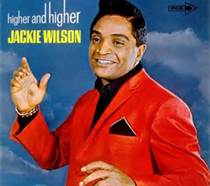
jackie wilsonJackie Wilson was known to his many fans as “Mr. Excitement”! He was one of the most inspirational and a pioneering artist of the 1950s when black music was called “Race Music”. He was one of the most underrated performers of our time.

What is not known by many is that Berry Gordy wrote some of his biggest hits. In fact, it was because of him that we had a Motown Records Company. For the record, when look at Elvis Presley what you see is Mr. Jackie Wilson. This man was an innovator and I will say the foundation of what became to be known as Soul Music.

In spite of his phenomenal success his personal life was full of tragedy. In 1960 in New Orleans, Wilson was arrested and charged with assaulting a police officer when fans tried to climb onstage with Wilson. He shoved a policeman who had shoved one of the fans. In his early years the pretty boy was a prize fighter and had a reputation for being rather quick-tempered.

On February 15, 1961, in Manhattan, Wilson was injured in a shooting. It is said the real story behind this incident is that one of his girlfriends, Juanita Jones, shot and wounded him in a jealous rage when he returned to his Manhattan apartment with another woman, fashion model Harlean Harris, an ex-girlfriend of the late Sam Cook. Supposedly, his management concocted a story to protect Wilson's reputation; that Jones was an obsessed fan who had threatened to shoot herself, and that Wilson's intervention resulted in him being shot.

Wilson was shot in the stomach: The bullet would result in the loss of a kidney, and lodged too close to his spine to be operated and removed. However, in early 1975, in an interview with author Arnold Shaw, Wilson maintained it actually was a zealous fan whom he didn't know that shot him. "We also had some trouble in 1961. That was when some crazy chick took a shot at me and nearly put me away for good...” Nonetheless, the story of the zealous fan was accepted, and no charges were brought against Jones. A month and a half later after the shooting incident, Jackie was discharged from the hospital and apart from a limp and discomfort for a while; he was quickly on the mend.

At the time Jackie had declared annual earnings of $263,000, while the average salary a man earned at the time was just $5,000 a year, but he discovered that, despite being at the peak of success, he was broke. Around this time the Internal Revenue Service (IRS) seized Jackie's Detroit family home. Tarnopol and his accountants were supposed to take care of such matters. Fortunately, Jackie made arrangements with the IRS to make restitution on the unpaid taxes and to re-purchase the family home at auction.

As far as money troubles went, this was not even the beginning for Wilson. Nat Tarnopol had taken advantage of Jackie, mis-managing Wilson's money ever since he took the role of Wilson's manager. He even had power-of-attorney over Wilson's finances, giving him complete control over Jackie's money. Shortly before Wilson suffered a heart attack in 1975, Tarnopol and 18 other Brunswick executives were indicted on charges of mail fraud and tax evasion stemming from bribery and payola scandals. Also in the indictment was the charge that Tarnopol owed at least $1 million in royalties to Wilson.

In 1976 Tarnopol and the others were found guilty; an appeals court overturned their conviction 18 months later. Although the conviction was overturned, judges went into detail, outlining that Tarnopol and Brunswick Records did defraud their artists of royalties, and that there was sufficient evidence for Wilson to file a lawsuit. However, a trial to sue Tarnopol for royalties never took place, as Wilson lay in a nursing home comatose. Sadly, Wilson died riddled with debt to the IRS and Brunswick Records.

Freda Hood, Wilson's first wife, with whom he had four children, divorced him in 1965 after 14 years of marriage, frustrated with his notorious womanizing. Although the divorce was amicable, Freda would regret her decision. Freda never stopped loving him, and Jackie treated her as though she were still his wife. His 16-year-old son, Jackie Jr. was shot and killed on a neighbor's porch in 1970 and two of Wilson's daughters also died at a young age. His daughter Sandra died in 1977 at the age of 24 of an apparent heart attack. Jacqueline Wilson was killed in 1988 in a drug related incident in Highland Park, Michigan. The death of Jackie Jr. devastated Wilson. He sank into a period of depression, and for the next couple of years he remained mostly a recluse, drinking and using drugs.

Wilson's second marriage was to model Harlean Harris in 1967 with whom he had three children, but they separated soon after. Wilson later met and lived with Lynn Crochet. He was with Crochet until his heart attack in 1975. However, as he and Harris never officially divorced, Harris took the role of Wilson's caregiver for the singer's remaining nine years.

On September 29, 1975, Wilson was one of the featured acts in Dick Clark’s Good Ol' Rock and Roll Revue, hosted by the Latin Casino in Cherry Hill, New Jersey where he was in the middle of singing "Lonely Teardrops" when he suffered a heart attack, during the middle of the line "My heart is crying." When he collapsed on stage, audience members initially thought it was part of the act. Clark then ordered the musicians to stop the music. Cornell Gunter of The Coasters, who was backstage, noticed Wilson was not breathing. Gunter was able to resuscitate him and Wilson was then rushed to a nearby hospital.

Medical personnel worked nearly 30 minutes to stabilize his vitals, but the lack of oxygen to his brain caused him to slip into a coma. He briefly emerged in early 1976, and was even able to take a few wobbly steps but slipped back into a semi-comatose state. He was a resident of the Medford Leas Retirement Center in Mount Holly, New Jersey when he was admitted into Virtua Memorial Hospitaldue to having trouble taking nourishment.

Jackie Wilson died on January 21, 1984, at the age of 49 from complications of pneumonia. Initially, he was buried in an unmarked grave at Westlawn Cemetery near Detroit. In 1987, a fundraiser collected enough money to purchase a headstone. Maybe the song “Lonely Tear Drops” came from his soul and spoke to the singer in a way that no one understood, as it seemed to be the story of his life. And that’s my Thought Provoking Perspective…