Showing posts with label historical. Show all posts

Sunday, September 16, 2012

Back By Popular Demand

I’ve received many emails recently telling me that I have begun to get too political and that I should continue to empower the consciousness of those who have no real connection or understand of the greatest story ever told, which is the African American Diaspora. I received one particular email from a young lady who could not remember when we were Negro’s. As a result of this surprising revelation I promised that I would re-post my Black History Month Series “The Twenty-Eight Day of Us”.

Therefore, as I promised this proud Black Woman thirsting for knowledge of self; I will provide her and you that knowledge but I can’t resist talking about that insanity of this political season because it is important to understand that we have but one choice and that choice is to re-elect our president.

What struck me by this request was a comment she made. She said “make it plain my brother”. This was something that Brother Malcolm used to say and I was an honor to have been connected to such a powerful statement. So I will do just that and “Make It Plain” starting with this post called “What Happened to the Black Family”!

In a past life, one of many that I have enjoyed, I taught a college course called the Psychology of the Black Family. From time to time I go back and look through some of those old term papers from that class to which I become enthralled by the content. The assignment given to each student was to write a term paper on “The Breakdown of the African American Family”. As I read through some of the thirty or so papers I found several very significant points and a common theme throughout the papers. I decided to capture some of the key points from those research papers to share with you.

During slavery, and from the 1800's through the 1980's, the concept of family was tight knit, strongly woven, and the envy of most cultures. The African American family unit survived in spite of unimaginable cruelty and adversity. It is only recently, during the last thirty years or so that the African American family became dysfunctional and lost its direction. One has to think for some twisted reason we do not feel whole because in many cases we allow others define us.

I can recall a powerful statement made by one of the students who expressed that she thinks the different social pressures on black men and women have contributed to the weak traditional family structure. Black women have been able to achieve more economic and educational success than black men, leading to them being higher wage earners. This inequality has eroded black women's reliance on men and their willingness to compromise on their needs or expectations, which in turn has led to resentment and disappointment on both sides.

Black women raise children, too often alone, and the bitterness that difficult task creates causes some women to make derogatory complaints against men in general, tainting their daughters and shaming their sons. Also, it seems that black women do not often hold their sons to as high a standard as their daughters, making them further vulnerable.

If proper behavior is not modeled for young people, they have difficulty fulfilling those expectations. This creates the perfect ingredients for the dismal situations to occur in our community. She went on to say that a lot of that has to do with our values, and the lack of knowing the importance of loving our communities, our families, and ourselves.

These are 12 key factors expressed from my student’s outstanding research papers:
1. The Vietnam War: Hundreds of thousands of strong, intelligent, hardworking black men were shipped abroad to be murdered, returned home shell shocked, severely damaged, or addicted. Many of which were unable to get back on track after returning from war because the government abandoned them.
2. COINTELPRO: The covert actions of J. Edgar Hoover in the wake of the Civil Rights Era and the Black Power Movements all but insured that anyone speaking out against the governments wrong doings would receive either long prison sentences or bullets. This fear silenced our forward progression, fueling distrust, and removing many of our leaders as well as potential future leaders.
3. The Assassinations of the 1960’s: Left a huge void in leadership that has yet to be filled, particularly within the Civil Rights Movement to include within the community. Instead, a universal acceptance of the pimp/hustler image in popular culture that presented alternative heroes to black youth, which resonant in the form of Gangster Rap. This genre leads to the glorification of the criminal element amidst immature minds that lack familial structure. In addition to black on black crime and staying silent while black youth are murdered by other black youth.
4. The Feminist Movement: Backed by liberal white women to fight for the equal rights of women; the same rights most black men had yet to fully be granted. A lot of black women got lost in the rhetoric of how men were keeping them down, losing sight of the fact that black men were down there with them. To this day, the power exchange and infighting among black men and women, is sadly considered the norm, a tool enumerated by Willie Lynch.
5. Oliver North & the Contras: The volume of drugs, mainly crack cocaine that flooded the black community during the 80 to which most of the drugs came in on U.S. ships with the support of the Government. The CRACK era escalated death and incarceration rates, unwanted pregnancies, neighborhood prostitution and a culture of violence. Folks were selling their kids to hit the pipe, and selling their souls to sell what went in that pipe. This epidemic destroyed our community in ways slavery could never have done. This form of contemporary was the cruelest type of slavery imposed upon our communities.
6. Mass media brainwashing & mind control: The influences of propaganda and distorted images of beauty and male/female roles. Shows like Life Styles of the Rich and Famous, Dynasty, Different Strokes, and the Jefferson’s for example. The American conscious during the 80's was money driven. Materialism became the idea that stuff defines you and others.
7. Education: The lack of proper education, financing support, and knowledge being taught by African American professionals. In addition our leaders and academics failed us as they fled the hood in droves for the suburbs during those crazy 80's. Prior to this period, kids saw on a daily basis married couples that looked like them, even if they didn’t live in their households. Yet the great migration to greener pastures left a void in the community leaving it to be filled by the image of the hustler-pimp-thug, ruthlessness, and violence.
8. Communication: This speaks to education of self and listening to the wrong messengers. The communication of values - parents became unavailable to hand down family legacies, traditions and value systems. We're like POW's locked in the same building for 20 years, unable to converse thru cement walls confined by our persona's, egos, insecurities, isms etc.
9. The Black Church: Many churches have lost their way. The business of religion is bankrupting our communities. Many churches are not touching the lives of those outside of the church most in need. Just like back in the day when it was the design of slave masters, who did so much wickedness to use this as a tactic by offering a bible and in most instances nothing more than pain and a promise of a better life to keep us in line. This is not the same as faith which was necessary to survive our struggles.
10. Urbanization - work and home were once connected. Parents were near their families and children understood work as a way of life. Urbanization helped create “latch key" kids and images of hard work disappeared while replacing it with material objects.
11. Social Services: The advent of the system of welfare that demanded the absence of the influence of the black man in the home. Before Claudine during the early 50's welfare was a Midwestern farmer hook up and back then you HAD to be a complete family to apply. So the laws for welfare changed in the inner-city while many in the farm lands of Mid America started to change in culture to fit the application for welfare. For decades to follow, trillions of dollars in government spending on ineffective social programs in our cities have not by enlarge benefited the mobility of the family.
12. Segregation: Jim Crow Laws and Black Codes that prevented legal marriages, dehumanized people, and discriminatory practices in work/education left many African Americans unable to access resources necessary to build strong family bases causing disillusioned men/husbands/fathers to abandonment rather than face daily reminder of their "failure".
Lastly, let us not forget the Willie Lynch Theory! So the when you look in the mirror or just look at the picture I have inserted; I hope you will think about and understand that it is a designed plan, as it has been from the being, to mentally enslave a people. And that’s my THOUGHT PROVOKING PERSPECTIVE!

http://johntwills.com

[youtube http://www.youtube.com/watch?v=o7ULRyRR668]

Tuesday, July 19, 2011

What Happened to the BLACK FAMILY?


In a past life, one of many that I have enjoyed, I taught a college course called the Psychology of the Black Family. From time to time I go back and look through some of those old term papers from that class to which I become enthralled by the content. The assignment given to each student was to write a term paper on “The Breakdown of the African American Family”. As I read through some of the thirty or so papers I found several very significant points and a common theme throughout the papers. I decided to capture some of the key points from those research papers to share with you.

I know this “Thought Provoking Perspective” may cause some controversy and maybe some hate mail. Nonetheless, my intent is to, maybe, create some dialog within our consciousness as to why the black family, our community, and black people are the least likely to work together as a solid unit to the benefit of each other as other ethnic groups do.

During slavery, and from the 1800's through the 1980's, the concept of family was tight knit, strongly woven, and the envy of most cultures. The African American family unit survived in spite of unimaginable cruelty and adversity. It is only recently, during the last thirty years or so that the African American family became dysfunctional and lost its direction. One has to think for some twisted reason we do not feel whole because in many cases we allow others define us.

I can recall a powerful statement made by one of the students who expressed that she thinks the different social pressures on black men and women have contributed to the weak traditional family structure. Black women have been able to achieve more economic and educational success than black men, leading to them being higher wage earners. This inequality has eroded black women's reliance on men and their willingness to compromise on their needs or expectations, which in turn has led to resentment and disappointment on both sides.

Black women raise children, too often alone, and the bitterness that difficult task creates causes some women to make derogatory complaints against men in general, tainting their daughters and shaming their sons. Also, it seems that black women do not often hold their sons to as high a standard as their daughters, making them further vulnerable.

If proper behavior is not modeled for young people, they have difficulty fulfilling those expectations. This creates the perfect ingredients for the dismal situations to occur in our community. She went on to say that a lot of that has to do with our values, and the lack of knowing the importance of loving our communities, our families, and ourselves.

These are 12 key factors expressed from my student’s outstanding research papers:

1. The Vietnam War: Hundreds of thousands of strong, intelligent, hardworking black men were shipped abroad to be murdered, returned home shell shocked, severely damaged, or addicted. Many of which were unable to get back on track after returning from war because the government abandoned them.

2. COINTELPRO: The covert actions of J. Edgar Hoover in the wake of the Civil Rights Era and the Black Power Movements all but insured that anyone speaking out against the governments wrong doings would receive either long prison sentences or bullets. This fear silenced our forward progression, fueling distrust, and removing many of our leaders as well as potential future leaders.

3. The Assassinations of the 1960’s: Left a huge void in leadership that has yet to be filled, particularly within the Civil Rights Movement to include within the community. Instead, a universal acceptance of the pimp/hustler image in popular culture that presented alternative heroes to black youth, which resonant in the form of Gangster Rap. This genre leads to the glorification of the criminal element amidst immature minds that lack familial structure. In addition to black on black crime and staying silent while black youth are murdered by other black youth.

4. The Feminist Movement: Backed by liberal white women to fight for the equal rights of women; the same rights most black men had yet to fully be granted. A lot of black women got lost in the rhetoric of how men were keeping them down, losing sight of the fact that black men were down there with them. To this day, the power exchange and infighting among black men and women, is sadly considered the norm, a tool enumerated by Willie Lynch.

5. Oliver North & the Contras: The volume of drugs, mainly crack cocaine that flooded the black community during the 80 to which most of the drugs came in on U.S. ships with the support of the Government. The CRACK era escalated death and incarceration rates, unwanted pregnancies, neighborhood prostitution and a culture of violence. Folks were selling their kids to hit the pipe, and selling their souls to sell what went in that pipe. This epidemic destroyed our community in ways slavery could never have done. This form of contemporary was the cruelest type of slavery imposed upon our communities.

6. Mass media brainwashing & mind control: The influences of propaganda and distorted images of beauty and male/female roles. Shows like Life Styles of the Rich and Famous, Dynasty, Different Strokes, and the Jefferson’s for example. The American conscious during the 80's was money driven. Materialism became the idea that stuff defines you and others.

7. Education: The lack of proper education, financing support, and knowledge being taught by African American professionals. In addition our leaders and academics failed us as they fled the hood in droves for the suburbs during those crazy 80's. Prior to this period, kids saw on a daily basis married couples that looked like them, even if they didn’t live in their households. Yet the great migration to greener pastures left a void in the community leaving it to be filled by the image of the hustler-pimp-thug, ruthlessness, and violence.

8. Communication: This speaks to education of self and listening to the wrong messengers. The communication of values - parents became unavailable to hand down family legacies, traditions and value systems. We're like POW's locked in the same building for 20 years, unable to converse thru cement walls confined by our personas, egos, insecurities, isms etc.

9. The Black Church: Many churches have lost their way. The business of religion is bankrupting our communities. Many churches are not touching the lives of those outside of the church most in need. Just like back in the day when it was the design of slave masters, who did so much wickedness to use this as a tactic by offering a bible and in most instances nothing more than pain and a promise of a better life to keep us in line. This is not the same as faith which was necessary to survive our struggles.

10. Urbanization - work and home were once connected. Parents were near their families and children understood work as a way of life. Urbanization helped create “latch key" kids and images of hard work disappeared while replacing it with material objects.

11. Social Services: The advent of the system of welfare that demanded the absence of the influence of the black man in the home. Before Claudine during the early 50's welfare was a Midwestern farmer hook up and back then you HAD to be a complete family to apply. So the laws for welfare changed in the inner-city while many in the farm lands of Mid America started to change in culture to fit the application for welfare. For decades to follow, trillions of dollars in government spending on ineffective social programs in our cities have not by enlarge benefited the mobility of the family.

12. Segregation: Jim Crow Laws and Black Codes that prevented legal marriages, dehumanized people, and discriminatory practices in work/education left many African Americans unable to access resources necessary to build strong family bases causing disillusioned men/husbands/fathers to abandonment rather than face daily reminder of their "failure".
The next time you look in the mirror or just look at the picture I have inserted which might give you something to think about. And that’s my THOUGHT PROVOKING PERSPECTIVE!

TO BE CONTINUED…

You are welcome to add your comments, views, and perspectives.


http:johntwills.com

Saturday, April 10, 2010

Whistling Dixie – Same Old Tune!!!

I like to think of myself as a historical junky, not that I know all things about everything, but I do know most political issues have an agenda that contains a subliminal messages designed to alter reality. Thought Provoking Perspectives is a vehicle that provides me a forum to express a point of view and this issue is one that begs commentary. The new Conservative Republican Virginia Governor, Robert F. McDonnell, this week issued a proclamation proclaiming April as Confederate History Month. However, he excluded any mention of that “little thing” called slavery, which was the primary reason the war was fought.

As a result, an immediate a barrage of nationwide criticism came for the exclusion causing the Governor to modify the proclamation conceding that it was "a major omission” acknowledging the states complicated past. I must admit, my first reaction to the initial proclamation was, this was just another veiled attempt to rewrite history like what is being done in Texas where the Conservatives are rewriting text books about history to fit their agenda? I am not opposed to rewriting history but I am not a proponent of HIS-story, which is what this was designed to do.

McDonnell said he left out any reference to slavery in the original proclamation because he wanted to include issues he thought were most "significant" to Virginia. He also said the seven paragraph document was designed to promote tourism in the state because next year marks the 150th anniversary of the start of the Civil War. In the first paragraph of the proclamation it says "the people of Virginia" joined the Confederacy in a war "for independence” and "fought for their homes and communities and Commonwealth." The proclamation urged reflection on their "sacrifices" because it was too bad they were "ultimately overwhelmed" by the North's "insurmountable" resources.

How does one, anyone, interpret this statement or his decision to declare April Confederate History Month? Was he referring to the, nearly 50% of Virginia’s population at the time, who were owned and held in bondage as beasts of burden, raped, beaten, starved or taken away from their families and sold? Or maybe he though being a slave was an honorable duty. How could he not realized the insensitivity of this action would cause a firestorm as national media, and rightly so, to descend upon Richmond as Democrats and African Americans accusing the new governor of ignoring the state's role in slavery. After all it was the home of the Confederate Capital.

As the usual suspects were paraded out to voice their displeasure concerning the governor’s position he issued a mea culpa for the document's exclusion of slavery. "The proclamation issued by this Office designating April as Confederate History Month contained a major omission. The failure to include any reference to slavery was a mistake, and for that I apologize to any fellow Virginian who has been offended or disappointed." He didn't quite say it explicitly but it sure sounded like the same old racist position of state’s rights. There is no other way to interpret it.

To that point: "There was a right side and a wrong side in the late war, which no sentiment ought to cause us to forget." -- Frederick Douglass, 1878.

I wondered; does he really believe his original position or was he furthering the conservative’s mission as to what Virginia's Republican Party stands for when it comes to the state's African American and other minority citizens. Was this a formal admission that effectively endorsed the South's cause in the Civil War with the suggesting that it will rise again? Nowhere did the original statement did it condemn or even acknowledge the fact that the South was fighting primarily to defend a society based on slavery, as the Confederacy's own leaders said at the time.

To Donnell’s credit, he did admits to the lack of any reference to slavery was a "major omission." He did amend the proclamation to say that "the institution of slavery led to this war, and was an evil and inhumane practice." It must be stated that he only modified the original proclamation under severe pressure from almost all quarters when he added a vital new paragraph clarifying his original proclamation for the Confederate History Month, which in reality was treason as a result of their succession.

It is crucial that we not, from my perspective, afford any admiration to the Confederacy with the explicit admission that it fought for a repugnant cause. Here's a historic parallel. I'd say that during Hitler’s rein the holocaust was the worst crime administered by an abhorrent government and one of the worst crimes known to man. In my opinion, the Confederacy ranks a few notches down from Nazism in the hierarchy of immoral regimes and dare I say crimes against humanity.

It's important to keep in mind that, for many Virginia conservatives, tea bagger, and wingnut today's struggles against or acceptance of a Black Man as President of the union they succeeded from is really a continuation of the efforts by Jefferson Davis and other secessionists. In a Washington Post interview the first lieutenant commander of the Virginia Division of the Sons of Confederate Veterans, which lobbied McDonnell to issue the proclamation said, "They were fighting for the same things that people in the 'tea party' are fighting for now."

The modern day Rebel also said, “he'd favor seceding again and tonight is not soon enough" -- because of high taxes, illegal immigration and energy legislation. He called today’s government as a "War of Northern Aggression". This is pretty far out particularly when he stated that the Confederacy and slavery was a "tired old argument" regardless of the historical facts. This is a pretty good indication that one would consider this as a group's on the political fringe with talk of secession.

I would just remind him of this vivid account provided by the Confederate Vice President Alexander Stephens in 1861. He said, the Confederate government's "foundations are laid, its cornerstone rests, upon the great truth that the negro is not equal to the white man; that slavery, subordination to the superior race, is his natural . . . condition." Quotes like that make me wonder whether it's ever justified to honor the Confederate "heritage” at all particularly as I know the KKK was born from this linage.

"Governor McDonnell's decision to designate April as Confederate History Month without condemning or even acknowledging, the pernicious stain of slavery or its role in the war disregards history. It is insensitive to the extraordinary efforts of Americans who died trying to eliminate slavery and bind the nation's wounds, and offends millions of Americans of all races in all parts of our nation” - not to mention all sane reasonable thinking human beings.

It is a matter of truth that a full accounting of the era must include a discussion of slavery and its lingering effects. So for all those who think this is now a post racial society and that racism no long exists – think again.

Introducing The “John T. Wills Chronicles – Black in America”
“The Unspoken Truth”

JUST A SEASON
Book Trailer

Tuesday, January 26, 2010

CELEBRATING THE BIRTH OF BLACK HISTORY MONTH

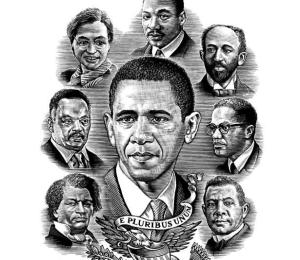
We have so much to celebrate during this Black History Month. Starting with the most significant historical accomplishment to date - having the first African American to become leader of the free world as President of these United States, as well as all of the storied achievements made by the ghost of the greats who have blaze mighty trails. As proud as I am for the many contributions African American’s have made to this great country and, dare I say, to the world, I am equally as confident that there is an abundance of history yet to be made.

So with this writing I would like to provide some insight into the creation of Black History Month. February is dedicated to this proud annual observance for the remembrance of those important people and events honoring the African America Diaspora. The story of Black History Month or the concept was conceived in Chicago during the summer of 1915. An alumnus of the University of Chicago with many friends in the city hosted a convention where Dr. Carter G. Woodson traveled from Washington DC to participate in a national celebration of the fiftieth anniversary of emancipation sponsored by the state of Illinois.

Thousands of African Americans traveled from across the country that summer to see exhibits highlighting the progress their people had made since the destruction of slavery. Awarded a doctorate at Harvard three years earlier, Dr. Woodson joined other exhibitors with a black history display. He was so enamored with the idea that he began the process of making this exhibit an annual event, which means we owe the celebration of Black History Month - to include the study of black history - to Dr. Woodson.

In 1924, his group responded with the creation of Negro History and Literature Week, which they renamed Negro Achievement Week. Their outreach was significant, but DR. Woodson desired greater impact. As he told students at the Hampton Institute, “We are going back to that beautiful history and it is going to inspire us to greater achievements.” In 1925, he decided that the Association had to shoulder the responsibility. He felt going forward with this idea would both create and popularize knowledge about black history.

He sent out a press release announcing Negro History Week in February of 1926. Dr. Woodson chose the second week of February because it marked the birthdays of two Americans who greatly influenced the lives and social condition of African Americans; Abraham Lincoln and abolitionist and former slave Frederick Douglass. Therefore, the myth that the month of February was selected because it is the shortest month – is not true.

Dr. Woodson also founded the Association for the Study of Negro Life and History, now the Association for the Study of African American Life and History. What you might not know is that black history had barely begun to be studied or even documented when the tradition originated. Further, it is important to remember that blacks have been in America since August of 1619 when a Dutch man-of-war ship rode the tide into Jamestown, Virginia and the first slaves were dragged onto its shores. However, it was not until the 20th century that African American history gained a respectable presence in the history books.

From the beginning, Dr. Woodson was overwhelmed by the response to his call. Negro History Week appeared across the country in schools and in many public forums. The expanding black middle class became participants in and consumers of black literature and culture. Black history clubs sprang up, teachers demanded materials to instruct their pupils, and progressive whites supported their efforts. They set a theme for the annual celebration providing study materials such as pictures, lessons for teachers, plays for historical performances, and posters of important dates and people.

The 1960’s had a dramatic effect on the study and celebration of black history. Before the decade was over, Negro History Week would be well on its way to becoming Black History Month. The shift to a month-long celebration began even before Dr. Woodson’s death. As early as the 1940’s, blacks in West Virginia, a state where Dr. Woodson often spoke, began to celebrate February as Negro History Month. By the late 1960’s, as young blacks on college campuses became increasingly conscious of links with Africa, Black History Month replaced Negro History Week.

Within the Association, younger intellectuals, part of the awakening, prodded Woodson’s organization to change with the times. They succeeded and in 1976, fifty years after the first celebration, the Association used its influence to institutionalize the shifts from a week to a month and from Negro history to black history. Since the mid 1970’s, every American president, Democrat and Republican, has issued proclamations endorsing the Association’s annual theme.

During this Black History Month, I will resurrect my “Brownsville Series” expounding upon those legendary segregated communities that produced success and a profound legacy that should never be forgotten and always cherished for we are merely the sum of the whole.

JUST A SEASON
TWITTER

Monday, November 3, 2008

What do you think?

In my thought provoking novel “Just a Season” I said, “Bill Clinton was as close as we would ever get to a black president”. Well, November 4th 2008 will prove me wrong. Frankly, I never thought I would live to see this occur in my lifetime. This historical event of monumental proportions will no doubt change America and dare I say the world.

So my question is: What do you think about Barack Obama being the next and first African American President of the United States of America?