Showing posts with label Ali. Show all posts

Monday, May 13, 2013

The Voices – Tall, Tan, and Talented


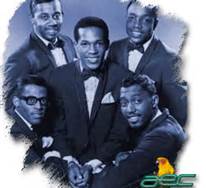
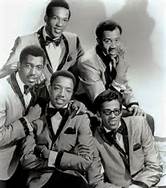
11(2)Some tunes stand the test of time, like “My Girl” and the same can be said about some groups. When you hear the melodies and incomparable classic of the Temptations today you immediately think of the greatest group of voices that ever sang a song.

The Grammy-winning Temptations achieved their legendary fame as one of the most successful acts to record for Motown Records. It’s rare for someone to change the course of time but this group changed the face of music. Often imitated be rarely duplicated! 

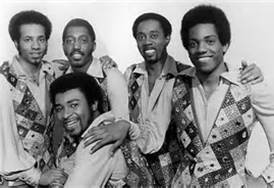
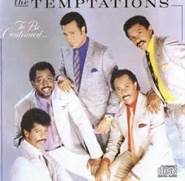
The original group included second tenor/baritone Otis Williams, first tenor Elbridge "Al" Bryant, bass Melvin Franklin, first tenor/falsetto Eddie Kendricks and second tenor/baritone Paul Williams (no relation to Otis). Among the most notable future Temptations were lead singers David Ruffin and Dennis Edwards both of whom became successful Motown solo artists after leaving the group. Other members included Richard Street, Damon Harris, Ron Tyson, Ali-Ollie Woodson, Theo Peoples, G.C. Cameron and others.

The history of the Temptations started in Detroit the home of Motown Records around 1961 as the Elgins. Overtime, as members came and went the new members carried the torch with finesse for decades. I would say this was accomplished because of the group’s mantra was “no one member is bigger than the group” and although the lineup frequently changed their impeccable sound did not.

A Motown-centric biography on the Temptations would start pretty glumly. Success eluded the group at first. Working at Motown was a "Dream Come True," but even that song didn't bring lasting fame. In 1963, a violent scuffle between Elbridge Bryant and Paul Williams preceded "Al's" exit. Enter David Ruffin whose weathered tenor injected intriguing angst into the sweetest songs.

th 6)
The Temptations with David Ruffin and new tunes by Smokey Robinson was the injection of magic and the just kept coming. The Kendricks led song, "The Way You Do the Things You Do," broke pop's Top 20 and "My Girl," 1964 became their signature. Meanwhile, Ruffin switched off with Kendricks at lead was like nothing that has come before or since.

Norman Whitfield, a rival producer, offered brawnier hits than Robinson's, like "Ain't Too Proud to Beg" and "I Wish It Would Rain." By the late '60s, his collaborations with Eddie Holland, then Barrett Strong, had earned him exclusive control over the music of the Temptations.

The group developed its own recognizable style. The Temptations wardrobe ran the fashion gamut: tuxedoes, capes, leather, linen, blues, limes, you name it. But the Tempts always looked sharp and fun in their costumes. Eddie Kendricks held some sway over this easy sophistication.

Under the direction of Broadway hoofer Cholly Atkins, the Temptations became renowned dancers, as well. Daily two-hour rehearsals ensured their movements were precise and spectacular enough to rivet fans from bare stages. Paul Williams’ choreography, including the Temptation Walk, oozed sheer erotic energy.

Onstage, group harmony ruled. Offstage, conflicts abounded, particularly between Ruffin and the others. Too much ego and flakiness cost him his membership in 1968. Though he released his own smash, "My Whole World Ended," solo super-stardom was not meant to be.

th (5)Enter, ex-Contour Dennis Edwards’ convincing vocals, new songs by the Temptations re-emphasized the ensemble. Whitfield's ambitious "psychedelic soul" phase fused denser grooves with sociopolitical observations, helping fans dance and think at once. Commercially, the Tempts stayed put on "Cloud Nine."

In 1971 brought both returns and departures after "Just My Imagination," a throwback to their tender ballads. Exit Eddie Kendricks for a solo career and the disco-esque hits, "Keep on Truckin'" and "Boogie Down." Exit Paul Williams died as a result of suicide. Two new tenors, Richard Street and Damon Harris gamely met the challenge and held their own against the older classics.

In 1975 things shifted from Harris to Glenn Leonard. Then from Dennis Edwards to Louis Price to Dennis Edwards (who'd leave and come back several times). Then from Motown to Atlantic in 1977, then back to Motown in the early '80s. Just in time for a reunion tour with David Ruffin and Eddie Kendricks!

th (4)Enter the great Ali Ollie Woodson who played an integral part in keeping the Temptations from becoming just a nostalgia act. I would refer to him as the Temptations Temptation. I mean this in the sense that by the early 1980s, the Temptations were no longer posting hit after hit as they had in the 1960s and ’70s with songs like “Papa Was a Rolling Stone,” “My Girl,” and “I Wish It Would Rain.” The soared once again with Ali!

In 1989, in flesh and in spirit, the six classic members shared the stage once more at the Rock and Roll Hall of Fame. Smooth spokesman Otis Williams, beloved Batman fanatic Melvin Franklin, ethereally elegant Eddie Kendricks, dynamic David Ruffin, and hard-hitting Dennis Edwards all accepted the award post harmoniously for the late Paul Williams.

All I can say is thanks for the spirit of the great men for their contribution to the world. The Temptations will live for all times. Thank you fellas! And that’s my thought Provoking Perspective…

http://johntwills.com

Friday, May 3, 2013

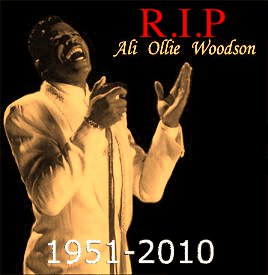
The Great Ali Ollie Woodson


OLLIEWOODSONRIPAli Ollie Woodson was born Ollie Creggett on September 12, 1951 in Detroit, Michigan. He is remembered for his one of a kind soulful gospel rooted voice and as the lead singer of the greatest vocal group of all time; The Temptations.

He was the lead singer on such classic tunes; “Treat Her Like a Lady”, Sail Away, and “Lady Soul. I was blessed to have met and known this gentle soul in the mid 1970s and until a few years before his passing our paths would cross, which was always a pleasure. I can recall telling him that he was known the world over, yet he made me feel as if I was his best friend. It was always like we just spoke yesterday.

Ali was not an original member of the Temptations, which had several lineup changes since it started in the 1960s. But he played an integral part in keeping the Temptations from becoming just a nostalgia act. I would refer to him as the Temptations Temptation. I mean this in the sense that by the early 1980s, the Temptations were no longer posting hit after hit as they had in the 1960s and ’70s with songs like “Papa Was a Rolling Stone,” “My Girl,” and “I Wish It Would Rain.” Enter Ali Woodson!

The group had lost original members, and Ali was brought in to replace Dennis Edwards, whose voice had defined the group in the 1970s. He added a distinctive flavor to the group during his tenure that was like a playful stamp on several Temptations’ standards with his tricky punctuation, sassy humor and inventive acrobatics. I say this with great reverence because he could do a David Ruffin better than David Ruffin.

In a review of a concert featuring the Temptations and the Four Tops in 1985, Stephen Holden of The New York Times described Ali as “a charismatic young pop-funk singer with a husky, agile voice that breaks into unexpected falsetto riffs.” Frankly, I have yet to find a singer of any era comparable to the elegance of his sound. If you heard him sing – you loved what he sung!

Ali went on the road at the age of 19 with Bill Pinkney who gave him a job as a musician and then vocalist for the Original Drifters in the early 1970s. He would return to lead The Original Drifters' gospel song "True Love" in 1996 on the CD “Peace in the Valley” (Malaco). He always referred to Pinkney as his Father in the music business and sang “Walk Around Heaven All Day” at Pinkney's home-going service in July 2007.

Most don’t know it but when Teddy Pendergrass left Harold Melvin and the Blue Notes it was Ali who got the call. He was called upon throughout his career to be the voice to accompany many of the great artists. But he was most notable for being lead singer of the Temptations from 1984 to 1986, and from 1988 to 1996.

He first recorded with The Temptations in 1983 on their “Back to Basics” album, when he was invited to perform lead vocals on the album track, "Stop the World Right Here (I Wanna Get Off)," filling in for an exhausted Dennis Edwards. The following year, he replaced Edwards and officially became a Temptation.

He began his tenure in the group on a high note when he co-wrote, co-produced, sang lead, and played keyboards on the 1984 Temptations single “Treat Her Like a Lady”, which appeared on his first full album with the group “Truly for you” and was a #2 hit on the U.S. R&B charts.

He continued to compose and sing lead on other moderate hits with The Temptations throughout the mid-1980s, up until his first departure from the group in 1987. However, he would rejoin the group the following year, and remained with them up through their 1995 album For Lovers Only.

Since leaving the group, Woodson began a solo career, and often toured with a Temptations-like revue called Ali Ollie Woodson & the Emperors of Soul and the Temptations Revue featuring Dennis Edwards. His last tour was with none other than the Queen of Soul – Aretha Franklin. I think that says it all.

I have lived long enough to know that it is rare and only once in a lifetime that God gives us an Ali Woodson. I am honored and truly blessed to have known him. In the Temptations movie David and Eddie would say “we were the voices”. With all due respect, Ali should also be called one of “the voices”.

Rest In Peace my friend and that’s my Thought Provoking Perspective…


Saturday, April 28, 2012

Inner City Blues

Today I am in a mellow but always socially conscience as to the way of the world. So today I will share a grove that will make you move and provoke thought!

 If you don't stand for something you will fall for anything! And that's my Thought Provoking Perspective... Enjoy!!!

Friday, February 17, 2012

The Greatest of All Times

 Muhammad Ali, known as the greatest boxer of all times and viewed by most as the “Champ,” retired as the first three-time Heavyweight Champion of the World. He was born Cassius Marcellus Clay Jr., the elder of two boys in Louisville, Kentucky, on January 17, 1942. He was named after his father, Cassius Marcellus Clay Sr., who was named for the 19th century abolitionist and politician, the owner of Clay’s ancestors. Ali changed his name after joining the Nation of Islam in 1964.

Clay was directed toward boxing by a white Louisville police officer whom he encountered as a 12-year-old fuming over the theft of his bicycle. After an extremely successful amateur boxing career, he won a gold medal in the light heavyweight division at the 1960 Summer Olympics in Rome. Ali said in his 1975 autobiography that he threw his Olympic gold medal into the Ohio River after being refused service at a “whites-only” restaurant.

Not only was the Champ a fighter in the ring, he had the courage to fight the U.S. Government in 1967 when he refused to be inducted into the U.S. military based on his religious beliefs and opposition to the Vietnam War. He was arrested and found guilty on draft evasion charges, stripped of his boxing title, and his boxing license was suspended. He was not imprisoned but did not fight again for nearly four years while his appeal worked its way up to the U.S. Supreme Court, where it was successful.

Nicknamed "The Greatest," Ali was involved in several historic boxing matches. Notable among them were three against rival Joe Frazier and one with George Forman, whom he beat by knockout to win the world heavyweight title for the second time. He suffered only five losses with no draws in his career, while amassing 56 wins, 37 knockouts and 19 decisions. Ali was well known for his unorthodox fighting style, which he described as "float like a butterfly, sting like a bee," you can’t hit what you can’t see.

Standing tall at 6 feet, 3 inches, Clay had a highly unorthodox style for a heavyweight boxer. Rather than the normal style of carrying the hands high to defend the face, he instead relied on foot speed and quickness to avoid punches and carried his hands low. He coined a new technique called the rope-a-dope where he rested upon the ring ropes and let the dope, his opponent, punch himself out. He was also known for his pre-match hype, where he would "trash talk" opponents on television and in person before the match and often with rhymes.

These personality quips and idioms, along with an unorthodox fighting technique, made him a cultural icon. Ali built a reputation by correctly predicting, with stunning accuracy, the round in which he would "finish" an opponent. While still Cassus Clay, he adopted the latter practice from "Gorgeous” George Wagner, a popular professional wrestling champion who drew thousands of fans. Often referred to as "the man you loved to hate," George could incite the crowd with a few heated remarks, which Ali used to his advantage.

As Clay he met his famous longtime trainer Angelo Dundee at a light heavyweight fight in Louisville shortly after becoming the top contender to fight Heavyweight Champion Sonny Liston. Despite his impressive record, he was not widely expected to defeat Liston who was considered a more sinister champion than Iron Mike Tyson. In fact, nobody gave him a snowball’s chance in hell of winning the fight against such a dominant champion.

The fight was scheduled for February 25, 1964 in Miami, Florida, but it almost never happened because the promoter heard that Clay had been seen around Miami and in other cities with the controversial Muslim Leader, Malcolm X. The promoters perceived this association as a potential gate killer to a bout where Liston was overwhelmingly favored to win. However, it was Clay's colorful persona and nonstop braggadocio that gave the fight its sole appeal.

The ever-boastful Clay frequently taunted Liston during the buildup to the bout by dubbing him "the big ugly bear" among other things. During the weigh-in on the day before the bout, acting like a wild crazy man, Clay declared for the first time that he would "float like a butterfly and sting like a bee.” He summarized his strategy for avoiding Liston's assaults this way: "Your hands can't hit what your eyes can't see."

By the third round, Clay was ahead on points and had opened a cut under Liston's eye. Liston regained some ground in the fourth, as Clay was blinded by a substance in his eyes. It is unconfirmed whether this was something used to close Liston's cuts or deliberately applied to Liston's gloves. What is clear, boxing historians and insiders have recalled, is that in at least two other Liston fights a similar situation occurred, suggesting the possibility that the Liston corner deliberately attempted to cheat.

By the sixth, Clay dominated Liston and was looking for a finish. Then Liston shocked the boxing world when he failed to answer the bell for the seventh round, claiming his shoulder was injured. At the end of the fight, Clay boasted to the press that doubted him before the match, proclaiming, "I shook up the world!" When Clay beat Liston at age 22, he became the youngest boxer to ever take the title from a reigning heavyweight champion, a mark that stood until the mid Mike Tyson’s reign began.

What is significant about Clay winning the bout is this: he said, “I am pretty, I can’t be beat” as he yelled into the cameras for the world to see. In the early sixties this was not the language Negro’s were using to describe themselves. Those words and that brash act was the catalyst for the black is beautiful movement, Afro-American, and black power. So from that perspective, yes, he shook up the world.

After winning the championship Clay revealed that he was a member of the Nation of Islam. It was the movement’s leader Elijah Muhammad who gave Clay the name Cassius X, discarding his surname as a symbol of his ancestors' enslavement, as had been done by other Nation members. On Friday, March 6, 1964, Malcolm X took Clay on a tour of the United Nations building where he announced that Clay would be granted his "X." That same night, Elijah Muhammad recorded a statement over the phone to be played over the radio that Clay would be renamed Muhammad – one who is worthy of praise, and Ali – rightly guided.

The rematch with Liston was held in May 1965 in Lewiston, Maine. Ali who had changed his name by this time won by knockout in the first round as a result of what came to be called the "phantom punch." Many believe that Liston, possibly as a result of threats from Nation of Islam extremists or in an attempt to "throw" the fight to pay off debts, waited to be counted out. However, most historians discount both scenarios and insist that it was a quick, chopping punch to the side of the head that legitimately felled Liston. Ali would later call the punch an “anchor punch” used by the Great Jack Johnson.

Aligning himself with the Nation of Islam made him a lightning rod for controversy, turning the outspoken but popular champion into one of that era's most recognizable and controversial figures. Appearing at rallies with Elijah Muhammad and declaring his allegiance to him at a time when mainstream America viewed Black Muslims with suspicion and outright hostility made Ali a target of outrage, as well as suspicion. Ali seemed at times to provoke such reactions with viewpoints that wavered from support for civil rights to outright support of separatism.

For example, Ali once made this comment in relation to integration: "We who follow the teachings of Elijah Muhammad don't want to be forced to integrate. Integration is wrong. We don't want to live with the white man; that's all." Or this remark about inter-racial marriage: "No intelligent black man or black woman in his or her right black mind wants white boys and white girls coming to their homes to marry their black sons and daughters." It was clear that his religious beliefs at the time included the notion that the white man was "the devil" and that white people were not "righteous." Ali would also make claims that white people hated black people.

In early 1966, Ali was reclassified to be eligible for the draft and induction into the U.S. Army during a time when the United States was involved in the Vietnam War. When notified of this status, he declared that he would refuse to serve in the Army and publicly considered himself a conscientious objector. Ali believed "War is against the teachings of the Holy Qur’an. I'm not trying to dodge the draft. We are not supposed to take part in no wars unless declared by Allah or The Messenger. We don't take part in Christian wars or wars of any unbelievers."

Ali also famously said, "I ain't got no quarrel with them Viet Cong ... They never called me Nigger." It was rare for a heavyweight boxing champion in those days, or now, to speak at Howard University where he gave his popular "Black Is Best" speech in 1996. Ali was invited to speak by Howard’s sociology professor Nathan Hare on behalf of the Black Power Committee, a student protest group. The event of 4,000 cheering students and community intellectuals was surely another step toward his iconic stature.

Appearing shortly thereafter for his scheduled induction into the U.S. Armed Forces on April 28, 1967 in Houston, he refused three times to step forward at the call of his name. An officer warned him he was committing a felony punishable by five years in prison and a fine of $10,000. Once more, Ali refused to budge when his name was called. As a result, he was arrested and on the same day the New York State Athletic Commission suspended his boxing license and stripped him of his title as did other boxing commissions, for being unpatriotic.

At Ali’s trial, after only 21 minutes of deliberation, the jury found Ali guilty; the Court of Appeals upheld the conviction; the case went to the U.S. Supreme Court. During this time, the public began turning against the war and support for Ali began to grow. Ali supported himself by speaking at colleges and universities across the country, where opposition to the war was especially strong. On June 28, 1971, the Supreme Court reversed by unanimous decision his conviction for refusing induction. The decision was not based on, nor did it address the merits of Clay's/Ali's claims per se; rather, the government's failure to specify which claims were rejected and which were sustained constituted the grounds upon which the Court reversed the conviction.

The legacy of the “Greatest” is the stuff movies are made of. Muhammad Ali defeated every top heavyweight in his era, which has been called the golden age of heavyweight boxing. Ali was named "Fighter of the Year" by Ring Magazine more times than any other fighter, and was involved in more Ring Magazine "Fight of the Year" bouts than any other fighter. He is an inductee into the International Boxing Hall of Fame and holds wins over seven other Hall of Fame inductees.

He is also one of only three boxers to be named “Sportsman of the Year” by Sports Illustrated. In 1993, the Associated Press reported that Ali was tied with Babe Ruth as one of the most recognized athletes, out of over 800 dead or alive athletes, in America. I have met Muhammad and was so impressed I named my only son after him, hoping his example of courage and fortitude would be shared. He is my hero and I say: thank you for your example and sacrifice. You are the Greatest of All Times.

And that is my Thought Provoking Perspective!

Black History Everyday because Black History is American History.

"Just a Season"

Legacy – A New Season the sequel is coming!

Wednesday, February 23, 2011

The Greatest of All Times


Muhammad Ali, known as the greatest boxer of all times and viewed by most as the “Champ,” retired as the first three-time Heavyweight Champion of the World. He was born Cassius Marcellus Clay Jr., the elder of two boys in Louisville, Kentucky, on January 17, 1942. He was named after his father, Cassius Marcellus Clay Sr., who was named for the 19th century abolitionist and politician, the owner of Clay’s ancestors. Ali changed his name after joining the Nation of Islam in 1964.

Clay was directed toward boxing by a white Louisville police officer whom he encountered as a 12-year-old fuming over the theft of his bicycle. After an extremely successful amateur boxing career, he won a gold medal in the light heavyweight division at the 1960 Summer Olympics in Rome. Ali said in his 1975 autobiography that he threw his Olympic gold medal into the Ohio River after being refused service at a “whites-only” restaurant.

Not only was the Champ a fighter in the ring, he had the courage to fight the U.S. Government in 1967 when he refused to be inducted into the U.S. military based on his religious beliefs and opposition to the Vietnam War. He was arrested and found guilty on draft evasion charges, stripped of his boxing title, and his boxing license was suspended. He was not imprisoned but did not fight again for nearly four years while his appeal worked its way up to the U.S. Supreme Court, where it was successful.

Nicknamed "The Greatest," Ali was involved in several historic boxing matches. Notable among them were three against rival Joe Frazier and one with George Forman, whom he beat by knockout to win the world heavyweight title for the second time. He suffered only five losses with no draws in his career, while amassing 56 wins, 37 knockouts and 19 decisions. Ali was well known for his unorthodox fighting style, which he described as "float like a butterfly, sting like a bee," you can’t hit what you can’t see.

Standing tall at 6 feet, 3 inches, Clay had a highly unorthodox style for a heavyweight boxer. Rather than the normal style of carrying the hands high to defend the face, he instead relied on foot speed and quickness to avoid punches and carried his hands low. He coined a new technique called the rope-a-dope where he rested upon the ring ropes and let the dope, his opponent, punch himself out. He was also known for his pre-match hype, where he would "trash talk" opponents on television and in person before the match and often with rhymes.

These personality quips and idioms, along with an unorthodox fighting technique, made him a cultural icon. Ali built a reputation by correctly predicting, with stunning accuracy, the round in which he would "finish" an opponent. While still Cassus Clay, he adopted the latter practice from "Gorgeous” George Wagner, a popular professional wrestling champion who drew thousands of fans. Often referred to as "the man you loved to hate," George could incite the crowd with a few heated remarks, which Ali used to his advantage.

As Clay he met his famous longtime trainer Angelo Dundee at a light heavyweight fight in Louisville shortly after becoming the top contender to fight Heavyweight Champion Sonny Liston. Despite his impressive record, he was not widely expected to defeat Liston who was considered a more sinister champion than Iron Mike Tyson. In fact, nobody gave him a snowball’s chance in hell of winning the fight against such a dominant champion.

The fight was scheduled for February 25, 1964 in Miami, Florida, but it almost never happened because the promoter heard that Clay had been seen around Miami and in other cities with the controversial Muslim Leader, Malcolm X. The promoters perceived this association as a potential gate killer to a bout where Liston was overwhelmingly favored to win. However, it was Clay's colorful persona and nonstop braggadocio that gave the fight its sole appeal.

The ever-boastful Clay frequently taunted Liston during the buildup to the bout by dubbing him "the big ugly bear" among other things. During the weigh-in on the day before the bout, acting like a wild crazy man, Clay declared for the first time that he would "float like a butterfly and sting like a bee.” He summarized his strategy for avoiding Liston's assaults this way: "Your hands can't hit what your eyes can't see."

By the third round, Clay was ahead on points and had opened a cut under Liston's eye. Liston regained some ground in the fourth, as Clay was blinded by a substance in his eyes. It is unconfirmed whether this was something used to close Liston's cuts or deliberately applied to Liston's gloves. What is clear, boxing historians and insiders have recalled, is that in at least two other Liston fights a similar situation occurred, suggesting the possibility that the Liston corner deliberately attempted to cheat.

By the sixth, Clay dominated Liston and was looking for a finish. Then Liston shocked the boxing world when he failed to answer the bell for the seventh round, claiming his shoulder was injured. At the end of the fight, Clay boasted to the press that doubted him before the match, proclaiming, "I shook up the world!" When Clay beat Liston at age 22, he became the youngest boxer to ever take the title from a reigning heavyweight champion, a mark that stood until the mid Mike Tyson’s reign began.

What is significant about Clay winning the bout is this: he said, “I am pretty, I can’t be beat” as he yelled into the cameras for the world to see. In the early sixties this was not the language Negro’s were using to describe themselves. Those words and that brash act was the catalyst for the black is beautiful movement, Afro-American, and black power. So from that perspective, yes, he shook up the world.

After winning the championship Clay revealed that he was a member of the Nation of Islam. It was the movement’s leader Elijah Muhammad who gave Clay the name Cassius X, discarding his surname as a symbol of his ancestors' enslavement, as had been done by other Nation members. On Friday, March 6, 1964, Malcolm X took Clay on a tour of the United Nations building where he announced that Clay would be granted his "X." That same night, Elijah Muhammad recorded a statement over the phone to be played over the radio that Clay would be renamed Muhammad – one who is worthy of praise, and Ali – rightly guided.

The rematch with Liston was held in May 1965 in Lewiston, Maine. Ali who had changed his name by this time won by knockout in the first round as a result of what came to be called the "phantom punch." Many believe that Liston, possibly as a result of threats from Nation of Islam extremists or in an attempt to "throw" the fight to pay off debts, waited to be counted out. However, most historians discount both scenarios and insist that it was a quick, chopping punch to the side of the head that legitimately felled Liston. Ali would later call the punch an “anchor punch” used by the Great Jack Johnson.

Aligning himself with the Nation of Islam made him a lightning rod for controversy, turning the outspoken but popular champion into one of that era's most recognizable and controversial figures. Appearing at rallies with Elijah Muhammad and declaring his allegiance to him at a time when mainstream America viewed Black Muslims with suspicion and outright hostility made Ali a target of outrage, as well as suspicion. Ali seemed at times to provoke such reactions with viewpoints that wavered from support for civil rights to outright support of separatism.

For example, Ali once made this comment in relation to integration: "We who follow the teachings of Elijah Muhammad don't want to be forced to integrate. Integration is wrong. We don't want to live with the white man; that's all." Or this remark about inter-racial marriage: "No intelligent black man or black woman in his or her right black mind wants white boys and white girls coming to their homes to marry their black sons and daughters." It was clear that his religious beliefs at the time included the notion that the white man was "the devil" and that white people were not "righteous." Ali would also make claims that white people hated black people.

In early 1966, Ali was reclassified to be eligible for the draft and induction into the U.S. Army during a time when the United States was involved in the Vietnam War. When notified of this status, he declared that he would refuse to serve in the Army and publicly considered himself a conscientious objector. Ali believed "War is against the teachings of the Holy Qur’an. I'm not trying to dodge the draft. We are not supposed to take part in no wars unless declared by Allah or The Messenger. We don't take part in Christian wars or wars of any unbelievers."

Ali also famously said, "I ain't got no quarrel with them Viet Cong ... They never called me Nigger." It was rare for a heavyweight boxing champion in those days, or now, to speak at Howard University where he gave his popular "Black Is Best" speech in 1996. Ali was invited to speak by Howard’s sociology professor Nathan Hare on behalf of the Black Power Committee, a student protest group. The event of 4,000 cheering students and community intellectuals was surely another step toward his iconic stature.

Appearing shortly thereafter for his scheduled induction into the U.S. Armed Forces on April 28, 1967 in Houston, he refused three times to step forward at the call of his name. An officer warned him he was committing a felony punishable by five years in prison and a fine of $10,000. Once more, Ali refused to budge when his name was called. As a result, he was arrested and on the same day the New York State Athletic Commission suspended his boxing license and stripped him of his title as did other boxing commissions, for being unpatriotic.

At Ali’s trial, after only 21 minutes of deliberation, the jury found Ali guilty; the Court of Appeals upheld the conviction; the case went to the U.S. Supreme Court. During this time, the public began turning against the war and support for Ali began to grow. Ali supported himself by speaking at colleges and universities across the country, where opposition to the war was especially strong. On June 28, 1971, the Supreme Court reversed by unanimous decision his conviction for refusing induction. The decision was not based on, nor did it address the merits of Clay's/Ali's claims per se; rather, the government's failure to specify which claims were rejected and which were sustained constituted the grounds upon which the Court reversed the conviction.

The legacy of the “Greatest” is the stuff movies are made of. Muhammad Ali defeated every top heavyweight in his era, which has been called the golden age of heavyweight boxing. Ali was named "Fighter of the Year" by Ring Magazine more times than any other fighter, and was involved in more Ring Magazine "Fight of the Year" bouts than any other fighter. He is an inductee into the International Boxing Hall of Fame and holds wins over seven other Hall of Fame inductees.

He is also one of only three boxers to be named “Sportsman of the Year” by Sports Illustrated. In 1993, the Associated Press reported that Ali was tied with Babe Ruth as one of the most recognized athletes, out of over 800 dead or alive athletes, in America. I have met Muhammad and was so impressed I named my only son after him, hoping his example of courage and fortitude would be shared. He is my hero and I say: thank you for your example and sacrifice. You are the Greatest of All Times.