Friday, April 19, 2013

The State Of Black America


We will soon commemorate the 50th anniversary of the historic March on Washington for Jobs and Freedom, which was a watershed moment in our history. However, we must be mindful that it was not a welcomed event as most of white America and the Kennedy Administration were very much against such a gathering of blacks in the nation’s capital. I am saddened to say that as a community, we are not much better off today than we were fifty years ago.

I'm not saying that there has not been significant and important progress in the last 50 years. Surely for some, but if Dr. King were to have an opinion – he would be very displeased. Marc Morial, President of the National Urban League, believes there’s a decrease in poverty, increases in high school graduation rates and enrollment rates". This may well be true but I wonder what statistics has he seen to come to this conclusion.

I don't profess to be as honorable or noteworthy as some of our so-called leaders but the disparity between black Americans and white Americans when it comes to jobs, income, healthcare and wealth remains vast and much too large. When you look at the urban communities - the African American plight is worse than ever in most of these categories.

Recently, several organizations gathered for the release of the annual "State of Black America" report, which highlighted the economic forecast for African Americans. Although the report is presented annually, this year, the Urban League commissioned a half-century study to commemorate the 1963 March on Washington.

The Congressional Black Caucus (CBC) Chair Marcia Fudge reported that “the unemployment rate is double for blacks than for whites, we've lost more homes to foreclosure than whites and we've lost more wealth than whites”. Yet, they say the percentage of blacks living in poverty has declined 23 points and the percentage of black children living in poverty is down by 22 points since 1963.

It is worth mentioning that the march was prior to the signing of any of the landmark civil rights legislation which adds little credibility to that statement. It is also noteworthy to remember that at that time the, in 1963, Jim Crow was the law of the land and its restrictions did not allow us to use the same bathrooms or eat at lunch counters. So, if you consider this environment - minimal gains have been made to be viewed as great progress.  

The report credits the civil rights measures that were enacted to open the doors of opportunity for blacks in education and standards of living. Rep. Chaka Fattah said, "It is without contradiction that African Americans have made extraordinary progress in the report... But, compared to the majority, we still have some room to grow". I wonder if his constituents would agree in Philadelphia?

Morial then said, as the budget debate continues in Washington on whether to cut critical program funding, the "State of Black America 2013" highlights a harsh reality. "Budget cutting fever will cause economic pneumonia. If we are to move toward a lasting economic recovery, full equality and empowerment, we must apply sustainable solutions keenly focusing on jobs for all Americans and closing the gaps that result in a tale of two Americas”.

 I will tell you that I have lived long enough to have witnessed and know that people will say anything, regardless of complication, on any subject. Many will say “there is no race problem. There’s a black president”. Or they will point to the few, out 42 million, successful African Americans, and I am proud of them.

However, as we commemorate the March that produced the famous “I have a Dream Speech” I believe it is fair to say that most African Americans will see the remnants of the “Dream” more as a “Nightmare”. I have to say from my vantage point the forecast looks GRIM! And that’s my Thought Provoking Perspective…

book 1
FaceBook @ John T. Wills
Twitter @ John T. Wills

Sunday, April 14, 2013

Whitesplaining


rand paulI have the utmost respect for Mr. Clarence Page of the Tribune's editorial board for his lifelong mission to express truth through his words. Mr. Page wrote an article on his blogs  this week that impressed me greatly. He made me aware of a new word coined as a result of Sen. Rand Paul's news-making speech at historically black Howard University.

I hope Mr. Page will appreciate my sharing his words for your empowerment. Thank you Sir:
Within hours after, Sen. Rand Paul's news-making speech at historically black Howard University someone posted this new definition on the user-driven Urban Dictionary website of an awkward-sounding but quite timely verb: "whitesplain":
"The act of a caucasian (sic) person explaining to audiences of color the true nature of racism," says the entry; "a caucasian (sic again) person explaining sociopolitical events and/or history to audiences of color as though they are ignorant children ...."
Whitesplaining appears significantly to be derived from "mansplaining," which first appeared in a thoughtful, hilarious 2008 Los Angeles Times essay by Rebecca Solnit titled "Men Who Explain Things."
Urban Dictionary now defines mansplaining as "condescending, inaccurate explanations delivered with rock-solid confidence of rightness and that slimy certainty that of course he is right, because he is the man in this conversation." I am guessing that a woman wrote that definition. Message received.
Anyway, as an example of how whitesplaining should be used, consider Urban Dictionary: "U.S. Sen. Rand Paul whitesplained to students at Howard University," it says, "that a black Republican founded the NAACP."
Indeed, even Paul looked surprised at Howard when, after he asked if anyone knew that the National Association for the Advancement of Colored People had been founded by Republicans, his audience responded with a resoundingly impatient "Yes!"
"We know our history," one student shouted. Unfortunately, Paul didn't. He had to be prompted from the audience with the name of Massachusetts Republican Edward Brooke, the first African-American to be elected to the U.S. Senate by popular vote — and Paul still mangled it twice as "Edwin Brooks."
Worse, he expounded at length on the historically incorrect narrative that conservatives often give, that blacks left the party of Abraham Lincoln to follow Franklin D. Roosevelt's promise of "unlimited federal assistance," while Republicans only have the "less tangible ... promise of equalizing opportunity through free markets."
Yet, even if you buy that oversimplified view of history, as conservatives with selective memory often do, Paul completely omitted a much more important sea change, the seismic racial realignment that followed President Lyndon B. Johnson's 1964 Civil Rights Act.
In fact, Republican nominees continued to receive sizable black support; 39 percent to Dwight Eisenhower in his 1956 re-election, according to the Joint Center for Political and Economic Studies, and 32 percent to his vice president, Richard Nixon, in 1960.
But after conservatives nominated Sen. Barry Goldwater, who voted against the civil rights bill, to oppose Johnson in 1964, LBJ won 94 percent of the black vote. No Republican presidential candidate has received more than 15 percent of the black vote since.
Widening the divide was the "Southern strategy" with which Republicans mined racial backlash to win white votes, first in the South, then nationwide. Some Republicans, like former party chairmen Ken Mehlman and Michael Steele, have been quite candid and contrite in denouncing such tactics, only to be shouted down by whitesplainers in the Grand Old Party's right wing.
In fact, "rightsplainers" more aptly describes Paul's selective view of GOP history, including his own. When he was questioned about his 2010 interviews with the Louisville Courier-Journal and on Rachel Maddow's MSNBC show in which he criticized part of the 1964 Civil Rights Act, Paul denied the charge. "I've never wavered in my support for civil rights or the Civil Rights Act," he said at Howard.
Yet, as videos posted on various websites show, he wavered a lot. He opposed the part of the act that banned discrimination in restaurants, hotels and other privately owned public accommodations.
True to his libertarian beliefs, Paul used the old argument that the magic of the marketplace would prevent merchants from turning away business. But, as an African-American who is old enough to remember having to sleep in the family car on long trips — in the South and the North — after being turned away repeatedly from hotels and restaurants, I have a sharply different view.
But mere ignorance does not deter the rightsplainers. They just keep on talking.
I could not have said it better! And that’s my Thought Provoking Perspective…

book 1
FaceBook @ John T. Wills
Twitter @ John T. Wills


Thursday, April 11, 2013

Designing Your Life with Carla: “For Women Only”


afe1220a-8bc2-44fb-967e-3c4c8d4bc98d_newtimelineYou are cordially invited to tune in to Designing Your Life with Carla, Friday April 12 at 4:00 pm (est) as Carla Armstrong interviews John T. Wills; author, speaker, former professor, teacher, publisher, blogger, a contributor to newspapers and online magazines.

He is the Executive Producer of the most dynamic and exciting literary radio show on the Internet airwaves; “The Book Tree Radio Show” designed to promote literacy, showcase authors, writers, wordsmiths, poets and other relevant content to empower the minds of a broad base community.

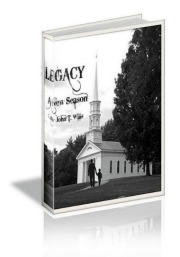
John will be sharing thoughts For Women Only and discussing his new book, "Legacy - A New Season". It is the sequel and the continuation of "Just a Season" and a stand-alone story rich in history on a subject rarely explained to children of this generation concerning the African American struggle.

From his Publicist: John is currently scheduling speaking engagements, book signing. He is available for all media contacts, interviews and opportunities as a contributing writer.

book 1CONTACT INFORMATION

Like my FaceBook Page
Twitter @ John T. Wills
BlogThought Provoking Perspectives
Email: johntwills@ymail.com

Call in to speak with John or Carla at (347) 215-9751.


Tuesday, April 9, 2013

The Prelude To "Just a Season"


A MUST READ!!!A season is a time characterized by a particular circumstance, suitable to an indefinite period of time associated with a divine phenomenon that some call life. One of the first things I learned in this life was that it is a journey. 

During this passage through time I have come to realize that there are milestones, mountains, and valleys that everyone will encounter. Today, I have to face a valley and it’s excruciating. It’s June 28th, a day that I once celebrated as a very special day. Now, it’s filled with sorrow. The reason this day is different from all others is because I have come to the cemetery at Friendly Church. 

Normally it’s hot and humid as summer begins, but not so today. It’s a cool gray day with the sky slightly overcast. I hear the echo of birds chirping from a distance. There is also a mist or a light fog hovering very near the ground that gives the aura of a mystical setting.  This is a place where many of my family members who have passed away rest for eternity.  Some have been resting here for over a hundred years. I have grandparents, uncles, aunts, cousins, a sister, and many friends here as well. The cemetery is in the most tranquil of places secluded from the rest of the world, very peaceful and beautiful, almost like being near the gateway of heaven.

My heart aches today because I have come here on what would have been my son’s birthday. This is a very hard thing for me to do as the natural order suggests it should be the other way around. Another difficulty is that this is the first time I will see his headstone that was put in place just a few days ago. Although I know what it should look like, it’s going to be hard to actually see it. It will indicate the finality of losing the dearest of all human beings.  It’s hard to imagine what the rest of my life will be like without my precious son.

As I pass Granddaddy’s gravesite, I stop to say hello. After a brief moment, I continue in the direction of my son’s resting place. As I get closer, I begin to receive a rush of emotion to the point that my movements slow as the sight comes into view. I can now see his name clearly and I whisper “God why did you take him?” I become numb as I finally arrive at his gravesite, overwhelmed with this never before known emotion. This is something I never thought I would ever have to do, but here I am!!! 

Suddenly, the sky begins to clear somewhat, as I now feel the sun’s rays from above.  At this very moment, I receive an epiphany upon reading the dates inscribed on the stone.  1981 – 2001. What does this really mean? The beginning and the end, surely, but in the final analysis it is just a tiny little dash that represents the whole life of a person. I fall to my knees realizing the profound impact of that thought causing me to look to the heavens and wonder. If someone, for whatever reason, were to tell the story concealed within my dash.   What might they say? 

Chapter One

The story begins in late November 1951 on a clear sunny Sunday afternoon. It was fairly cool for an autumn day and as it was the custom in the Reid family, everyone had gone to church early to give praise to the Lord. This was a special day for this family. It was a special day because of their anticipation of a new member into the family. So it was a great, great feeling of joy and excitement that filled their home. Ruth and Josie did not attend church this day, because Josie was overdue and expecting to give birth at anytime.

At the end of this epic novel the journey continues with “Legacy – A New Season”…
book 1
FaceBook @ John T. Wills
Twitter @ John T. Wills

Monday, April 8, 2013

The Certain Ones Online Magazine


408449_10200579829001956_1804937140_n

I am man who has been blessed with the gift of words or should I say the effective use of words. Therefore, I want to give high praise to my friend Vanessa Richardson of The Certain Ones Online Magazine for sharing the wisdom of the amazing contributors who enrich, enlighten, and empower the minds and consciousness of us all. I am honored to be part of this group of fabulous wordsmiths. 

Meet the prolific authors/talk show hosts and contributors to The Certain Ones Online Magazine. Dr. Darcova TriplettJamesina GreeneAdrienna TurnerJohn T. Wills, Dr. Dolapo Babalola,Lacha' Mitchell-ScottShon Hyneman, and Cherese Spand. We are blessed to connect with you.

I invite you to take a moment to visit these talented contributors at their virtual homes, via our website: www.TheCertainOnesMagazine.com. Blessings!

You will be inspired and empowered. And that’s my Thought Provoking Perspective…

Sunday, April 7, 2013

Civil Rights Timeline


obama and king 1History is like a clock that tells a story of the times in which we’ve lived. It is also true that it is written by the victor. Therefore, we must forget the version told as “His-Story” and remember our story, which is the Greatest Story Ever Told. Thanks to Infoplease, I have added information and Links about the milestones in the modern civil rights movement.

My only request is that you share this information with your children to let them know what time it is. If you don’t, they will never know. And that’s my Thought Provoking Perspective…


Milestones in the modern civil rights movement

by Borgna Brunner and Elissa Haney
19481954196019671968197119881991200520082009

1948

July 26

Truman signs Executive Order 9981, which states, "It is hereby declared to be the policy of the President that there shall be equality of treatment and opportunity for all persons in the armed services without regard to race, color, religion, or national origin."

1954

May 17

Thurgood MarshallThe Supreme Court rules on the landmark case Brown v. Board of Education of Topeka, Kans., unanimously agreeing that segregation in public schools is unconstitutional. The ruling paves the way for large-scale desegregation. The decision overturns the 1896 Plessy v. Ferguson ruling that sanctioned "separate but equal" segregation of the races, ruling that "separate educational facilities are inherently unequal." It is a victory for NAACP attorney Thurgood Marshall, who will later return to the Supreme Court as the nation's first black justice.

1955

Aug.

Fourteen-year-old Chicagoan Emmett Till is visiting family in Mississippi when he is kidnapped, brutally beaten, shot, and dumped in the Tallahatchie River for allegedly whistling at a white woman. Two white men, J. W. Milam and Roy Bryant, are arrested for the murder and acquitted by an all-white jury. They later boast about committing the murder in a Look magazine interview. The case becomes a cause célèbre of the civil rights movement.

Dec. 1

Rosa Parks(Montgomery, Ala.) NAACP member Rosa Parks refuses to give up her seat at the front of the "colored section" of a bus to a white passenger, defying a southern custom of the time. In response to her arrest the Montgomery black community launches a bus boycott, which will last for more than a year, until the buses are desegregated Dec. 21, 1956. As newly elected president of the Montgomery Improvement Association (MIA), Reverend Martin Luther King, Jr., is instrumental in leading the boycott.

1957

Jan.–Feb.

Martin Luther King, Charles K. Steele, and Fred L. Shuttlesworth establish the Southern Christian Leadership Conference, of which King is made the first president. The SCLC becomes a major force in organizing the civil rights movement and bases its principles on nonviolence and civil disobedience. According to King, it is essential that the civil rights movement not sink to the level of the racists and hatemongers who oppose them: "We must forever conduct our struggle on the high plane of dignity and discipline," he urges.

Sept.

The Little Rock Nine pictured with Daisy Bates, the president of the Arkansas NAACP.(Little Rock, Ark.) Formerly all-white Central High School learns that integration is easier said than done. Nine black students are blocked from entering the school on the orders of Governor Orval FaubusPresident Eisenhower sends federal troops and the National Guard to intervene on behalf of the students, who become known as the "Little Rock Nine."

1960

Feb. 1

(Greensboro, N.C.Four black students from North Carolina Agricultural and Technical College begin a sit-in at a segregated Woolworth's lunch counter. Although they are refused service, they are allowed to stay at the counter. The event triggers many similar nonviolent protests throughout the South. Six months later the original four protesters are served lunch at the same Woolworth's counter. Student sit-ins would be effective throughout the Deep South in integrating parks, swimming pools, theaters, libraries, and other public facilities.

April

(Raleigh, N.C.) The Student Nonviolent Coordinating Committee (SNCC) is founded at Shaw University, providing young blacks with a place in the civil rights movement. The SNCC later grows into a more radical organization, especially under the leadership of Stokely Carmichael (1966–1967).

1961

May 4

Over the spring and summer, student volunteers begin taking bus trips through the South to test out new laws that prohibit segregation in interstate travel facilities, which includes bus and railway stations. Several of the groups of "freedom riders," as they are called, are attacked by angry mobs along the way. The program, sponsored byThe Congress of Racial Equality (CORE) and the Student Nonviolent Coordinating Committee (SNCC), involves more than 1,000 volunteers, black and white.

1962


Oct. 1

James MeredithJames Meredith becomes the first black student to enroll at the University of Mississippi. Violence and riots surrounding the incident cause President Kennedy to send 5,000 federal troops.

1963

April 16

Martin Luther King is arrested and jailed during anti-segregation protests in Birmingham, Ala.; he writes his seminal "Letter from Birmingham Jail," arguing that individuals have the moral duty to disobey unjust laws.

May

During civil rights protests in Birmingham, Ala., Commissioner of Public Safety Eugene "Bull" Connor uses fire hoses and police dogs on black demonstrators. These images of brutality, which are televised and published widely, are instrumental in gaining sympathy for the civil rights movement around the world.

June 12

(Jackson, Miss.) Mississippi's NAACP field secretary, 37-year-old Medgar Evers, is murdered outside his home. Byron De La Beckwith is tried twice in 1964, both trials resulting in hung juries. Thirty years later he is convicted for murdering Evers.

Aug. 28

Martin Luther King, Jr.(Washington, D.C.) About 200,000 people join the March on Washington. Congregating at the Lincoln Memorial, participants listen as Martin Luther King delivers his famous "I Have a Dream" speech.

Sept. 15

(Birmingham, Ala.) Four young girls (Denise McNair, Cynthia Wesley, Carole Robertson, and Addie Mae Collins) attending Sunday school are killed when a bomb explodes at the Sixteenth Street Baptist Church, a popular location for civil rights meetings. Riots erupt in Birmingham, leading to the deaths of two more black youths.

1964

Jan. 23

The 24th Amendment abolishes the poll tax, which originally had been instituted in 11 southern states after Reconstruction to make it difficult for poor blacks to vote.

Summer

The Council of Federated Organizations (COFO), a network of civil rights groups that includes CORE and SNCC, launches a massive effort to register black voters during what becomes known as the Freedom Summer. It also sends delegates to the Democratic National Convention to protest—and attempt to unseat—the official all-white Mississippi contingent.

July 2

President Johnson signs the Civil Rights Act of 1964. The most sweeping civil rights legislation since Reconstruction, the Civil Rights Act prohibits discrimination of all kinds based on race, color, religion, or national origin. The law also provides the federal government with the powers to enforce desegregation.

Aug. 4

FBI photographs of Andrew Goodman, James Earl Chaney, and Michael Schwerner(Neshoba Country, Miss.) The bodies of three civil-rights workers—two white, one black—are found in an earthen dam, six weeks into a federal investigation backed by President Johnson. James E. Chaney, 21; Andrew Goodman, 21; and Michael Schwerner, 24, had been working to register black voters in Mississippi, and, on June 21, had gone to investigate the burning of a black church. They were arrested by the police on speeding charges, incarcerated for several hours, and then released after dark into the hands of the Ku Klux Klan, who murdered them.

1965

Feb. 21

Malcolm X(Harlem, N.Y.Malcolm X, black nationalist and founder of the Organization of Afro-American Unity, is shot to death. It is believed the assailants are members of the Black Muslim faith, which Malcolm had recently abandoned in favor of orthodox Islam.

March 7

(Selma, Ala.) Blacks begin a march to Montgomery in support of voting rights but are stopped at the Pettus Bridge by a police blockade. Fifty marchers are hospitalized after police use tear gas, whips, and clubs against them. The incident is dubbed "Bloody Sunday" by the media. The march is considered the catalyst for pushing through the voting rights act five months later.

Aug. 10

Congress passes the Voting Rights Act of 1965, making it easier for Southern blacks to register to vote. Literacy tests, poll taxes, and other such requirements that were used to restrict black voting are made illegal.

Aug. 11–17, 1965

(Watts, Calif.) Race riots erupt in a black section of Los Angeles.
Lyndon B. Johnson

Sept. 24, 1965

Asserting that civil rights laws alone are not enough to remedy discrimination, President Johnson issues Executive Order 11246, which enforces affirmative action for the first time. It requires government contractors to "take affirmative action" toward prospective minority employees in all aspects of hiring and employment.

1966

Members of The Black Panthers Party

Oct.

(Oakland, Calif.) The militant Black Panthers are founded by Huey Newton and Bobby Seale.

1967

April 19

Stokely Carmichael, a leader of the Student Nonviolent Coordinating Committee (SNCC), coins the phrase "black power" in a speech in Seattle. He defines it as an assertion of black pride and "the coming together of black people to fight for their liberation by any means necessary." The term's radicalism alarms many who believe the civil rights movement's effectiveness and moral authority crucially depend on nonviolent civil disobedience.

June 12

In Loving v. Virginia, the Supreme Court rules that prohibiting interracial marriage is unconstitutional. Sixteen states that still banned interracial marriage at the time are forced to revise their laws.

July

Major race riots take place in Newark (July 12–16) and Detroit (July 23–30).

1968

April 4

(Memphis, Tenn.) Martin Luther King, at age 39, is shot as he stands on the balcony outside his hotel room. Escaped convict and committed racist James Earl Ray is convicted of the crime.

April 11

Eyewitnesses to the assassination of Martin Luther King, Jr.President Johnson signs the Civil Rights Act of 1968, prohibiting discrimination in the sale, rental, and financing of housing.

1971

April 20

The Supreme Court, in Swann v. Charlotte-Mecklenburg Board of Education, upholds busing as a legitimate means for achieving integration of public schools. Although largely unwelcome (and sometimes violently opposed) in local school districts, court-ordered busing plans in cities such as Charlotte, Boston, and Denver continue until the late 1990s.

1988

March 22

Overriding President Reagan's veto, Congress passes the Civil Rights Restoration Act, which expands the reach of non-discrimination laws within private institutions receiving federal funds.

1991

Nov. 22

After two years of debates, vetoes, and threatened vetoes, President Bush reverses himself and signs the Civil Rights Act of 1991, strengthening existing civil rights laws and providing for damages in cases of intentional employment discrimination.

1992

April 29

(Los Angeles, Calif.) The first race riots in decades erupt in south-central Los Angeles after a jury acquits four white police officers for the videotaped beating of African American Rodney King.

2003

June 23

In the most important affirmative action decision since the 1978 Bakke case, the Supreme Court (5–4) upholds the University of Michigan Law School's policy, ruling that race can be one of many factors considered by colleges when selecting their students because it furthers "a compelling interest in obtaining the educational benefits that flow from a diverse student body."

(See alsoAffirmative Action Timeline.)

2005

June 21

The ringleader of the Mississippi civil rights murders (see Aug. 4, 1964), Edgar Ray Killen, is convicted of manslaughter on the 41st anniversary of the crimes.

October 24

Rosa Parks dies at age 92.

2006

January 30

Coretta Scott King dies of a stroke at age 78.

2007

February

Emmett Till's 1955 murder case, reopened by the Department of Justice in 2004, is officially closed. The two confessed murderers, J. W. Milam and Roy Bryant, were dead of cancer by 1994, and prosecutors lacked sufficient evidence to pursue further convictions.

May 10

James Bonard Fowler, a former state trooper, is indicted for the murder of Jimmie Lee Jackson 40 years after Jackson's death. The 1965 killing lead to a series of historic civil rights protests in Selma, Ala.

2008

January

Senator Edward Kennedy (D-MA) introduces the Civil Rights Act of 2008. Some of the proposed provisions include ensuring that federal funds are not used to subsidize discrimination, holding employers accountable for age discrimination, and improving accountability for other violations of civil rights and workers' rights.

2009

January

In the Supreme Court case Ricci v. DeStefano, a lawsuit brought against the city of New Haven, 18 plaintiffs—17 white people and one Hispanic—argued that results of the 2003 lieutenant and captain exams were thrown out when it was determined that few minority firefighters qualified for advancement. The city claimed they threw out the results because they feared liability under a disparate-impact statute for issuing tests that discriminated against minority firefighters. The plaintiffs claimed that they were victims of reverse discrimination under the Title VII of the Civil Rights Act of 1964. The Supreme Court ruled (5–4) in favor of the firefighters, saying New Haven's "action in discarding the tests was a violation of Title VII."

Related Links

Saturday, April 6, 2013

Confused Saints


thI wrote an article this week titled “Drama In The Church” which had the village smoking. I am grateful however, because of the topic I got a lot of shares on the social media sites driving over one hundred thousand (100,000) hits to that post. Of those visitors to my site some took issue with my words. I can accept critiques, even the threats, and different points of views. After all my words are simply a Thought Provoking Perspective. 

I was moved by one email that reminded me of something Jesus said, “He who is without sin cast the first stone”. I suppose she viewed me as a heathen and another damned me to hell.

The definition of faith is “believing what is unseen to be true”. In my article what was stated is public knowledge, reported by the media, and can been seen as fact. What I talked about was admitted by the sinner and/or has been investigated and addressed by the legal authorities.

When said leader has had sexual relations and a child with a members of the congregation, which he admitted through a televised plea for forgiveness. Or it is alleged by many young boys in another congregation that said leader had sex with them and settled out of court. I think from my religion base that I call “that old time religion” this is reprehensible. Now, I don’t know what GOD IS, I do believe HE IS, but I do know WHAT HE ISN’T.

Suppose it was your son molested or you were the wife dishonored. Would you then view it differently? How can we save ourselves if we expect people such as this to save our souls? The foundation of Jesus' preaching is truth. So I ask; do you believe in GOD or Man?

The “False Prophets or Lost Sheppard’s” I spoke of, leaders of their flocks in the name of GOD, can hardly be adored and not embraced on any level in my opinion. And that’s my Thought Provoking Perspective…

FaceBook @ John T. Wills
Twitter @ John T. Wills

Wednesday, April 3, 2013

What’s Going On


mg
In a world that has not changed. I find myself always thinking about the consciousness of man, moreover the profound consciousness of how we view the world we live. There is no better way to remember and commemorate the spirit of the genius of the great Marvin Gaye’s timeless classic “What’s Going On”. Thank you Marvin for all that you left for us to enjoy and be inspired.

Gone but not forgotten - Rest In Peace. And that’s my Thought Provoking Perspective. 

Monday, April 1, 2013

Drama In The Church


th (4)I’ll start by saying “Here we go again”. We seem to continue to witness the fall of people held in high regard with titles like, and for the purpose of this post, use the word pastor loosely. You know those Mega-Church Pastor’s who adorn the grace of the pulpit who has fallen short of the long arm of the law, at least morally. Let’s see there has been the flashy televangelist Eddie Wrong and Creflo "The Dollar Man" known for preaching that prosperity is good.

Now we have Pastor, and I use this loosely also, Jamal Bryant's fall from grace that began with an extramarital affair that tore up his congregation and destroyed his marriage. This guy was the leader of a mega church, the Empowerment Temple in Baltimore, Maryland, whose affair ended his marriage, disrupted his congregation, and almost destroyed his ministry. It is alleged that he had a child by a member of the congregation as a preacher.

Although this is not as bad as the Bishop, and I use that loosely, Eddie Long's situation - somehow in my mind it begs the question – WTF? First of all, if Jesus where to come back today I am pretty sure he would do just as he did in the temple with the money changes. In my opinion, these leaders of huge flocks cannot effectively serve the community when they have the huge financial responsibility of such monstrosities. Frankly, it’s just business! Just sayin!

There is a very popular radio host who does a show from time to time called “Pimps in the Pulpit”. Let me be clear, I am not calling either of these Sheppard’s pimps but when you take from the needy to benefit the greedy. Well, we have to find a word that more accurately describes the mission other than pastor. The larger question is who are the followers of these guys? Are they just sheep lead blindly?

Let’s recap! Last year there was a Mega-Church preacher from Florida who was found dead in New York (allegedly) of a drug overdose with drugs found on his person (allegedly). Both Long and Dollar were among six televangelists investigated by Iowa U.S. Senator Chuck Grassley from 2007 to 2010, following questions about personal use of church-owned airplanes, luxury homes and credit cards by mega church pastors and their families. I won’t even touch the Catholic Church and their problems.

I don’t believe these are isolated instances and I am not saying that every church falls into this kind of negative category. But I would suggest that if there tax status changed some of these issues would be remedied. I also want to say I am not just picking on African American pastors. There are just as many whites and others who are just as foul in their devotion to the all mighty dollar and enjoy the sins of the flesh. Like the Catholic Priests!

I am not going to spend too many words on the frailties of faith leaders. Nor am I challenging anyone’s faith – but believers we are or should be believe the word of God and the teachings of Jesus! Not some jokers with private jets or a huge worship palaces that you are paying for. If I can use a popular phrase that says “Game Knows Game” or you should.

Lastly, it might be a good idea to not be so blindly devoted to hustlers, con artist, or maybe I should say, pimps in the pulpit and you know who they are. Let me close by suggesting that maybe it is time to believe in yourself and know that you might find power in your soul. So, let’s get back to family, which is strength! And that’s my Thought Provoking Perspective…


http://johntwills.com
FaceBook @ John T. Wills
Twitter @ John T. Wills